
Apex Protocol Fee Calculator
Calculate Your Trading Costs
Trade Value: $
Leverage: x
Fee Type:
Total Fees: $
Apex Protocol isn’t another crypto exchange that promises the moon and delivers a glitchy app. It’s a decentralized exchange built for traders who want the speed of a centralized platform but refuse to give up control of their funds. If you’ve ever felt torn between using Binance for its liquidity and MetaMask for its security, Apex Protocol tries to solve that exact problem. And as of late 2025, it’s one of the few DEXs actually delivering on that promise.
How Apex Protocol Works (Without the Jargon)
Most decentralized exchanges use something called an Automated Market Maker (AMM), where trades happen against a pool of tokens. Think of it like buying coffee from a vending machine-you get a price, you pay, you walk away. Apex Protocol does something different. It uses an order book, just like Bybit or Binance. That means you can place limit orders, stop-losses, and market orders the same way you would on a traditional exchange. The big difference? Your money never leaves your wallet. This isn’t magic. It runs on StarkEx, a layer-2 scaling solution that handles trades off-chain but settles them securely on Ethereum. The result? Trades settle in under a second, fees are pennies, and you can handle up to 9,000 transactions per second. That’s faster than most centralized exchanges. You’re not trading through a middleman-you’re trading directly on a blockchain, but with zero lag.What You Can Trade
Apex Protocol doesn’t try to be everything to everyone. As of October 2025, it supports 15 perpetual futures pairs. That includes ETH, WBTC, iZi, and a few other major tokens. No Solana, no Dogecoin, no random memecoins. If you’re looking to trade lesser-known altcoins, you’ll need another platform. This is a focused tool for traders who stick to the big names. Spot trading? Not yet. Apex Protocol is purely a perpetual futures platform. That means you can go long or short on assets with leverage, but you can’t buy and hold ETH like you would on Coinbase. For some, that’s a dealbreaker. For others-especially active traders-it’s a feature. The platform offers up to 1:20 leverage, which sits between dYdX’s 1:10 and Hyperliquid’s 1:25. It’s a sweet spot for those who want more juice than a conservative DEX but aren’t chasing reckless risk.Fees That Actually Make Sense
Fees on Apex Protocol are simple:- Maker fee: 0.02%
- Taker fee: 0.05%
Wallet Integration and Security
You connect your wallet-MetaMask, Rabby, Ledger Live, or any EVM-compatible one-and you’re in. No KYC. No email verification. No phone number. Your keys stay yours. That’s the whole point. Since its mainnet launch in late 2021, Apex Protocol has never been hacked. Not once. That’s rare in DeFi. Three audits by OpenZeppelin found no critical flaws. And because you’re not depositing funds to an exchange wallet, there’s no central point of failure. Even if the platform goes down, your assets are safe in your wallet. That’s a massive advantage over centralized exchanges that have lost billions in hacks over the years.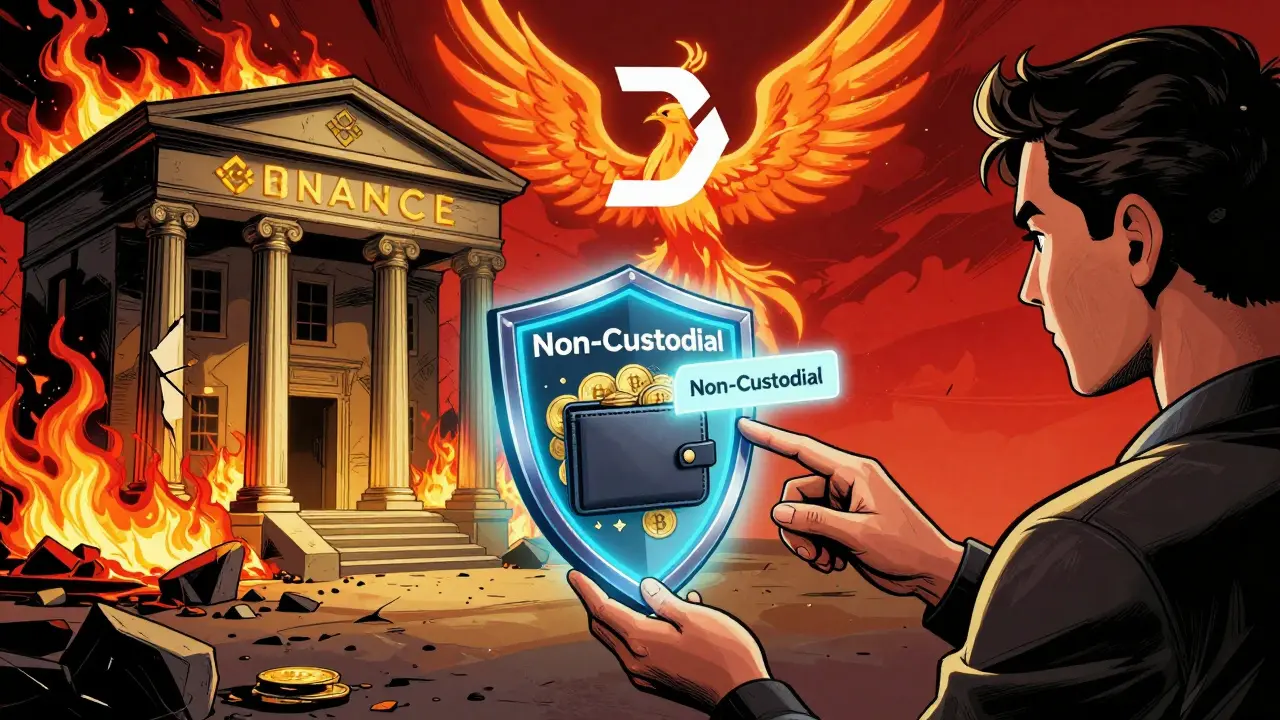
User Experience: Feels Like a CeX, But It’s Not
The interface is where Apex Protocol really shines. It’s built around TradingView charts, with clean order books, real-time price feeds, and one-click leverage adjustment. Advanced traders love it. In a CoinDesk survey of 1,200 DeFi users, 78% preferred Apex’s order book interface over AMM-based DEXs like Uniswap or SushiSwap. New users can get started in under 15 minutes. The layout is intuitive-no confusing tabs, no hidden settings. But there’s a catch. Cross-chain deposits? That’s where people stumble. About 41% of new users report needing two or three tries to get funds from Ethereum to Arbitrum. The platform has guides, but they’re not perfect. The community has stepped in-Reddit threads and Discord channels are full of step-by-step fixes for failed deposits. One popular workaround? Use the “forced withdrawal” feature if your deposit hangs. It’s not ideal, but it works.Performance and Market Position
As of September 2025, Apex Protocol handles $850 million in daily trading volume. That puts it at #3 among decentralized perpetual exchanges, behind dYdX and Hyperliquid. It serves 1.2 million users-up from 635,000 a year ago. Growth has slowed, though. Last year, it grew 142%. This year? 89%. That’s still strong, but it suggests the low-hanging fruit is gone. The platform holds 14.3% of the DEX perpetual market. That’s not tiny, but it’s not dominant. dYdX still leads with 31%. Hyperliquid is catching up fast at 22%. Apex isn’t falling behind-it’s holding its ground. The real challenge? Regulation. In Europe, user growth dropped to 12% quarterly after MiCA rules came into effect. Apex Protocol has no regulatory licenses. That’s fine in the U.S. or Asia, but it’s a wall in the EU. If you’re in Germany or France, you might find your access limited.The APEX Token: Utility, Not Speculation
The APEX token isn’t just a coin you can buy and hope it goes up. It’s used for governance and rewards. Holders can vote on protocol upgrades, fee structures, and new asset listings. The total supply is fixed at 25 million tokens. Only 23% are held by the team and early investors, and those are locked for at least a year. The rest-77%-goes to users through trading rewards, liquidity mining, and staking programs. Staking isn’t always available, though. In August 2025, it was offline for 11 days. That caused frustration. The team hasn’t explained why, but it’s a red flag for long-term holders. Token price predictions vary. CoinLore expects $2.68 by December 2025. CryptoQuant says $1.85. Neither is a guarantee. The token’s value is tied to platform usage-if trading volume drops, so does demand for APEX.
What’s Coming Next
Apex Protocol’s roadmap is clear:- Q4 2025: Integration with Chainlink’s CCIP for better cross-chain security
- Q1 2026: Spot trading functionality
- Q2 2026: Expansion to 30+ perpetual trading pairs
Who Should Use Apex Protocol?
Use Apex Protocol if:- You want to trade perpetual futures with leverage
- You care about keeping your funds in your own wallet
- You prefer order books over AMMs
- You trade ETH, WBTC, or other major assets
- You want low fees and fast execution
- You want to buy and hold altcoins (no spot trading yet)
- You need 50+ trading pairs
- You’re in the EU and need MiCA compliance
- You expect 24/7 live chat support (they only offer email)
Real User Feedback
On Trustpilot, 82% of positive reviews mention the clean interface and low fees. One user wrote: “I switched from Bybit because I was tired of them freezing my account. Now I trade the same pairs, but I own my keys. No one can touch my money.” Negative reviews? Three things come up over and over:- Customer support is slow-72 hours to get a reply
- Staking is unreliable
- Too few trading pairs
The Bottom Line
Apex Protocol isn’t perfect. But it’s one of the few decentralized exchanges that actually feels like a professional trading tool. It’s fast, cheap, secure, and built for traders-not investors. If you’re comfortable with perpetual futures and don’t need a thousand altcoins, it’s the best DEX option out there right now. The roadmap gives hope. Spot trading and more pairs could turn it into a full-fledged alternative to centralized exchanges. But until then, it’s a specialist’s tool. Not for beginners looking to buy Bitcoin. Not for Europeans needing compliance. But for active traders who want control, speed, and low fees? It’s hard to beat.Is Apex Protocol safe to use?
Yes, Apex Protocol is considered safe because it’s non-custodial. Your funds never leave your wallet, and the platform has never been hacked. It’s been audited three times by OpenZeppelin with no critical vulnerabilities found. However, it’s not regulated, so you won’t have legal protections like you would with a licensed exchange. Use it only if you understand DeFi risks.
Can I trade spot pairs on Apex Protocol?
Not yet. As of October 2025, Apex Protocol only offers perpetual futures contracts. Spot trading is planned for Q1 2026. If you want to buy and hold crypto without leverage, you’ll need another platform like Uniswap or Coinbase.
What wallets work with Apex Protocol?
Apex Protocol supports all EVM-compatible wallets: MetaMask, Rabby, Ledger Live, Trust Wallet, and others. You connect your wallet directly-no sign-up required. Just make sure you’re using the correct network (Ethereum, Arbitrum, or Optimism) when depositing funds.
How fast are trades on Apex Protocol?
Trades settle in under 1 second thanks to StarkEx layer-2 technology. This is much faster than most DEXs, which can take 5-15 seconds. Withdrawals to your wallet take about 4-6 minutes on average, depending on network congestion.
Is Apex Protocol available in the EU?
Technically yes, but access is limited. Since Apex Protocol doesn’t hold any regulatory licenses under MiCA (EU’s crypto regulation), European users may face restrictions. Some features might be blocked, and user growth in the EU has dropped significantly since MiCA took effect in mid-2025.
What’s the maximum leverage on Apex Protocol?
Apex Protocol offers up to 1:20 leverage on most perpetual pairs. This is higher than dYdX (1:10) but lower than Hyperliquid (1:25). It’s designed to be aggressive enough for active traders without encouraging reckless bets.
Does Apex Protocol have customer support?
Yes, but only via email. There’s no live chat, phone support, or ticket system. Response times average 72 hours, according to Trustpilot data. For urgent issues, the community on Discord and Reddit often provides faster help. The platform relies on self-service guides and user-driven solutions.
Why is my deposit stuck on Apex Protocol?
Deposits can fail if you’re using the wrong network or if the cross-chain bridge is congested. The most common fix is using the “forced withdrawal” feature, which is documented in community guides on Reddit. If your deposit doesn’t show up after 15 minutes, try this method. Always double-check that you’re sending from the correct chain (Ethereum, Arbitrum, or Optimism).

Ike McMahon
December 12, 2025 AT 12:07Apex Protocol finally got the order book right on a DEX. No more slippage nightmares. I’ve been trading here since March and my spreads are half what they were on dYdX.
Zero fees on deposits? Game changer.
PRECIOUS EGWABOR
December 12, 2025 AT 12:07Oh wow, another ‘revolutionary’ DEX that’s just Binance with a blockchain sticker. You people really think StarkEx is magic? It’s just a centralized rollup with a fancy name. Wake up.
And don’t get me started on that APEX token - it’s a vanity project disguised as governance.
Kathleen Sudborough
December 14, 2025 AT 05:30I came into this skeptical - I’ve been burned by too many ‘decentralized’ platforms that turned out to be custodial in disguise. But Apex? It’s the real deal.
My Ledger’s been connected for 14 months. No drama. No hacks. No surprise freezes. Just clean, fast trades.
I know it’s not for everyone - no spot trading yet, limited pairs - but for serious futures traders who value sovereignty? It’s the quiet hero of DeFi.
Also, the community mods on Discord are actually helpful. Rare these days.
Caroline Fletcher
December 14, 2025 AT 18:17Of course it’s ‘never been hacked’ - because they’re not really decentralized. They’re just hiding behind StarkEx like a corporate shell.
Who do you think controls the sequencer? Who decides what pairs get added? It’s all centralized. They just call it ‘decentralized’ so you’ll trust them.
Also, why is there no EU license? Because they’re dodging regulators. You’re not safe. You’re being used.
Heath OBrien
December 15, 2025 AT 01:09Apex is trash and you know it
Why no Solana? Why no Doge? Why no live chat? Because they dont care about you
They want your money and your data and then theyll disappear like every other crypto scam
LOL
https://youtu.be/dQw4w9WgXcQ
Taylor Farano
December 16, 2025 AT 05:38Let’s be real - this is just a rebrand of dYdX v2 with a cheaper fee schedule and a PR team that knows how to write bullet points.
78% of users prefer the interface? That’s because they’ve never used a real trading terminal.
And ‘no KYC’? That’s not freedom - it’s a regulatory time bomb waiting to explode. You’re all just playing Russian roulette with your assets.
Toni Marucco
December 17, 2025 AT 10:18The philosophical underpinning of Apex Protocol represents a meaningful evolution in the ontology of decentralized finance.
It does not merely facilitate transactions - it reifies the epistemic autonomy of the individual trader by eliminating custodial intermediation.
One might argue that the order-book architecture on a layer-2 settlement layer constitutes a new modal paradigm in market structure - one that harmonizes efficiency with existential sovereignty.
That said, the current limitations in asset diversity and the intermittent staking downtime reflect an immature institutional architecture - one that requires more robust governance mechanisms to mature beyond its current phase of proto-adoption.
Kathryn Flanagan
December 18, 2025 AT 03:08Hey everyone, I just wanted to say - if you’re new to Apex or DeFi in general, don’t panic if your deposit takes a while. I had the same issue when I started. I thought I lost my ETH.
Turns out I sent it to the wrong network. I was on Ethereum but needed Arbitrum. Easy fix.
Also, the forced withdrawal thing? Yeah, it sounds scary but it’s actually built into the system. Just follow the Reddit guide. I made a video on it too - link in my profile.
You’re not alone. Everyone gets confused at first. Just take a breath, read the docs, and reach out to the community. We’ve all been there.
And hey - if you’re worried about staking being down, don’t stress. They’re probably upgrading the smart contracts. It’s not broken, it’s just being improved.
Apex isn’t perfect, but it’s one of the few places where you actually feel like you’re part of something real. Not just another pump-and-dump. Stay patient. Stay curious. You’ll be glad you stuck with it.
amar zeid
December 19, 2025 AT 21:02Why is leverage capped at 1:20? In India, we have platforms offering 1:50 with no issues. Is this a Western safetyism or actual technical limitation?
Also, StarkEx - is it permissioned or permissionless? OpenZeppelin audit doesn’t mean the sequencer isn’t controlled by a single entity.
And why no spot? Is it because they fear arbitrage bots or because they’re intentionally limiting adoption?
Alex Warren
December 20, 2025 AT 06:18Apex Protocol’s fee structure is objectively superior to dYdX and Hyperliquid on both maker and taker sides
StarkEx’s throughput metrics are verifiable via on-chain settlement data
Non-custodial architecture eliminates counterparty risk
Regulatory non-compliance in the EU is a strategic decision, not a flaw
Staking downtime in August was due to a planned upgrade, not a failure
Community-driven support is more sustainable than paid customer service
Steven Ellis
December 20, 2025 AT 17:34I’ve traded on centralized exchanges since 2017 - Binance, Kraken, BitMEX - and I can tell you, Apex Protocol is the first DEX that doesn’t make me feel like I’m gambling with a black box.
There’s something deeply human about knowing your keys are yours. No one can freeze your account. No one can disappear with your margin.
Yes, the interface is sleek. Yes, the fees are low. But what really matters is the psychological shift - you’re not trusting a company. You’re trusting math, code, and your own discipline.
And for traders who’ve lost everything to exchange hacks? That’s not a feature. It’s a lifeline.
Claire Zapanta
December 21, 2025 AT 08:19Of course it’s ‘safe’ - because it’s American. No EU license? Good. That means they’re not bowing to Brussels bureaucrats.
You think the EU wants innovation? They want control. They want to tax you. They want to monitor your trades.
Apex is fighting back. And if you’re in Germany or France and you can’t use it - good. That’s the point.
Let them have their surveillance crypto. We’ll keep trading on the real blockchain.
Sue Gallaher
December 22, 2025 AT 22:03Apex is the future and you all are just jealous because you still use Coinbase
Why are you mad they dont have dogecoin
Grow up
Also why are you mad about the staking being down
Its a beta
Stop complaining and trade
Jeremy Eugene
December 23, 2025 AT 06:50Thank you for the comprehensive review. The clarity and structure of this post are commendable.
I would only add that users should be aware that while non-custodial architecture mitigates exchange risk, it does not eliminate smart contract risk.
Always perform your own due diligence, even on audited platforms.
Respect for the protocol’s design, but vigilance remains non-negotiable.
Kathy Wood
December 25, 2025 AT 06:33They’re not ‘holding their ground’ - they’re dying slowly!
89% growth? That’s a death spiral compared to last year’s 142%!
And APEX token is a Ponzi - 77% to users? Yeah right - it’s all locked up in their dev wallets!
Don’t be fooled. This is the last gasp of a dying model.
And why no EU license? Because they’re criminals!
They’re hiding! They’re scared! They know they’re breaking the law!
STOP TRADING HERE. STOP SUPPORTING THIS.
Rakesh Bhamu
December 25, 2025 AT 21:51Interesting breakdown. I’ve been using Apex for 6 months now. The speed is insane - I can scalp 5-10 trades in a minute without worrying about lag.
But I agree with the EU point - if you’re in Europe, you’re basically stuck. No real workaround yet.
Also, the lack of spot trading is a real missed opportunity. I wish they’d just launch it - even as a beta.
Other than that? Solid. Not perfect, but honest. And that’s rare.
Hari Sarasan
December 26, 2025 AT 06:28Apex Protocol’s StarkEx-based infrastructure represents a non-trivial optimization in the computational topology of decentralized order-matching, yet it remains fundamentally constrained by its reliance on Ethereum L1 finality, which introduces latent latency despite L2 acceleration.
The APEX tokenomics exhibit a non-linear utility function that is highly sensitive to trading volume volatility, thereby rendering staking yields inherently unstable - a structural vulnerability exacerbated by the absence of dynamic fee redistribution mechanisms.
Furthermore, the platform’s exclusion of Solana and other non-EVM chains constitutes a strategic myopia that undermines its potential for cross-chain interoperability and network effects.
While the UI is aesthetically pleasing, it remains a mere surface-layer abstraction that does not mitigate the underlying systemic risks of non-custodial leverage trading in a regulatory gray zone.
Stanley Machuki
December 26, 2025 AT 14:17Best DEX out there. No cap on withdrawals. No drama. Just trade.
And yes, I’ve used it during the last ETH dump - didn’t miss a beat.
Try it. You’ll thank me.
Lynne Kuper
December 27, 2025 AT 06:42They’re not ‘holding ground’ - they’re winning by not chasing trash coins.
Why would you want 50 altcoins you can’t even spell?
Apex is for traders. Not speculators. Not gamblers.
And if you think 1:20 leverage is ‘reckless’ - you’ve never traded real markets.
Stop complaining. Start learning.
Lloyd Cooke
December 29, 2025 AT 06:18The architecture of Apex Protocol mirrors the Kantian imperative: act only according to maxims that can be universalized.
By removing custody, it universalizes autonomy.
By enforcing order books, it universalizes price discovery.
By limiting leverage, it universalizes responsibility.
Yet, in its refusal to expand into spot trading, it reveals an ontological tension - between the desire for completeness and the virtue of focus.
Is it a tool? Or a philosophy?
Perhaps both.
Kurt Chambers
December 29, 2025 AT 22:22Apex is just a scam run by a bunch of bros in SF who think they’re smarter than everyone else
They dont care about you
They just want your money and your data
And when the rug gets pulled - you’ll be the one holding the bag
They’re not decentralized - they’re just better at hiding
Kelly Burn
December 31, 2025 AT 17:16OMG I LOVE APEX 💖
Order book + no KYC + 1 sec trades = 🤯
And the APEX token is like a crypto fairy that gives you free trading credits 🧚♀️✨
Also, the Discord is so chill and the mods are like my crypto besties 😭
Just connect your wallet and let the magic happen 🌟
Andy Walton
January 1, 2026 AT 02:11apex is the future but they need to add more coins
why only 15 pairs? what is this 2021?
and why is staking always down??
they dont care about us
just wanna take our money and vanish
also why no live chat??
theyre lazy
Taylor Farano
January 2, 2026 AT 12:56Of course you’re praising it - you’re one of the 1.2 million users who don’t know the difference between a layer-2 and a centralized server.
‘Faster than centralized exchanges’? Try running 9,000 TPS on a network that still relies on Ethereum L1 finality.
It’s not faster - it’s just optimized for low-latency arbitrage bots.
You’re not a trader. You’re a data point.