
Angola Mining Power Calculator
See how much electricity Bitcoin mining consumed in Angola before the April 2024 ban. Before the crackdown, mining operations were using up to 15% of the country's total electricity output.
Results will appear here after calculation
Context for Your Numbers
Angola's electricity grid was severely strained by mining operations:
- Up to 15% of national electricity was consumed by mining
- Each mining rig consumed 1.2 - 2.5 kW (average 1.85 kW)
- Over 50,000 rigs operated before the ban
- Power was often stolen from residential and hospital grids
Before April 2024, Angola was one of the biggest Bitcoin mining hubs in the world. Not just in Africa - globally. By late 2023, it ranked as the eighth largest Bitcoin mining country on Earth. That changed overnight. On April 10, 2024, Angola made it illegal to mine any cryptocurrency within its borders. Not just discouraged. Not just taxed. Illegal. And the penalties aren’t light.
What the Law Actually Says
Angola’s Law No. 3/24 didn’t just say "no mining." It laid out exactly what’s banned and what happens if you break it. Three things are now crimes:- Running any kind of cryptocurrency mining operation on Angolan soil
- Using any electrical license or connection to power mining equipment
- Connecting mining hardware to the national power grid
The law defines mining as the process of solving cryptographic puzzles to validate transactions and add new blocks to the blockchain. That’s the core of Bitcoin and similar coins. And now, doing that in Angola is a felony.
The punishments are harsh. If you’re caught mining, you could face one to twelve years in prison. If you’re just holding mining gear - even if you haven’t turned it on - you could get one to five years and lose everything you own. Equipment, computers, power supplies, cooling units - all seized. No warning. No second chance.
Foreigners aren’t exempt. If you’re not an Angolan citizen and you’re caught mining, you’ll be deported. On top of jail time. The law also bans anyone convicted from holding public office or running a business in Angola.
Why Angola Pulled the Plug
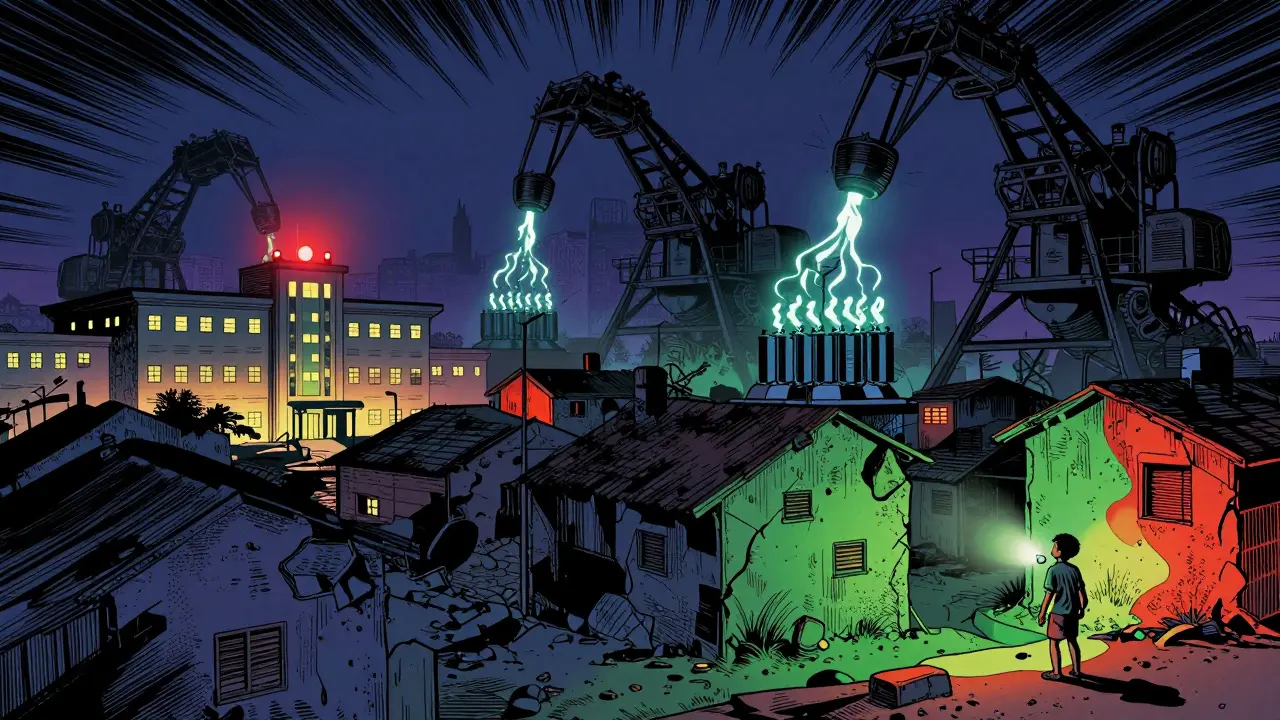
This wasn’t about controlling money. It wasn’t about ideology. It was about power.Angola’s electricity grid was breaking. Millions of people in cities like Luanda, Benguela, and Huambo were getting blackouts - sometimes for days. Hospitals struggled. Schools shut down. Factories couldn’t operate. Meanwhile, crypto miners were using massive amounts of electricity - often stealing it from the grid.
By late 2023, Bitcoin mining was consuming so much power that the national utility, EDAG, couldn’t keep up. Reports showed mining operations using more electricity than entire towns. Some miners ran on illegally tapped lines. Others paid off local officials to ignore their setups. The government estimated that mining was draining up to 15% of the country’s total electricity output.
Angola isn’t rich in energy. It has oil, yes - but its power infrastructure is outdated. Transmission lines are old. Transformers fail. Rural areas get power only a few hours a day. When miners started showing up in droves, they didn’t just use energy - they broke the system.
Who Was Mining in Angola?
The answer: mostly Chinese nationals.After China banned all cryptocurrency mining in 2021, thousands of mining rigs were shipped out. Angola became a top destination. Why? Cheap electricity, weak enforcement, and a government that didn’t yet see the threat. By 2023, Angola had more mining rigs than any other African country. Some estimates put the number at over 50,000 machines.
Chinese mining companies set up shop in warehouses, industrial zones, even abandoned factories. They brought in generators, cooled their rigs with industrial AC units, and ran them 24/7. Some even connected directly to high-voltage lines meant for factories - bypassing meters entirely.
The Chinese Embassy in Luanda warned its citizens months before the ban took effect. A translated notice said: "Possession of mining equipment is punishable by imprisonment and confiscation." Many ignored it. Others tried to hide their gear. Most didn’t make it.
The Crackdown: August 2024
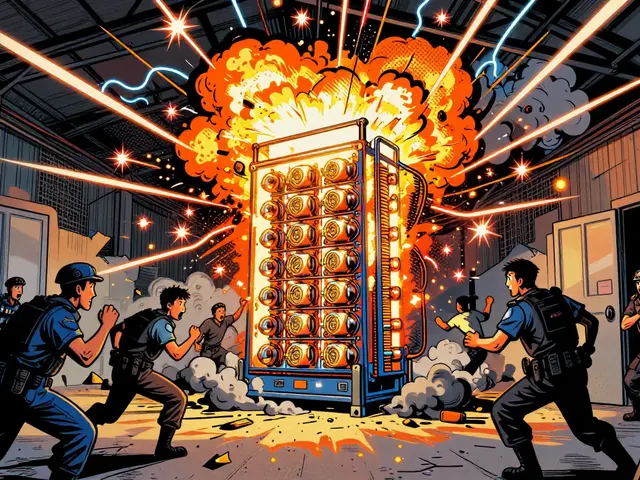
On August 12, 2024, Interpol and Angolan police raided 25 illegal mining sites across the country. The operation targeted 60 Chinese nationals. Over $37 million in mining equipment was seized - ASIC miners, power supplies, cooling units, backup generators. All of it was confiscated.It was the largest crypto mining bust in African history. And it wasn’t random. It was planned. Authorities had been tracking locations, power usage spikes, and financial transfers for months. The seized equipment wasn’t destroyed. The government announced it would be redistributed to hospitals, schools, and community centers in underserved areas.
This raid was part of a bigger African crackdown. Across the continent, 1,209 people were arrested in coordinated operations. Over $97 million in assets were recovered. Zambia, Nigeria, and Kenya also shut down fake crypto investment schemes that tricked tens of thousands of people out of hundreds of millions of dollars.
What About Other Crypto Activities?
The ban only covers mining. Buying, selling, or holding Bitcoin or Ethereum is still legal in Angola. You can use apps like Binance or Coinbase. You can send crypto to a friend. You can even run a crypto exchange - as long as you’re not using Angolan electricity to mine it.But the government’s message is clear: if you’re not producing value, you’re a risk. Mining doesn’t create jobs. It doesn’t build infrastructure. It doesn’t pay taxes. It just uses power and leaves behind heat and noise.
Legal experts point out one flaw in the law: there’s a typo in the penalty section for companies. Article 14 references a non-existent Article 12. It’s a small mistake, but it could cause delays in court cases. No one’s been charged under that section yet, but lawyers say it’s a risk.
What’s the Bigger Picture?
Angola’s move is a warning to other developing nations. When you have unreliable power and growing energy demand, crypto mining isn’t a tech boom - it’s a crisis. Other countries are watching. Nigeria, Kenya, and Ghana have all seen spikes in mining activity. Some are considering similar bans.For Bitcoin’s global network, Angola’s exit matters. Before the ban, Angola contributed nearly 2% of the entire Bitcoin hash rate. That’s a lot. When those machines went offline, the network adjusted - but the loss of that capacity is still felt. Some miners moved to Kazakhstan or Iran. Others shut down completely.
The ban also shows that governments are no longer willing to tolerate crypto mining as a gray-area activity. If you’re draining public resources, you’re not a pioneer - you’re a thief.
What’s Next for Angola?
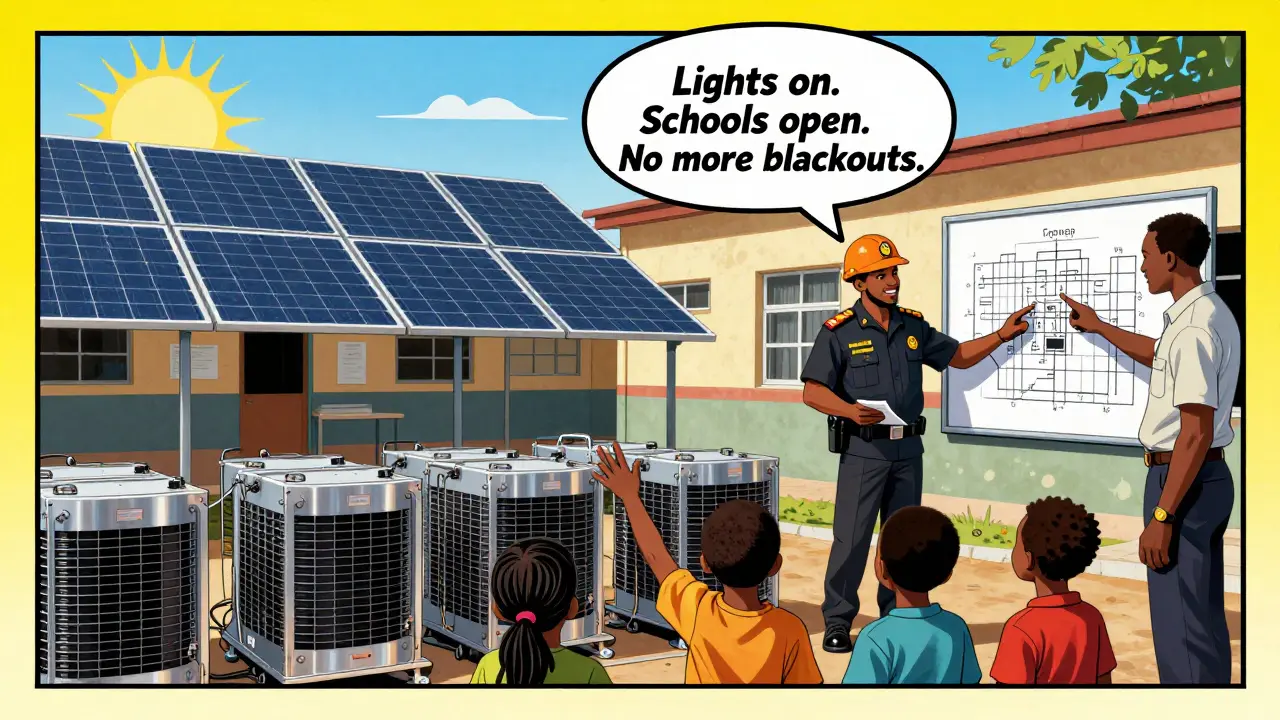
The government says it’s investing in renewable energy. Solar farms are being planned. Grid upgrades are underway. They’re also cracking down on illegal electricity connections - not just for miners, but for anyone.There’s no sign the ban will be reversed. No protests. No lobbying from miners. The public largely supports it. People are tired of blackouts. They want lights on in their homes. They want their kids to study at night. They want hospitals to run.
Angola didn’t ban crypto because it’s afraid of technology. It banned mining because it chose its people over profit.
Tisha Berg
December 6, 2025 AT 17:34It’s wild how quickly things can flip. One day you’re powering your rig with cheap electricity, the next you’re looking at a decade in jail. Angola didn’t just ban mining-they chose people over profit, and honestly? I respect that.
My cousin works in a hospital in Luanda. She told me they used to lose power during surgeries. Now? Lights stay on. That’s worth more than any Bitcoin.
Not saying crypto’s bad-but not when it’s stealing from the sick and the students.
Billye Nipper
December 8, 2025 AT 05:04This is so powerful!!!
Imagine being a kid in Angola trying to study at night… and the lights go out because some guy in a warehouse is mining Dogecoin with a bank of GPUs…
Angola didn’t just make a law-they made a stand.
And the fact they’re giving the seized gear to schools?? That’s next-level justice.
Someone please make a documentary about this.
YES.
YES.
YES.
Chris Mitchell
December 10, 2025 AT 01:31Power is sovereignty.
Miners didn’t create value-they extracted it.
Angola chose its people over a speculative asset.
That’s not anti-tech.
That’s civilization.
Martin Hansen
December 10, 2025 AT 04:42Oh wow, so now the government gets to be the ultimate crypto police? How quaint.
Let me guess-the same folks who let Chinese firms loot the grid for years are now ‘heroes’ for confiscating equipment?
Pathetic. You don’t solve corruption by outlawing tech-you solve it by prosecuting the corrupt.
Also, 12 years for owning a rig? That’s not justice. That’s tyranny dressed in solar panels.
Lore Vanvliet
December 10, 2025 AT 11:31OMG I CAN’T BELIEVE THIS IS HAPPENING!!
CHINESE MINERS STOLE OUR POWER??
ANGOLA IS A HERO!!!
🔥🔥🔥
Also, why is no one talking about how the U.S. lets crypto miners use 10x the power of entire towns in Texas??
DOUBLE STANDARDS!!
WE NEED A WORLDWIDE MINING BAN!!
😭😭😭
Frank Cronin
December 10, 2025 AT 23:45Of course the Chinese miners got caught.
They thought Angola was a backwater with no teeth.
Turns out, when you’re stealing electricity from hospitals, even the most ‘non-interventionist’ governments get mad.
They didn’t ban Bitcoin.
They banned theft.
And now the world’s watching.
Good. Let them watch.
Nicole Parker
December 12, 2025 AT 06:14I’ve been thinking about this a lot, and it’s not just about electricity.
It’s about what kind of society you want to be.
Angola could’ve let the miners keep running-made a few bucks off them, turned a blind eye, kept the lights flickering for civilians.
But they chose to say: no, this isn’t sustainable. This isn’t fair. This isn’t right.
That’s hard. That’s rare.
Most countries would’ve just taxed it, let it grow, and then blamed the poor for the blackouts.
Angola didn’t.
They saw their people. And they acted.
That’s leadership.
Not perfect. Not easy. But real.
Brooke Schmalbach
December 12, 2025 AT 18:32Let’s be real-this wasn’t a moral victory. It was a logistical emergency dressed in virtue signaling.
Angola’s grid was collapsing. Miners were the last straw. The government didn’t ban mining because it was evil-they banned it because they were out of options.
And now they’re playing the ‘we saved the children’ card while quietly selling the seized ASICs on the black market to fund new oil pipelines.
Don’t be fooled. This is realpolitik, not righteousness.
Also, 50,000 rigs? That’s not ‘Chinese miners.’ That’s a state-backed operation. Someone in Beijing knew exactly what was happening.
Angola’s crackdown? It’s a geopolitical middle finger.
And it’s brilliant.
Elizabeth Miranda
December 14, 2025 AT 06:51It’s interesting how the ban only targets mining, not trading.
That’s a smart distinction.
Bitcoin can still circulate. People can still use it. The technology isn’t outlawed-just the energy-intensive part.
That’s not anti-innovation.
That’s responsible innovation.
And the fact they’re repurposing the hardware? Brilliant.
Instead of destroying the equipment, they turned a confiscation into a public investment.
That’s the kind of policy I wish more governments had the courage to make.
Krista Hewes
December 14, 2025 AT 07:56i just read this and i cried a little
my grandma in nigeriia had to use candles during blackouts
imagine if she lived in angola and her hospital lost power because some guy was mining btc in a warehouse
angola did the right thing
even if it seems harsh
people come first
not machines
not coins
just… people
Noriko Robinson
December 14, 2025 AT 13:41Why is everyone so shocked?
This has been coming for years.
Every time a country with weak infrastructure gets flooded with crypto miners, the same thing happens: the lights go out, the hospitals suffer, the kids can’t study, and the government panics.
Angola didn’t react too late-they reacted just in time.
Other African nations are watching. Nigeria’s already drafting similar rules.
And honestly? Good.
Maybe now the crypto bros will stop treating developing countries like their personal power plants.
It’s not a frontier. It’s a home.
Mairead Stiùbhart
December 15, 2025 AT 14:45Oh, so now the Chinese are the villains?
Let’s not pretend they were the only ones.
Angola’s own officials were taking bribes to look the other way.
And now the government gets to be the righteous hero?
Classic.
But hey, at least the lights are back on.
Even if the justice system’s still a mess.
ronald dayrit
December 15, 2025 AT 18:35There’s a deeper layer here that no one’s talking about.
Angola didn’t ban crypto mining because it was bad.
They banned it because it exposed how broken their energy system was.
For years, the government ignored the rot-focusing on oil exports, ignoring maintenance, letting corruption fester.
Then came the miners.
They didn’t cause the collapse.
They just made it visible.
Now the state is trying to fix the house while blaming the guests.
It’s not hypocrisy.
It’s survival.
And maybe, just maybe, this is the spark that finally forces real reform.
That’s the real story.
Doreen Ochodo
December 15, 2025 AT 21:04Angola chose people.
That’s it.
Done.
Yzak victor
December 17, 2025 AT 10:56Man, I’ve seen so many crypto stories where the rich get richer and the poor get blackouts.
This one’s different.
For once, the people won.
Not because they were loud.
Because they were tired.
And tired people? They change things.
Holly Cute
December 17, 2025 AT 22:09Okay, but let’s be honest-this whole thing is a distraction.
Angola’s economy is still a mess. Oil prices are down. Debt is up.
They banned mining to look like they’re doing something.
Meanwhile, the real problem? The corrupt officials who let this happen in the first place.
They’re still in power.
They’re just now wearing ‘anti-mining’ badges.
And the seized equipment? Probably already being sold to private investors.
Don’t be fooled by the feel-good headlines.
This is politics, not justice.
😭
Neal Schechter
December 18, 2025 AT 18:05For anyone who thinks this is just about electricity-it’s not.
It’s about control.
Miners operated outside the state’s systems. No taxes. No oversight. No accountability.
That’s a threat to any government, especially one with fragile institutions.
Angola didn’t ban Bitcoin.
They banned unregulated power.
And honestly? I get it.
When your country can’t power a hospital, you don’t let outsiders run their own grid.
Madison Agado
December 19, 2025 AT 02:06There’s a quiet dignity in this decision.
Angola didn’t need to justify it with moral grandstanding.
They didn’t need to explain it to the West.
They just looked at their people, saw the darkness, and said: enough.
It’s not about crypto.
It’s about what you value when the lights go out.
Roseline Stephen
December 19, 2025 AT 02:48Interesting that the law has a typo in Article 14.
Small mistake.
Big irony.
They banned mining to fix a broken system.
But the system still has cracks.
Still, better than nothing.
Jon Visotzky
December 19, 2025 AT 04:42So what happens when the solar farms are built?
Will they let mining come back?
Or is this a permanent line in the sand?
Either way, it’s a landmark moment.
First time I’ve seen a country say: no, we’re not your energy dump.
Frank Cronin
December 19, 2025 AT 16:51And now the Chinese are crying about ‘economic imperialism’?
They took advantage of a collapsing grid.
They didn’t invest.
They extracted.
And now they’re surprised when the host nation fights back?
Wake up.
This isn’t colonialism.
This is consequences.