Have you ever scrolled through a crypto tracker and seen a name that sounds more like a fruit salad than a financial instrument? Pineapple (PAPPLE) is an Ethereum-based cryptocurrency token operating within the decentralized finance sector. It’s not just a meme coin with a funny logo; it’s tied to a specific utility: the PineappleDEX platform. But before you rush to buy, you need to know what you’re actually getting into. The data surrounding PAPPLE is messy, the prices vary wildly across exchanges, and it sits firmly in the "high-risk" category of digital assets.
If you are looking for a quick answer: PAPPLE is an ERC-20 token on the Ethereum blockchain designed to facilitate trading on its own decentralized exchange. As of mid-2026, it remains a low-cap, high-volatility asset with significant liquidity issues. This guide breaks down the tokenomics, the technology behind it, and why you should be extremely cautious if you decide to trade it.
Understanding the Core Technology
To understand PAPPLE, you first have to understand where it lives. It is built on the Ethereum blockchain network that supports smart contracts and decentralized applications. Specifically, it follows the ERC-20 standard a technical standard for fungible tokens on Ethereum. This means if you have a wallet that holds ETH, USDT, or any other standard Ethereum token, you can likely hold PAPPLE too. You don’t need a special hardware device or a new app just to store it.
The contract address for the token is 0x129e5915326ed86f831b0e035acda34b209633d5. Always double-check this address when buying. In the world of decentralized finance, scams thrive on fake tokens with similar names. If you send your money to the wrong address, there is no customer support line to call. It’s gone.
The primary purpose of holding PAPPLE isn’t just speculation; it’s utility within the PineappleDEX a decentralized exchange platform offering limit orders, charts, and staking features. Think of it like airline miles: the token has value because it lets you do things on their platform, such as paying for trades, accessing advanced charting tools, or staking to earn rewards. Without the DEX, the token would be little more than a speculative bet.
The Confusing Reality of PAPPLE’s Price
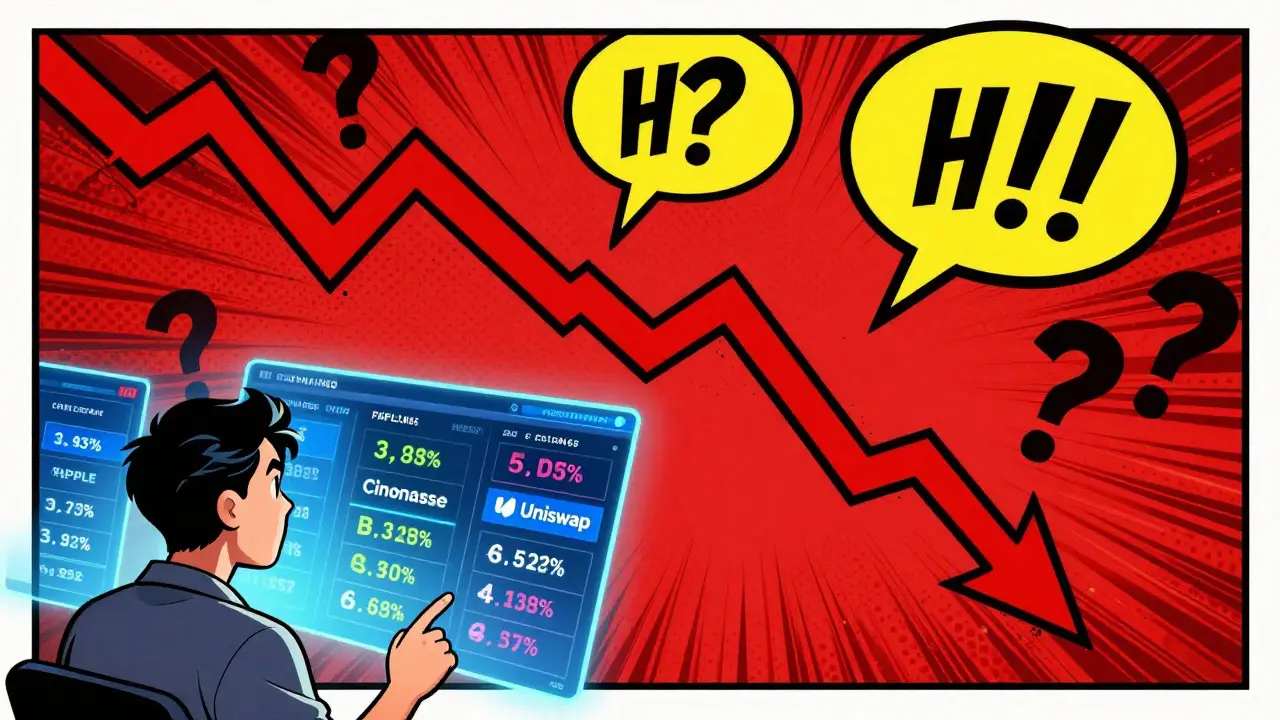
Here is where things get tricky. If you check five different crypto websites today, you might see five completely different prices for PAPPLE. This isn’t a glitch; it’s a feature of illiquid markets.
As of April 2026, the data paints a fragmented picture:
- Coinbase: Reports a price around $0.0223 USD. They show a market cap of roughly $14.4 million. Interestingly, Coinbase lists the price but does not necessarily offer direct spot trading for all low-cap tokens in the same way they do for Bitcoin.
- CoinGecko: Lists the price significantly lower, at approximately $0.0003234 USD. Their data suggests a market cap measured in Bitcoin terms (BTC115.64), which translates to a much smaller valuation in fiat currency.
- Uniswap: Shows a price near $0.000386 USD. Since Uniswap is a decentralized exchange, this price reflects actual user swaps rather than a centralized order book.
- MEXC: Reports $0.00038398 USD.
Why the massive difference between Coinbase ($0.0223) and CoinGecko/Uniswap ($0.0003)? It often comes down to how "market cap" and "price" are calculated when liquidity is thin. Sometimes, a large single trade on one platform skews the average. Other times, different pairs (like PAPPLE/ETH vs. PAPPLE/USDT) are priced differently due to lack of arbitrage.
| Platform | Price (USD) | 24h Volume | Status |
|---|---|---|---|
| Coinbase | $0.0223 | $224.77K | Listed / Tracking |
| CoinGecko | $0.0003234 | $81.4K | Aggregated Data |
| Uniswap | $0.000386 | N/A (On-chain) | Active Trading |
| MEXC | $0.00038398 | $0 (reported) | Tracking |
| Binance | N/A | N/A | Not Listed |
The key takeaway? Never assume the price you see on one site is the price you will get on another. Slippage-the difference between the expected price of a trade and the price at which the trade is executed-can be brutal on tokens like PAPPLE.
Tokenomics: Supply and Circulation
Let’s look at the math behind the token. The maximum supply of PAPPLE is capped at 1,000,000,000 (1 billion) tokens. This fixed supply creates scarcity, theoretically supporting price appreciation if demand rises. However, scarcity only matters if people want to buy.
The circulating supply is where the data gets murky again. Some sources report approximately 646 million tokens in circulation, while others suggest closer to 770 million. This discrepancy usually happens because some tokens are locked in liquidity pools, staking contracts, or held by early investors who haven’t sold yet. For us, the investor, the important number is the fully diluted valuation (FDV). If all 1 billion tokens were in play and priced at the higher Coinbase estimate of $0.0223, the FDV would be over $22 million. At the lower CoinGecko price, the FDV drops drastically.
This variance highlights a risk: if a large portion of the supply is suddenly unlocked or dumped onto the market, the price could collapse. Always check the vesting schedule of a project if available, though for PAPPLE, detailed public roadmaps regarding token release schedules are sparse.
Trading Availability: Where Can You Buy?
You won’t find PAPPLE on the biggest centralized exchanges. Binance the largest cryptocurrency exchange by volume explicitly states that PAPPLE is not listed. Crypto.com a global cryptocurrency platform tracks the price but notes it is not yet tradable on their main interface.
This forces traders into the decentralized ecosystem. Your primary venues will be:
- Uniswap: The most popular decentralized exchange for ERC-20 tokens. You connect your wallet (like MetaMask), swap ETH for PAPPLE, and pay gas fees. This is where the real price discovery happens.
- PineappleDEX: The native platform. Using their own exchange might offer benefits like lower fees or access to limit orders, which are rare on many simple DEXs.
- Smaller CEXs: Platforms like MEXC may list it, but liquidity can be nonexistent. Check the order book depth before placing a trade.
Because it’s not on Binance or Coinbase Pro (for easy fiat-on-ramp trading), buying PAPPLE requires a bit of technical know-how. You need to bridge funds to Ethereum, manage gas fees, and understand slippage tolerance settings.
Risks and Red Flags
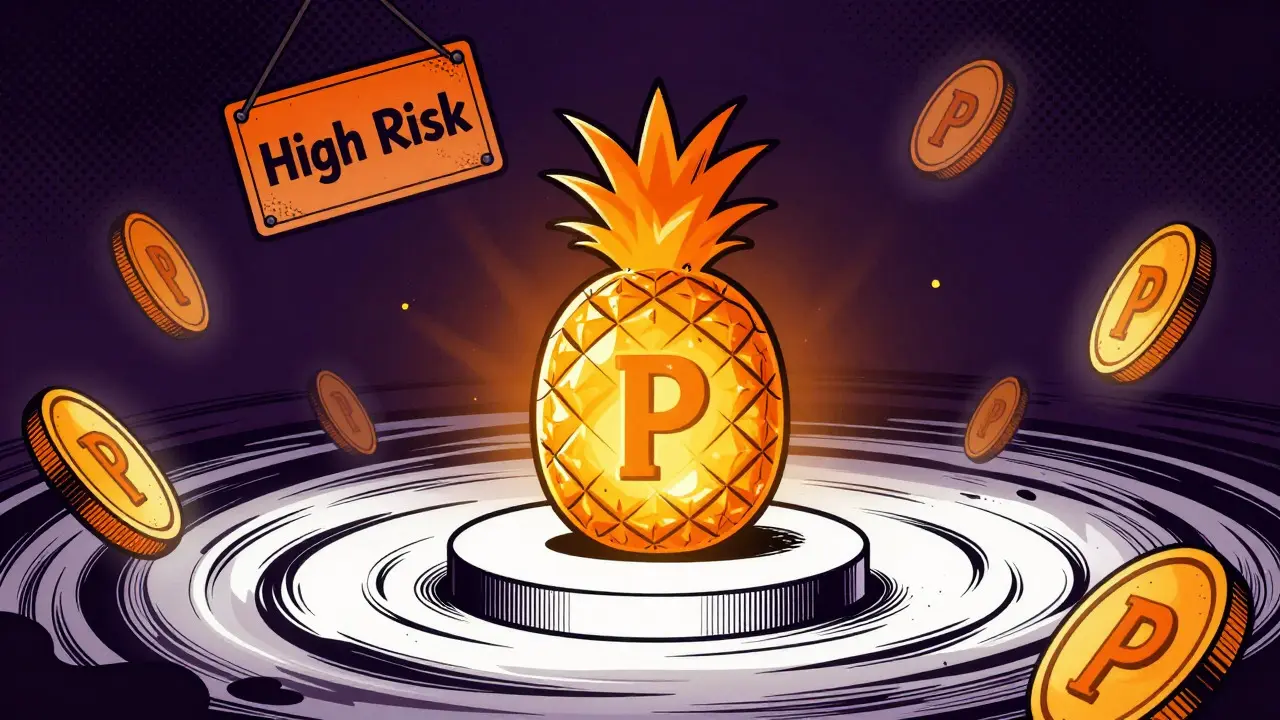
Let’s be honest. PAPPLE is not Bitcoin. It’s not even Solana or Cardano. It ranks #1528 on CoinGecko. That puts it in the "long tail" of crypto, where thousands of projects compete for attention. Here are the specific risks you face:
- Liquidity Risk: With daily volumes sometimes dipping below $100k on major aggregators, selling a large position could crash the price. If you try to sell $1,000 worth of PAPPLE and there aren’t enough buyers, you might only get $800 back after slippage.
- Data Inconsistency: The fact that Binance reports "0 circulating supply" while Coinbase reports 646 million suggests poor data integration or reporting errors. This makes fundamental analysis difficult.
- Underperformance: In recent weeks, while the broader Ethereum ecosystem gained over 12%, PAPPLE declined nearly 2%. It is lagging behind its parent blockchain.
- Smart Contract Risk: While PAPPLE uses the secure Ethereum network, the PineappleDEX smart contracts themselves must be audited. If there is a bug in their code, funds could be drained. Look for audit reports from firms like CertiK or OpenZeppelin, though these are not prominently highlighted in current public data.
Is PAPPLE Worth It?
So, should you buy it? Only if you fit a specific profile. If you are a conservative investor looking for steady growth, PAPPLE is probably too volatile and obscure. If you are a DeFi enthusiast who believes in the potential of niche decentralized exchanges and wants to gamble on early-stage platforms, it might fit your portfolio.
The token has reached an all-time high of roughly $0.0235 in July 2025. Current prices are significantly below that peak. Some see this as a discount; others see it as a sign of dying interest. The decision depends on whether you believe the PineappleDEX team can attract users away from giants like Uniswap and PancakeSwap.
Keep your position small. Treat any money spent on PAPPLE as money you are willing to lose entirely. Diversify. And always, always verify the contract address before connecting your wallet.
What is the contract address for Pineapple (PAPPLE)?
The official ERC-20 contract address for PAPPLE on the Ethereum network is 0x129e5915326ed86f831b0e035acda34b209633d5. Always copy-paste this directly to avoid typos when adding the token to your wallet.
Can I buy PAPPLE on Binance?
No. Binance explicitly states that PAPPLE is not listed for trading or services on their platform. You will need to use decentralized exchanges like Uniswap or specialized platforms like PineappleDEX to acquire the token.
Why are PAPPLE prices different on Coinbase and CoinGecko?
Price discrepancies occur due to differences in liquidity, trading pairs, and data aggregation methods. Coinbase may reflect a specific order book or index price, while CoinGecko aggregates data from multiple decentralized sources like Uniswap. Low liquidity leads to wider spreads and inconsistent pricing across venues.
What is the maximum supply of PAPPLE?
The maximum supply of Pineapple (PAPPLE) is capped at 1,000,000,000 (1 billion) tokens. The circulating supply varies by source but is estimated between 646 million and 770 million tokens.
Is PAPPLE a safe investment?
PAPPLE is considered a high-risk asset. It has low market capitalization, limited liquidity, and lacks listings on major centralized exchanges. Prices are volatile, and data inconsistencies exist across tracking platforms. Only invest what you can afford to lose.
What is PineappleDEX?
PineappleDEX is the decentralized exchange platform associated with the PAPPLE token. It offers features such as limit orders, real-time charts, token insights, and staking capabilities, aiming to provide a more advanced trading experience than basic DEXs.