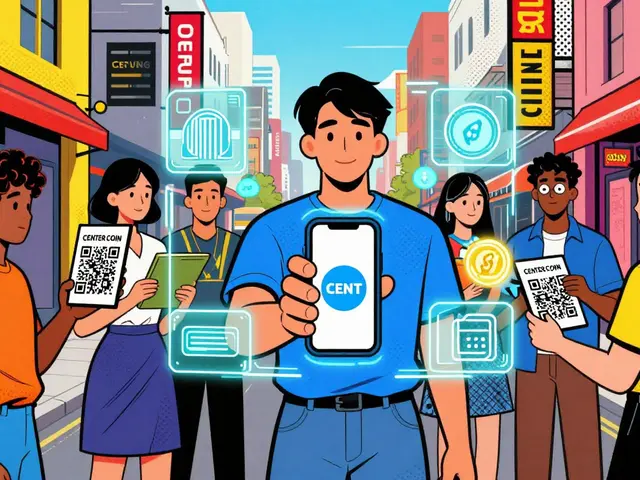
Have you ever seen a cryptocurrency symbol like CENT pop up on a price tracker and wondered what it actually does? It’s easy to get confused. In the world of crypto, "cent" sounds like a tiny fraction of a dollar, but in this case, it’s the name of a specific digital asset called CENTER COIN, which operates as a utility token designed to bridge blockchain technology with real-world economic participation through decentralized payments and rewards.
If you are looking at your portfolio or scrolling through exchange lists, you might be asking: Is this a scam? Is it worth buying? How does it work? This guide cuts through the noise. We will look at who is behind the project, how the token functions on blockchains like KAIA and Klaytn, and what the current market data tells us about its viability.
The Core Concept: Democratizing Blockchain Access
At its heart, CENTER COIN aims to solve a simple problem: blockchain technology is often too complex for everyday people. You don’t need to know how to code or own expensive mining rigs to participate in the digital economy. The project, founded by Yujin Choi, was built on the idea that anyone should be able to contribute to and benefit from decentralized networks.
Unlike Bitcoin, which started as a peer-to-peer electronic cash system requiring significant energy to secure, CENTER COIN focuses on utility. It acts as a medium of exchange within a specific ecosystem. Think of it less like gold stored in a vault and more like loyalty points that have actual value and can be traded. The goal is to create an open digital economy where users are rewarded for their activity, whether that’s making payments, engaging with ads, or even using mobility services.
Who Is Behind CENTER COIN?
When evaluating any small-cap cryptocurrency, the team is your first line of defense against scams. CENTER COIN has a documented founding team, which adds a layer of credibility compared to anonymous projects.
- Yujin Choi: Founder and CEO, providing central leadership.
- Jaehun Seo: Chief Technology Officer (CTO), handling technical architecture.
- Tail Yun: Developer, responsible for implementation.
- Jiyeon Kim: Chief Marketing Officer (CMO).
- Janehyung Ban: Media Representative.
Interestingly, while the token launched publicly in 2022, the whitepaper dates back to 2014, with business research starting in 2016. This suggests a long gestation period. However, in crypto, time moves fast. A project planning for eight years before launching needs to prove it hasn’t missed the boat. The presence of named executives helps, but you should always verify their LinkedIn profiles or public records to ensure they are active in the industry.
How Does the CENT Token Work?
CENTER COIN is not just a speculative asset; it has defined use cases within its ecosystem. Understanding these utilities is crucial because if no one uses the token for anything, its value relies entirely on hype.
- Decentralized Payments: The primary function is facilitating payments at partner locations. Users can scan QR codes at restaurants, cafes, and retail stores to pay using the platform. This integrates with a franchise model where partners set up these payment systems.
- Rewards for Engagement: Users earn CENT tokens for various activities. This includes staking based on market activity, paying fees, and even driving distance when using affiliated scooter services. This "move-to-earn" or "engage-to-earn" mechanic incentivizes daily usage.
- NFTs and Gaming: The token can be used in NFT marketplaces and gaming platforms to purchase virtual goods. This taps into the broader Web3 trend of integrating crypto into entertainment.
- Advertising Revenue Sharing: The platform supports targeted advertisements. Users who engage with these ads are rewarded with CENT, creating a mutual-sharing data model that benefits both advertisers and users.
This multi-faceted approach attempts to create a circular economy. You earn tokens by using services, spend them at partners, and potentially stake them for further rewards. However, the success of this model depends heavily on the number of active partners and users. Without widespread adoption, the utility remains theoretical.
Technical Infrastructure: Multi-Chain Presence
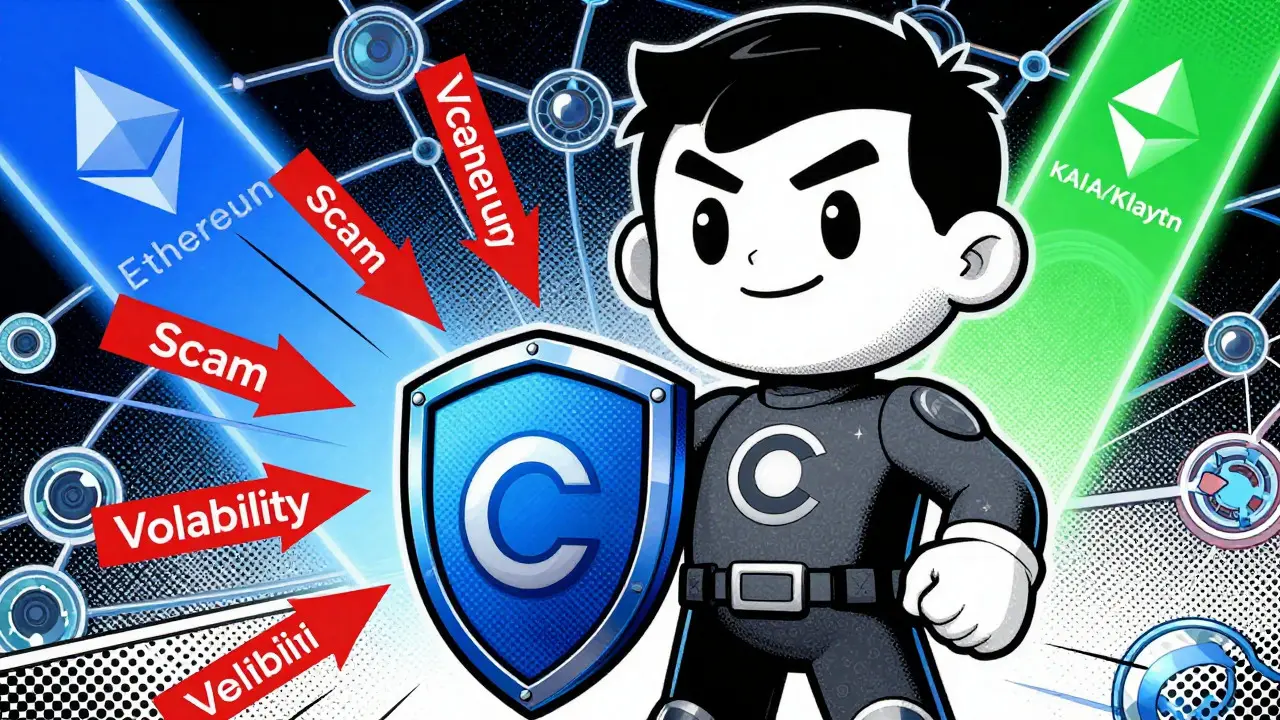
One of the interesting aspects of CENTER COIN is its presence on multiple blockchain networks. Originally associated with Ethereum, the project has expanded to include the KAIA blockchain (formerly Klaytn). This migration or dual-operation strategy is significant.
Klaytn/KAIA is a major blockchain platform in South Korea, known for high throughput and low transaction costs. By operating on KAIA, CENTER COIN positions itself to tap into the Asian market, particularly Korean users who are highly active in crypto. The Ethereum contract address is 0x262B6A8B044AB9B7a345353DED8f541c1aC37BD3, while the Klaytn address is 0xd364de0683b29e582e5713425b215b24ce804ae9.
Using multiple chains reduces reliance on a single network’s congestion or fee spikes. For example, if Ethereum gas fees are high, transactions can potentially route through KAIA for cheaper processing. This flexibility is a technical plus, but it also means investors need to check which chain they are holding their tokens on, as bridging between chains can sometimes be risky or costly.
Tokenomics: Supply and Circulation
Understanding the supply dynamics is critical for assessing potential price movements. Here is the breakdown for CENTER COIN:
| Metric | Value |
|---|---|
| Total Supply | 1,000,000,000 (1 Billion) CENT |
| Circulating Supply (Reported) | ~200,000,000 (200 Million) CENT |
| Fully Diluted Valuation (FDV) | Varies by price (~$25M - $21M) |
| Token Type | Utility Token |
The total supply is fixed at 1 billion tokens, which creates scarcity if demand increases. However, only about 20% of those tokens are reportedly in circulation. This means there is a large amount of tokens yet to be released or unlocked. In crypto, this is often a red flag for future inflation. If the remaining 800 million tokens are dumped onto the market later, the price could drop significantly unless there is massive demand to absorb them.
You should also note discrepancies in circulating supply reports. Some major exchanges like Binance and Coinbase show zero circulating supply in their direct listings, indicating that CENT is not actively traded on their main order books. This lack of transparency in supply data across platforms makes it harder to gauge true market depth.
Price Analysis and Market Volatility
If you look at the price of CENTER COIN, you will notice something strange: it varies wildly depending on where you look. As of recent data, prices range from $0.0023 on Coinbase to $0.0256 on CoinMarketCap. Why such a huge difference?
The answer is liquidity. CENTER COIN is a low-volume asset. When trading volume is low, even small buy or sell orders can cause massive price swings. Furthermore, different exchanges may have different trading pairs or data feeds. For instance, Binance lists CENT but explicitly states it is not available for trading, meaning the price shown is likely a reference index rather than a live market price.
Historically, the coin has been volatile. It reached an all-time high of roughly $0.0179 to $0.065 (depending on the source) in April 2025. Since then, it has experienced significant corrections, dropping over 80% from its peak in some metrics. Over a one-year period, however, it has shown gains of over 3,000% from its lowest points. This extreme volatility is typical for micro-cap cryptocurrencies. It offers high reward potential but carries equally high risk.
For traders, this means slippage can be an issue. If you try to sell a large amount of CENT, you might find there aren’t enough buyers at the current price, forcing you to accept a lower rate. Always check the order book depth before entering a position.
Is CENTER COIN Legit? Risks and Considerations
No investment is without risk, and CENTER COIN sits in the "high risk" category due to several factors:
- Limited Exchange Listings: Being absent from major trading venues like Binance (for active trading) limits accessibility and trust. Major exchanges perform rigorous audits before listing tokens. Absence doesn’t mean it’s a scam, but it means it hasn’t met those high bars yet.
- Low Market Cap: Ranking around #3983 globally, it is a tiny player in a sea of thousands. Small caps can disappear overnight if development stops.
- Data Discrepancies: Conflicting information about supply and price across platforms suggests a lack of standardized reporting, which can confuse investors.
- Adoption Challenges: The utility relies on real-world partners accepting CENT payments. If few merchants accept it, the token’s value proposition weakens.
On the positive side, the project has a clear team, a multi-chain strategy, and a defined utility model. The P2P authentication system aimed at protecting user data is also a step toward addressing privacy concerns, which are increasingly important in regulated markets.
How to Buy CENTER COIN (CENT)
Since CENT is not widely available on top-tier exchanges, buying it requires a bit more effort. Here is a general path:
- Check Availability: Verify which exchanges currently support CENT trading. Platforms like Crypto.com or smaller DEXs (Decentralized Exchanges) on Ethereum or KAIA may offer liquidity.
- Use a Wallet: You will need a wallet that supports ERC-20 (Ethereum) or KLAYTN (KAIA) tokens. MetaMask or Kaikas are popular choices.
- Bridge or Swap: If buying on a centralized exchange, you might receive ETH or KLAY first, then swap for CENT on a DEX like Uniswap (for Ethereum) or Kyberswap (for KAIA). Ensure you are on the correct network to avoid losing funds.
- Verify Contract Address: Always double-check the contract address against official sources to avoid fake tokens.
Be cautious of high gas fees if transacting on Ethereum. Using the KAIA network might be cheaper for smaller transactions.
Future Outlook
The future of CENTER COIN hinges on execution. The roadmap details are sparse in public forums, which is common for smaller projects but leaves investors guessing. Key areas to watch include:
- Partnership Expansion: Are new restaurants or retailers joining the payment network?
- Exchange Listings: Will CENT get listed on Tier-1 exchanges, which would boost liquidity and credibility?
- Regulatory Compliance: As global crypto regulations tighten, especially in Europe and Asia, how will CENTER COIN adapt its KYC/AML processes?
Without concrete updates on these fronts, the token may remain a niche asset. However, if the team successfully scales its merchant network and leverages the KAIA blockchain’s growth in Asia, it could carve out a sustainable niche in the DeFi payments space.
Is CENTER COIN (CENT) a good investment?
CENTER COIN is a high-risk, high-reward asset. Due to its low market cap, limited liquidity, and lack of major exchange listings, it is suitable only for investors who can afford to lose their capital. It is not considered a stable or blue-chip investment like Bitcoin or Ethereum. Always do your own research (DYOR) before investing.
Which blockchain does CENTER COIN run on?
CENTER COIN operates on multiple blockchains, primarily Ethereum (ERC-20) and KAIA (formerly Klaytn). This multi-chain approach allows for cross-network compatibility and potentially lower transaction fees on the KAIA network.
What is the total supply of CENT tokens?
The total supply of CENTER COIN is fixed at 1 billion (1,000,000,000) tokens. Approximately 200 million tokens are reported to be in circulation, though this figure may vary across different data providers.
Can I buy CENTER COIN on Binance or Coinbase?
As of recent data, CENTER COIN is not actively tradable on Binance or Coinbase main order books. Binance lists it for reference only, and Coinbase shows pricing data but may not support direct fiat-to-CENT pairs. You may need to use decentralized exchanges (DEXs) or smaller centralized platforms to acquire the token.
Who is the founder of CENTER COIN?
The founder and CEO of CENTER COIN is Yujin Choi. The team also includes CTO Jaehun Seo and other key members in marketing and development, providing a structured organizational hierarchy.
How can I earn CENTER COIN tokens?
Users can earn CENT tokens through various mechanisms including staking, making payments at partner merchants, engaging with targeted advertisements, and participating in mobility services like scooter rentals where rewards are tied to distance driven.