
By early 2025, if you tried to trade Monero, Zcash, or Dash on major crypto exchanges, you’d find them gone. Not because they stopped working. Not because no one wanted them. But because privacy coin delisting became a global wave - and it changed how crypto works for millions.
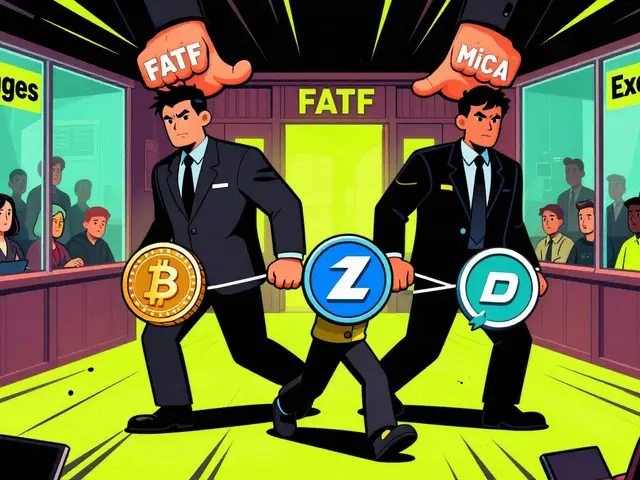
It started with regulators. Not quietly. Not slowly. The Financial Action Task Force (FATF) dropped new guidance in June 2024 that made it clear: if you can’t trace a transaction, you can’t list it. That single rule triggered a chain reaction. By the end of 2025, 73 exchanges worldwide had removed privacy coins. That’s up from just 51 in 2023. And it wasn’t random. It was systematic. One by one, exchanges from Tokyo to Toronto, London to Seoul, shut down access.
What Exactly Are Privacy Coins?
Privacy coins aren’t just Bitcoin with a mask on. They’re built differently from the start. Bitcoin’s ledger is public. Anyone can see who sent what to whom. Privacy coins use math to hide that. Monero uses ring signatures - mixing your transaction with dozens of others so even experts can’t tell which one is yours. Zcash uses zero-knowledge proofs - proving a payment happened without showing the amount, sender, or receiver. Dash and others use stealth addresses to hide who received the coins.
That’s the whole point. These aren’t flaws. They’re features. Designed for people who don’t want their financial activity tracked - journalists in authoritarian countries, small businesses protecting supplier data, or just ordinary users who believe privacy is a right, not a luxury.
Why Did Exchanges Start Delisting Them?
The answer isn’t about crime. It’s about paperwork.
Regulators don’t care if you’re a criminal. They care if they can’t prove you’re not. The FATF’s 2025 Travel Rule update forced exchanges to collect and share customer info for every transaction over $1,000. But privacy coins? They make that impossible. If you can’t see who sent the money, you can’t report it. And if you can’t report it, you’re breaking the law.
Exchanges didn’t wake up one morning and decide to punish users. They got hit with fines, license revocations, and legal threats. Binance pulled Monero, Zcash, and Dash from its European and U.S. platforms in February 2025. Kraken did the same in Canada. Japan’s entire exchange industry followed government orders. South Korea’s top five exchanges - including Upbit and Bithumb - removed six privacy coins by October 2025. OKEx Korea axed five. All cited FATF rules.
It wasn’t just the big names. Over 97 countries tightened their rules. The European Union’s MiCA regulation cut privacy coin offerings by 22%. By July 2027, the EU will ban all anonymous crypto accounts. That’s not coming. That’s scheduled.
Who Got Hit the Hardest?
Monero (XMR) took the biggest hit. It’s the most private, so it became the primary target. Zcash (ZEC) wasn’t far behind. Dash (DASH), Haven (XHV), PIVX, and BitTube (TUBE) all vanished from major platforms. Together, these coins made up 11.4% of all crypto transactions in 2025 - over $250 billion in volume. That’s not a niche market. That’s a major slice of crypto.
And yet, prices didn’t crash. They jumped. In 2025, privacy coins rose 71.6% - more than Bitcoin. Why? Because supply dropped. When exchanges delist, the number of places you can buy drops. But demand didn’t vanish. It just moved.
Where Did Users Go?
They didn’t stop using privacy coins. They just stopped using centralized exchanges.
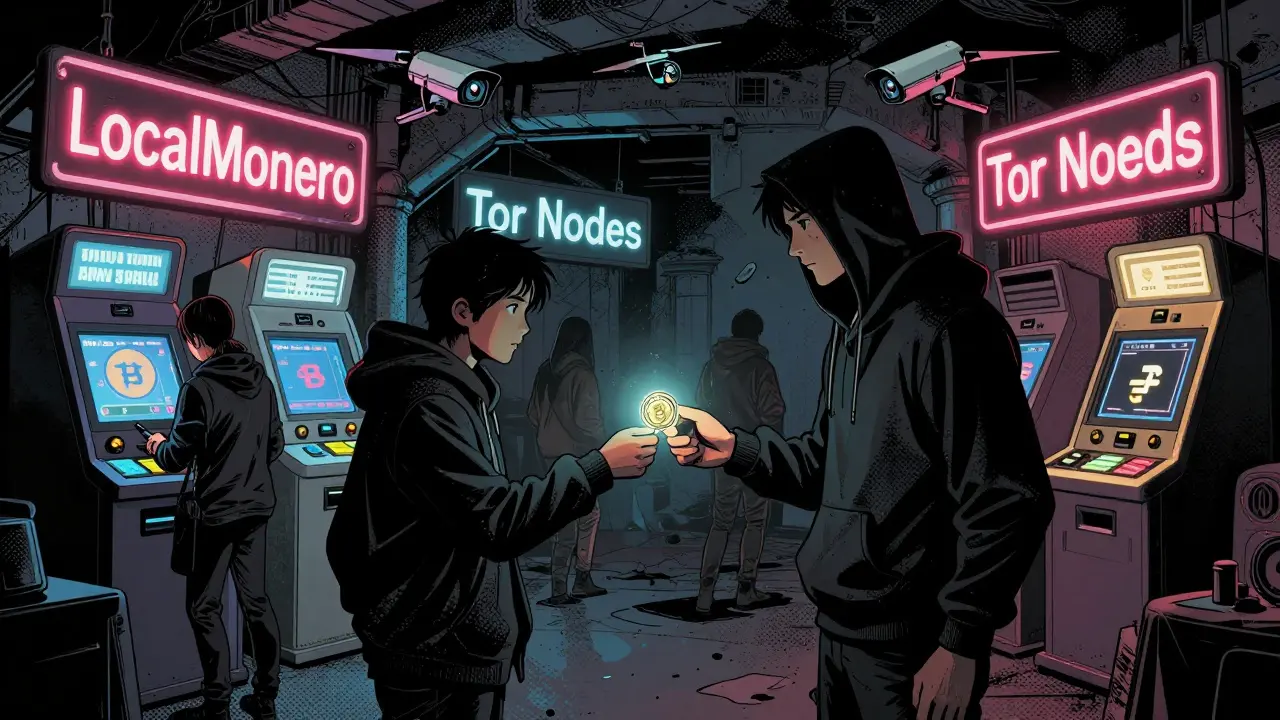
LocalMonero, a peer-to-peer trading site, saw a 19% surge in activity after the delistings. People started using decentralized exchanges (DEXs), atomic swaps, and crypto ATMs. Reddit threads filled with tips on how to buy Monero without an exchange. Twitter became a hub for advice on non-custodial wallets and Tor-enabled nodes.
Some users accepted it. They said, "If we want to be taken seriously, we have to play by the rules." Others called it betrayal. "This isn’t regulation. It’s control," one user wrote on a privacy forum. "We built crypto to escape banks. Now banks are dictating what we can own."
And here’s the irony: institutional investors - hedge funds, family offices, even some venture firms - started quietly buying privacy coins again. Not on Binance. Not on Kraken. But through private OTC desks and encrypted channels. They didn’t care about the public listing. They cared about the price action. And the fact that supply was shrinking.
Is There a Way Forward?
Not all hope is lost. Developers aren’t giving up. They’re building new versions.
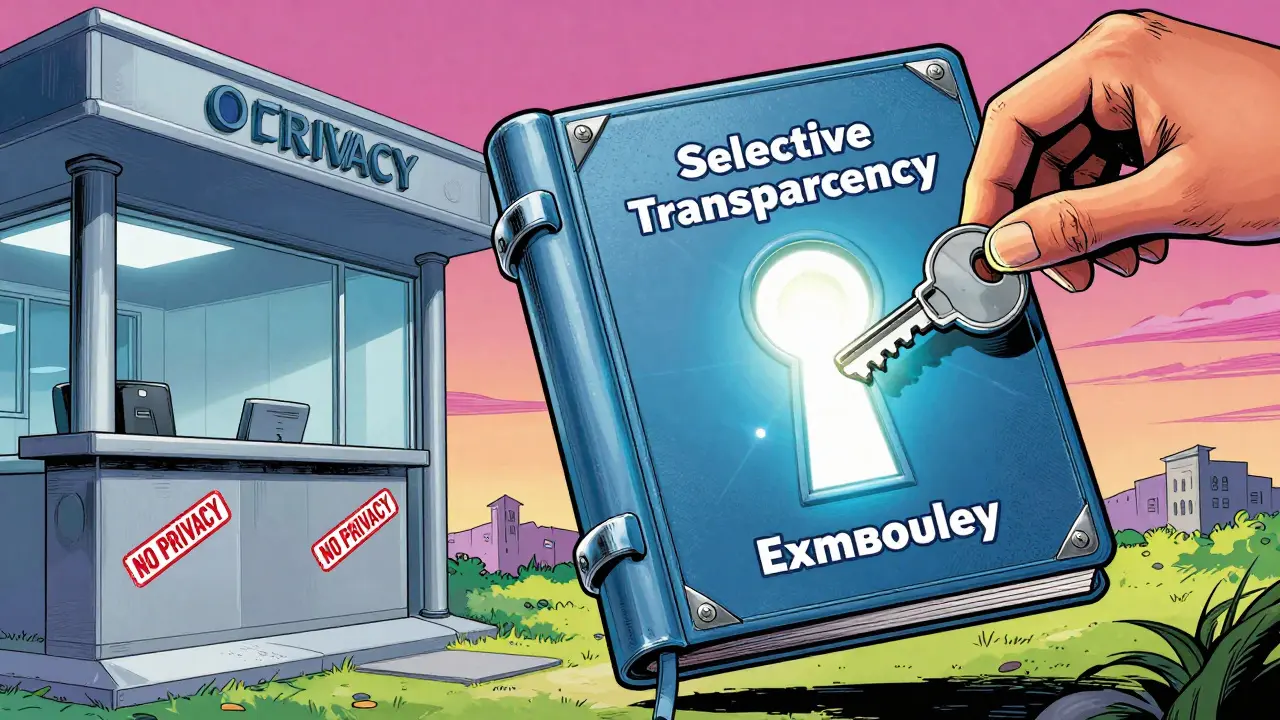
Some teams are experimenting with "selective transparency" - where users can prove compliance without revealing everything. Imagine a Zcash transaction that hides the amount from the public but shows a regulator’s audit tool a verified hash. It’s not perfect. But it’s progress.
Japan still bans privacy coins entirely. South Korea blocks them. The EU will ban them. But Switzerland and Singapore still allow them under strict KYC. Liechtenstein offers regulatory sandboxes. That’s not a loophole. It’s a path.
The future might not be fully anonymous. But it might not be fully transparent either. The next generation of privacy coins could be like a locked diary with a key only you and a regulator hold - no one else can open it, but you can prove you’re not hiding crime.
What This Means for You
If you’re a regular crypto user, this isn’t just about Monero or Zcash. It’s about what happens when regulation wins over decentralization.
Exchanges are becoming more like banks. They’re asking for ID. They’re blocking transactions. They’re following rules. That makes them safer. But it also makes them less free.
For some, that’s fine. For others, it’s the end of crypto’s original promise.
One thing’s certain: privacy coins didn’t die. They went underground. And underground markets don’t disappear. They grow.
Whether you see this as a necessary cleanup or a dangerous precedent, one truth remains: if you want to trade privacy coins today, you can’t do it on Coinbase, Binance, or Kraken. You’ll need to find another way. And that’s exactly what makes this moment so critical.
Why were privacy coins delisted from crypto exchanges?
Privacy coins were delisted because they make it impossible for exchanges to comply with global anti-money laundering (AML) and counter-terrorism financing (CTF) rules. Regulations like the FATF’s 2025 Travel Rule require exchanges to track and report customer data for transactions over $1,000. Privacy coins like Monero and Zcash use technologies like ring signatures and zero-knowledge proofs that hide sender, receiver, and amount - making compliance impossible. Exchanges chose to delist rather than risk losing licenses or facing fines.
Which privacy coins were most affected by delistings?
Monero (XMR) was the most targeted due to its strong anonymity features. Zcash (ZEC) and Dash (DASH) were also widely removed. Other coins like Haven (XHV), PIVX, and BitTube (TUBE) lost access to major platforms. These six coins accounted for over 11% of all crypto transactions in 2025, making their removal one of the largest regulatory shifts in crypto history.
Did the delistings cause privacy coin prices to crash?
No. Despite losing access to major exchanges, privacy coins rose 71.6% in value during 2025. This counterintuitive rise happened because supply on centralized platforms dropped sharply, while demand shifted to decentralized exchanges and peer-to-peer markets. Reduced liquidity on big exchanges created scarcity, driving up prices - even as trading volume moved underground.
Can you still buy privacy coins today?
Yes, but not on major centralized exchanges like Binance or Coinbase. You can still buy privacy coins through decentralized exchanges (DEXs), peer-to-peer platforms like LocalMonero, crypto ATMs in certain countries, or private OTC desks. Some regions, like Switzerland and Singapore, still allow them under strict KYC rules. The access is harder, but it’s not gone.
Will privacy coins ever return to major exchanges?
Not in their current form. Unless developers create privacy coins that can comply with AML rules - such as selective transparency systems where regulators can verify compliance without seeing full transaction details - they won’t be relisted. Some teams are working on hybrid models, but regulatory pressure remains strong. For now, the path forward is outside traditional exchanges.
What’s the difference between privacy coins and regular cryptocurrencies?
Regular cryptocurrencies like Bitcoin and Ethereum have public blockchains. Anyone can see who sent money to whom and how much. Privacy coins use advanced cryptography to hide sender, receiver, and transaction amount. Monero mixes transactions in rings. Zcash uses zero-knowledge proofs. This makes them anonymous by design - while Bitcoin is pseudonymous, meaning addresses aren’t names, they’re still trackable.
Are privacy coins illegal?
No, privacy coins themselves aren’t illegal. But many countries ban exchanges from offering them because they can’t comply with financial regulations. Japan outright banned them in 2018. The EU will ban anonymous crypto accounts in 2027. In the U.S., regulators haven’t banned them, but they’ve pressured exchanges to delist them. So while owning them isn’t illegal, trading them on regulated platforms often is.
How did regulatory agencies like FATF influence this?
The FATF issued updated guidance in June 2024 that required all regulated exchanges to collect and share customer data for transactions over $1,000 - known as the "Travel Rule." Privacy coins, by design, cannot meet this requirement because they obscure transaction details. This forced exchanges to choose: delist privacy coins or risk losing their operating licenses. The FATF’s influence turned a technical issue into a global regulatory mandate.
What role did MiCA play in the delisting wave?
The EU’s Markets in Crypto-Assets (MiCA) regulation, which took full effect in 2025, required all crypto assets traded in Europe to meet strict transparency standards. Privacy coins, which hide transaction data, failed to meet these standards. MiCA reduced privacy coin offerings by 22% across EU platforms and set the stage for the 2027 ban on anonymous crypto accounts. It was the first major legal framework to explicitly target privacy features, not just criminal use.
Is there any evidence that privacy coins are used for crime?
Yes, but not as much as often claimed. Studies show that less than 1% of all cryptocurrency transactions involve illicit activity - and privacy coins account for only a fraction of that. Most criminal crypto use still happens on Bitcoin and Ethereum because they’re more widely used. However, regulators focus on privacy coins because they’re harder to trace, not because they’re used more often. The delisting wave was driven more by regulatory feasibility than crime statistics.
Ian Plunkett
February 17, 2026 AT 18:00jennifer jean
February 17, 2026 AT 22:48Sasha Wynnters
February 19, 2026 AT 06:59Rajib Hossaim
February 19, 2026 AT 13:54Beth Erickson
February 21, 2026 AT 05:03Jenn Estes
February 21, 2026 AT 20:10Andrew Edmark
February 22, 2026 AT 13:16Charrie VanVleet
February 22, 2026 AT 23:07Geet Kulkarni
February 23, 2026 AT 01:13Lauren Brookes
February 24, 2026 AT 19:24Chris Thomas
February 25, 2026 AT 11:22James Breithaupt
February 26, 2026 AT 02:12Alex Williams
February 26, 2026 AT 17:32Sarah Shergold
February 28, 2026 AT 07:19Scott McCrossan
March 1, 2026 AT 16:20Ruby Ababio-Fernandez
March 3, 2026 AT 14:44Jeremy Fisher
March 3, 2026 AT 19:19Anandaraj Br
March 5, 2026 AT 04:57AJITH AERO
March 6, 2026 AT 06:46Angela Henderson
March 7, 2026 AT 05:27Paul David Rillorta
March 8, 2026 AT 20:18andy donnachie
March 9, 2026 AT 15:19Jennifer Riddalls
March 10, 2026 AT 13:27Kyle Tully
March 11, 2026 AT 19:04kieron reid
March 12, 2026 AT 04:00Avantika Mann
March 13, 2026 AT 17:08yogesh negi
March 14, 2026 AT 22:21Nikki Howard
March 15, 2026 AT 14:48Tarun Krishnakumar
March 16, 2026 AT 23:00