
When you think of Norway, you probably picture fjords, Northern Lights, and clean energy. What you might not think of is a country suddenly saying no to Bitcoin mining. But that’s exactly what happened in late 2025. Norway, one of the world’s biggest users of renewable electricity, announced it would block new cryptocurrency mining data centers. Not because crypto is illegal. Not because it’s dangerous. But because it’s using too much power - power that could be doing something more useful.
Why Norway Is Stopping New Crypto Mines
Norway has been a magnet for cryptocurrency miners for years. Why? Cheap, clean electricity. The country gets over 90% of its power from hydropower, and during off-peak seasons, it had surplus energy to sell. Miners from the U.S., Russia, and China moved in, setting up massive data centers that ran 24/7, using up gigawatts of electricity just to solve math problems and earn Bitcoin. But in June 2025, the government flipped the script. The Labour Party, led by Minister for Digitalization Karianne Tung, made it clear: “Cryptocurrency mining is very power-intensive and generates little in the way of jobs and income for the local community.” That’s the core of the argument. It’s not about carbon emissions - even though mining uses renewable energy, it still locks up resources that could support factories, hospitals, or tech startups that actually employ Norwegians. Think of it like this: Imagine your town has a wind farm that produces extra electricity. You could sell it to a company that uses it to run thousands of computers mining crypto. Or you could use it to power a new aluminum plant that hires 300 local workers and pays taxes for 20 years. Which one makes more sense? Norway chose the plant.What the Ban Actually Does (And Doesn’t Do)
This isn’t a total shutdown. The ban only applies to new cryptocurrency mining data centers. Existing operations can keep running - for now. That’s a key detail. The government isn’t kicking out miners already there. It’s just freezing any new ones from opening. Why this approach? Because Norway wants data. Before making permanent rules, officials needed to know how much energy miners were really using. So in early 2025, they rolled out new rules requiring all crypto mining facilities to register with the national grid operator. That gave them real numbers: how many servers, how much power, where they’re located. The results? A few dozen large facilities were identified, consuming over 1.2 terawatt-hours of electricity in 2024 alone. That’s more than the entire annual usage of a city like Stavanger. And it’s growing fast. The ban, which took effect in autumn 2025, is temporary - at least for now. The government says it will review the situation in 18 months. If mining’s impact shrinks, or if new energy-efficient tech emerges, the rules could change. But for now, the message is clear: Don’t build here.How This Compares to Other Countries
Norway isn’t alone. But its move stands out. - China banned all crypto mining in 2021, forcing operators to flee overseas. It was a total crackdown. - Russia banned mining in 10 regions in January 2025 to prevent blackouts. It was about grid stability. - New York State imposed a two-year moratorium in 2022 on mining powered by fossil fuels. Only 100% renewable-powered mines were allowed. - Kosovo banned mining outright in 2022 after rolling blackouts hit homes and hospitals. Norway’s version is different. It doesn’t ban crypto. It doesn’t ban mining. It just says: “We have better uses for this power.” It’s not about fear. It’s about priorities.
What This Means for Miners
For miners already in Norway, life goes on. But expansion is off the table. No new permits. No new buildings. No new cooling systems. Some are already looking elsewhere - Iceland, Canada, Finland. But those places are watching Norway closely. If Norway’s ban works, they might follow. And for investors? The message is loud: Don’t count on Norway as a long-term mining hub. The days of easy, cheap, renewable power for crypto are over there. The infrastructure is there. The energy is there. But the political will isn’t.Why Renewable Energy Isn’t Enough
Here’s the big misconception: “If it’s powered by renewables, it’s green.” Not quite. Yes, Norway’s hydropower is clean. But it’s also finite. The dams don’t make more water. They don’t make more electricity. And when miners suck up 1.2 TWh, that’s electricity that can’t go to: - A new data center for a Norwegian AI startup - A factory making electric buses - Heating homes during harsh winters - Charging electric vehicle networks Mining doesn’t create jobs. It doesn’t build infrastructure. It doesn’t train engineers. It just runs machines. And those machines are expensive - both to build and to power. Norway’s government looked at the numbers and asked: Is this the best way to use our natural wealth? Their answer was no.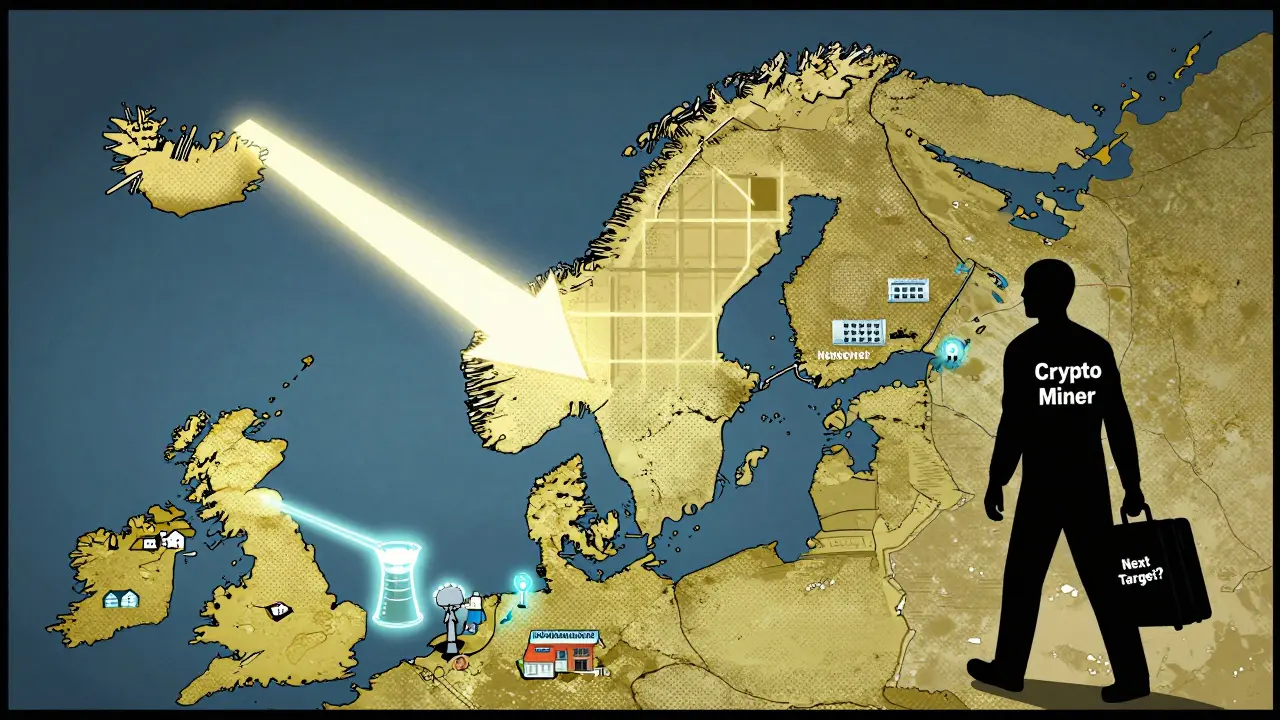
What’s Next for Norway and Crypto
The ban is just one piece of a bigger strategy. Norway is also tightening rules on crypto exchanges, requiring stricter KYC checks and reporting. Digital assets are still legal to own. You can still buy Bitcoin. You can still trade it. You just can’t mine it - not anymore. The government is also investing more in grid upgrades and energy storage. They want to make sure surplus power goes to industries that create value, not just digital coins. And as for the global ripple effect? Watch Iceland. Watch Canada. Watch Sweden. All have cheap renewable power. All have growing crypto mining scenes. All are now watching Norway to see if the ban works - and if it’s worth copying.Final Thoughts
This isn’t a war on crypto. It’s a win for smart resource management. Norway didn’t shut down mining because it’s bad. It shut it down because it’s a bad deal. The country has more than enough clean energy. But it’s not infinite. And when you have a choice between powering a machine that makes nothing and powering a factory that employs hundreds - the answer should be obvious. Norway made it.Is cryptocurrency mining illegal in Norway?
No, cryptocurrency mining is not illegal in Norway. Existing mining operations are still allowed to run. The ban only blocks the construction of new data centers. You can still own, trade, and mine Bitcoin legally - as long as you’re not building a new facility after autumn 2025.
Why did Norway choose to ban only new mining facilities?
Norway wanted to avoid sudden disruption to businesses already operating. By allowing existing mines to continue, the government gave operators time to adapt. It also gave officials space to collect accurate data on energy usage before locking in long-term rules. The temporary nature of the ban means it can be adjusted if mining’s impact changes.
Does Norway’s ban apply to all cryptocurrencies, or just Bitcoin?
The ban targets all cryptocurrency mining that is power-intensive, not just Bitcoin. While Bitcoin is the most common, Ethereum, Litecoin, and other proof-of-work coins are also affected. The government didn’t single out any specific coin - it’s about energy use, not the type of digital asset.
Can miners move their equipment from one location to another in Norway?
Yes. The ban only stops new construction. Miners can relocate existing equipment within Norway - for example, moving from one town to another - as long as they don’t build a new facility. However, any relocation still requires approval under Norway’s updated data center registration rules.
How much electricity does crypto mining use in Norway?
In 2024, cryptocurrency mining consumed over 1.2 terawatt-hours (TWh) of electricity in Norway. That’s roughly equivalent to the annual power use of a city like Stavanger, with a population of over 200,000. The government estimates this number could have doubled by 2026 if new mines were allowed to open.
What happens to miners who try to build new facilities after the ban?
Any new mining facility built after the ban took effect in autumn 2025 is considered illegal under Norway’s Planning and Building Act. Authorities can shut down construction, issue fines, and require demolition. Operators who ignore the ban risk losing their investment entirely - and potentially facing legal penalties.
Will other countries follow Norway’s lead?
Yes, several are already watching closely. Iceland, Canada, and Sweden all have abundant renewable energy and growing crypto mining sectors. If Norway’s ban leads to lower electricity prices for local industries and no major economic fallout, those countries may adopt similar rules. The goal isn’t to stop crypto - it’s to make sure energy goes where it creates the most value.

Matthew Ryan
February 8, 2026 AT 11:26Nathaniel Okubule
February 9, 2026 AT 03:58Shruti Sharma
February 9, 2026 AT 09:31Robin Ødis
February 9, 2026 AT 13:57Joshua Herder
February 10, 2026 AT 19:39Brittany Coleman
February 12, 2026 AT 17:58Molly Andrejko
February 14, 2026 AT 04:56Michael Sullivan
February 15, 2026 AT 03:53Paul Jardetzky
February 16, 2026 AT 07:11Udit Pandey
February 17, 2026 AT 19:00Sharon Lois
February 19, 2026 AT 02:46Josh Flohre
February 19, 2026 AT 23:20Jordan Axtell
February 20, 2026 AT 07:43James Harris
February 20, 2026 AT 22:28aryan danial
February 22, 2026 AT 22:03Olivette Petersen
February 23, 2026 AT 15:57Michelle Anderson
February 24, 2026 AT 01:15Kyle Pearce-O'Brien
February 24, 2026 AT 12:07Brittany Novak
February 25, 2026 AT 07:40Alisha Arora
February 25, 2026 AT 17:30Paul Gariepy
February 27, 2026 AT 15:18Jim Laurie
February 28, 2026 AT 20:36mahikshith reddy
March 2, 2026 AT 20:14Brendan Conway
March 4, 2026 AT 07:37Katie Haywood
March 6, 2026 AT 04:25Matt Smith
March 7, 2026 AT 08:17orville matibag
March 9, 2026 AT 02:14Reda Adaou
March 10, 2026 AT 21:25Nathaniel Okubule
March 12, 2026 AT 12:45