
Imagine buying a token because a dog in a meme made you laugh. Now imagine buying one because it powers decentralized finance for millions. That’s the difference between memecoins and serious cryptocurrency projects - and it’s not just about price charts. In 2026, the crypto market is split between two worlds: one built on hype, the other on code. One moves fast and crashes harder. The other moves slow but builds something that lasts.
What Are Memecoins Really?
Memecoins like Dogecoin (DOGE), Shiba Inu (SHIB), and Pepe (PEPE) didn’t start as solutions. They started as jokes. Dogecoin was created in 2013 as a parody of Bitcoin. Pepe came from a meme culture that had nothing to do with finance. Yet today, these tokens have market caps in the billions. How? Because communities believe in them - not because of tech, but because of identity.
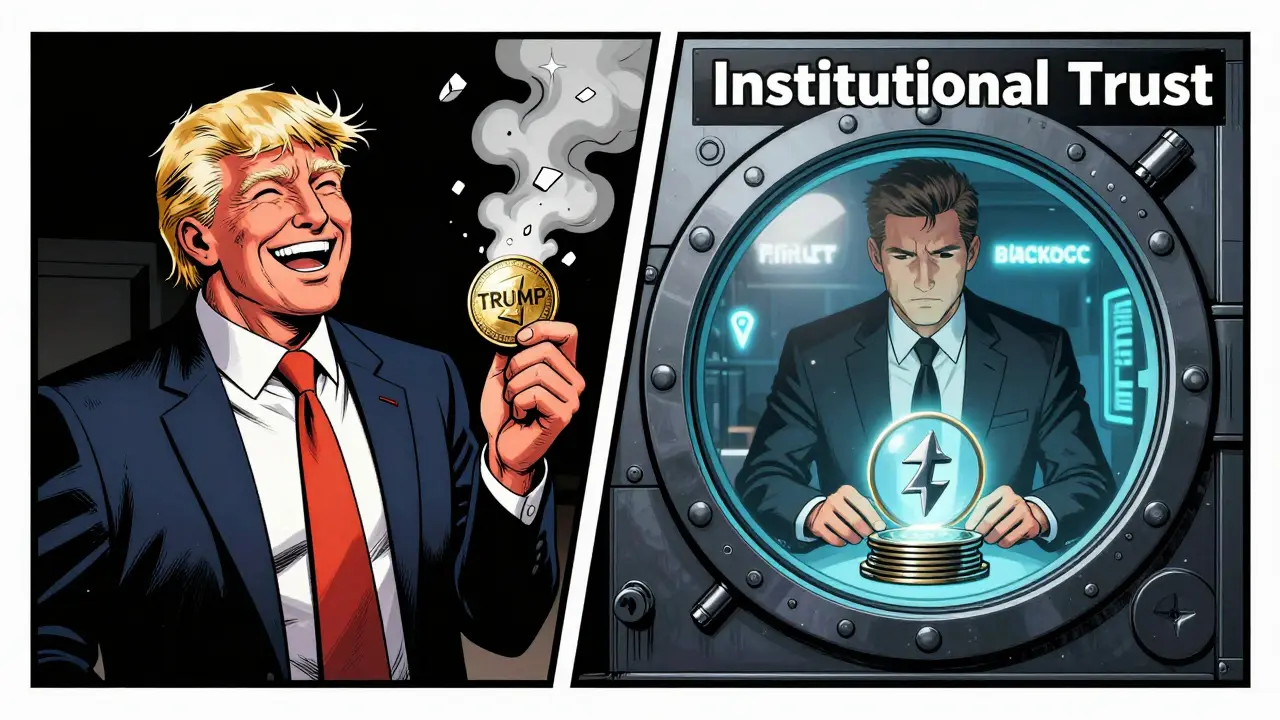
There’s no whitepaper explaining how Pepe will fix supply chain logistics. No roadmap for decentralized identity. Just a logo, a ticker, and a Twitter feed full of memes. That’s it. Their value comes from social momentum. When influencers tweet about them, prices spike. When the trend fades, they crash. In January 2025, the $TRUMP memecoin lost over 60% of its value in 48 hours after a viral surge. That’s not volatility - that’s emotional trading.
And here’s the scary part: most memecoins are built on existing blockchains. They don’t improve the tech. They just ride it. Many have no security audits. Some are outright scams. In 2024, hackers stole $2.2 billion from poorly coded meme tokens. If you’re holding one, you’re betting on luck, not logic.
What Makes a Serious Cryptocurrency Project?
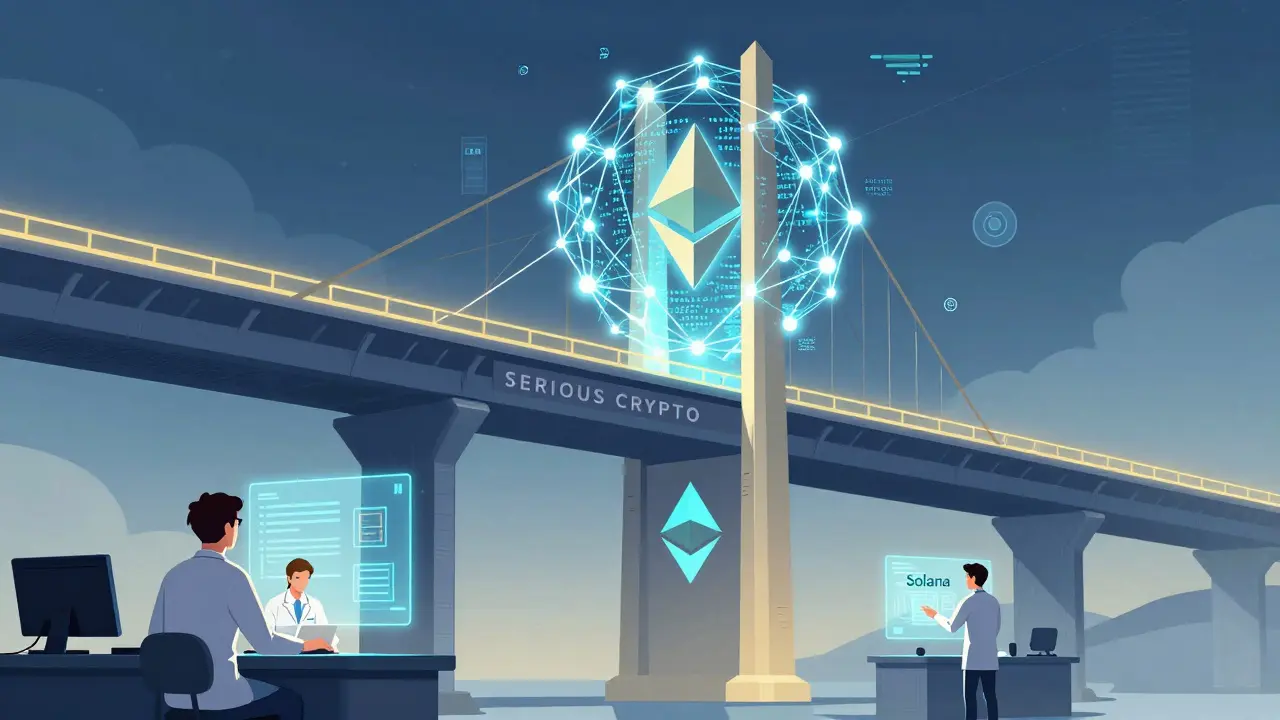
Now look at Ethereum (ETH), Cardano (ADA), Polkadot (DOT), and Solana (SOL). These weren’t created to be funny. They were built to solve problems. Ethereum introduced smart contracts - self-executing agreements that power DeFi, NFTs, and DAOs. Cardano uses peer-reviewed research to improve security and scalability. Polkadot connects different blockchains so they can talk to each other. Solana handles thousands of transactions per second at low cost.
These projects have teams. They publish quarterly updates. They hold developer conferences. They release code on GitHub. They run bug bounties. They get audited by firms like CertiK and SlowMist. Their tokens aren’t just speculative assets - they’re utility keys. You stake ETH to help secure the network. You use DOT to vote on upgrades. You pay fees in SOL to run dApps.
And it shows in performance. While memecoins surge and vanish, Ethereum has survived four major market cycles since 2017. Solana, despite outages, still processes over 650 million transactions in a single month. These aren’t lucky bets. They’re infrastructure.
How Do They Compare?
Let’s break it down. Here’s what separates memecoins from serious projects - side by side.
| Feature | Memecoins | Serious Cryptocurrency Projects |
|---|---|---|
| Origin | Internet memes, viral trends | Solving real-world problems |
| Technology | Usually no innovation; built on existing chains | Advanced features: smart contracts, interoperability, scaling |
| Security | Rarely audited; high risk of rug pulls | Regular audits, bug bounties, formal verification |
| Development | Often abandoned after launch | Continuous updates, long-term roadmaps |
| Use Case | Trading, speculation, community culture | DeFi, payments, governance, enterprise adoption |
| Investor Profile | Short-term traders, social media followers | Long-term holders, institutions, developers |
| Price Driver | Hype, influencer tweets, FOMO | Adoption, network usage, technical progress |
One is a carnival ride. The other is a bridge.
Who Wins in 2026?
Memecoins aren’t disappearing. In fact, they’re thriving - but not because they’re valuable. They’re thriving because they’re fun. People want to feel part of something. A meme coin gives them a tribe. A Dogecoin holder isn’t just holding a token - they’re part of a global inside joke. That’s powerful.
But here’s what’s changing in 2026: regulation. The SEC now requires memecoins to meet basic compliance standards. Creators must disclose tokenomics, team info, and risks. That’s killing the wild west. Many low-effort meme tokens are vanishing. Only the ones with real communities - like DOGE and SHIB - are surviving. Even then, they’re more cultural artifacts than investments.
Serious projects? They’re getting stronger. Ethereum’s Layer 2 scaling is handling millions of transactions daily. Solana’s network is more stable than ever. New projects like Arbitrum and Polygon are becoming the backbone of Web3 apps. Institutions are starting to allocate funds. BlackRock filed for an Ethereum ETF. Fidelity is letting clients stake ETH in retirement accounts.
And the numbers back it up. Token Metrics projects ETH at $5,700 and SOL at $630 in 2026 - based on user growth, liquidity, and capital flow. Not guesses. Not hype. Math.
What Should You Do?
If you’re looking to get rich quick - go ahead. Buy a memecoin. Just know this: 95% of them will go to zero. The ones that make it? They’re the exceptions. Shiba Inu made early holders millions. But for every SHIB, there are 10,000 tokens that vanished in a week.
If you’re looking to build wealth over time? Focus on projects with:
- Active development teams
- Real-world usage (not just trading volume)
- Third-party security audits
- Clear tokenomics (no infinite supply)
- Community that builds, not just memes
Don’t ignore memecoins entirely. A small portion of your portfolio - say 5% - can be for fun. But never risk money you can’t afford to lose. And never confuse a viral tweet with a business model.
Why This Matters Beyond Price
It’s easy to get caught up in charts. But crypto isn’t just about money. It’s about who controls the future of the internet.
Memecoins are a mirror. They show us what people want right now: entertainment, rebellion, quick wins. They’re the pop songs of crypto - catchy, fleeting, and loud.
Serious projects are the symphonies. They’re complex. They take time. They’re not always popular. But they shape the structure of what comes next. They’re the reason you can send money across borders without a bank. The reason you can own digital art without a middleman. The reason governments are scrambling to understand blockchain.
One side is noise. The other is infrastructure. And in the long run, infrastructure wins.
Are memecoins a good investment?
Most memecoins are not good investments - they’re speculative bets. While a few like Dogecoin and Shiba Inu have survived for years, the vast majority lose value within months. Only invest money you’re willing to lose completely. Treat them like lottery tickets, not assets.
Can memecoins ever become serious projects?
Rarely. Dogecoin and Shiba Inu are exceptions because they built real ecosystems - wallets, charities, NFTs, and community tools. But they started as jokes. Most memecoins never evolve beyond hype. If a memecoin adds smart contracts, audits, or real utility, it’s no longer a memecoin - it’s a new project.
Why do people still buy memecoins if they’re so risky?
Because they’re fun, social, and emotionally rewarding. Buying a memecoin feels like joining a movement. People aren’t just buying tokens - they’re buying belonging. The thrill of a quick 10x return is addictive. But emotion doesn’t pay bills. Discipline does.
What’s the safest serious cryptocurrency to invest in right now?
Ethereum remains the most established, with the largest developer community, the most dApps, and the strongest institutional backing. Solana is growing fast with high throughput and low fees. Cardano offers deep research-backed security. The safest approach is diversifying across 2-3 proven projects with real usage, not just price.
How do I avoid rug pulls in memecoins?
Check if the contract is renounced (no owner can change it), if liquidity is locked, and if the team is doxxed (public identities). Use tools like RugDoc or TokenSniffer. If the project has no GitHub, no audits, and no clear roadmap - walk away. No meme is worth losing your money over.
Will regulation kill memecoins?
It’s already killing the worst ones. In 2025, the SEC started requiring memecoins to disclose team details, token supply, and risks. Many anonymous projects disappeared. The ones that remain - like DOGE and SHIB - are surviving because they’re too big to ignore. Regulation won’t kill memecoins, but it will clean up the fraud.
Ryan Depew
January 22, 2026 AT 23:03Look, I get the hype. But if you’re holding PEPE because some guy on X said ‘to the moon,’ you’re already losing. I’ve seen 300 meme coins die in the last year. Zero utility, zero audits, zero future. Just pure dopamine gambling.
Nadia Silva
January 24, 2026 AT 12:54It’s not about memecoins vs serious projects. It’s about civilization choosing between spectacle and substance. One is a fireworks show. The other is the foundation of a building. We’re not just investing in tokens-we’re voting on what kind of future we want.
HARSHA NAVALKAR
January 26, 2026 AT 12:52my friend bought shib at 0.000001 and now he’s eating ramen again. i still laugh. but i also know he’s not alone. that’s the real magic. not the money. the feeling.
Andy Marsland
January 27, 2026 AT 07:02Let’s be brutally honest here. The entire crypto space is a Ponzi scheme wrapped in blockchain buzzwords. Ethereum? It’s just Bitcoin with more complexity and higher gas fees. Solana? A glorified PayPal for degens. The only thing that matters is who controls the nodes-and it ain’t you. You’re just a data point in a corporate surveillance ledger dressed up as decentralization.
Shamari Harrison
January 29, 2026 AT 02:57For anyone new: if you’re thinking of dipping into crypto, start with ETH or BTC. Not because they’re ‘safe’-nothing here is-but because they’ve survived every crash since 2013. Learn how wallets work. Learn what a private key is. Don’t trust a meme. Trust the code. And if you don’t understand the code, don’t put money in it. There’s zero shame in waiting.
Roshmi Chatterjee
January 30, 2026 AT 23:09My dad thinks crypto is just digital money. I showed him DOGE and he laughed so hard he cried. Then I showed him how Ethereum runs hospitals in Kenya with smart contracts. He didn’t say a word for 10 minutes. That’s the gap. One’s a joke. The other’s changing lives.
Deepu Verma
February 1, 2026 AT 14:52Don’t hate on memecoins. They’re the gateway drug to crypto. I got into blockchain because of Dogecoin. Now I run a node for Cardano. Memecoins got me curious. Real tech kept me. Every expert started somewhere-even if it was with a shiba inu.
MICHELLE REICHARD
February 3, 2026 AT 12:38Wow. Another ‘serious project’ apologist. Let’s not pretend Ethereum isn’t just a speculative bubble with a whitepaper. The only reason it’s still alive is because banks are using it to launder money under the guise of ‘DeFi.’ You think they care about decentralization? They care about control.
Julene Soria Marqués
February 4, 2026 AT 22:38Why do people still buy memecoins? Because they’re bored. They’re lonely. They want to feel like they’re part of something. I get it. I used to buy Dogecoin just to post memes. Then I realized I was spending more time scrolling than living. I sold everything. Best decision ever.
Abdulahi Oluwasegun Fagbayi
February 5, 2026 AT 14:31Memecoins are like street music. Loud. Chaotic. Sometimes beautiful. Serious coins are the symphony. You don’t need to like both. But if you only listen to one, you miss half the world.
Linda Prehn
February 6, 2026 AT 18:28So you’re saying the only reason people hold memecoins is because they’re emotionally attached? That’s cute. But emotion doesn’t scale. And when the next crash hits, those ‘tribes’ will vanish faster than a TikTok trend. Just wait. It’s coming.
Adam Lewkovitz
February 6, 2026 AT 23:55US is winning. China’s banning crypto. Europe’s regulating it into oblivion. But here? We still have freedom to gamble. And that’s why memecoins thrive. It’s not stupid-it’s American. You don’t like it? Move to Canada.
Brenda Platt
February 8, 2026 AT 17:48Just wanted to say-thank you for this post. 🙏 I’m a single mom who lost $800 on a memecoin last year. I cried. Then I read your breakdown. Bought 0.02 ETH. Now I’m learning Solidity. It’s not about the money. It’s about believing you can build something better. You gave me that.
steven sun
February 9, 2026 AT 15:50memecoins r fun but i just dont get why people think they r investmnts. its like buying a pokemon card and calling it a stock. lol
Athena Mantle
February 10, 2026 AT 05:13What if the real revolution isn’t in the tech… but in the way we feel? Memecoins give people belonging. Serious coins give them control. But belonging? That’s the drug that keeps the system alive. We’re not investing in blockchain. We’re investing in identity. And that’s scarier than any rug pull.
Paru Somashekar
February 11, 2026 AT 05:01While the emotional appeal of memecoins is undeniable, one must not overlook the fundamental requirement of cryptographic security and economic sustainability. The absence of formal verification and transparent governance mechanisms renders most such tokens inherently unstable and ethically dubious as financial instruments.
Taylor Mills
February 11, 2026 AT 17:59Everyone’s talking about ETH and SOL like they’re gods. Meanwhile, the real innovation is happening in privacy coins and ZK-rollups. You’re all stuck in 2021. The future isn’t in hype-it’s in anonymity. And no, I won’t name the projects. Figure it out.
Arielle Hernandez
February 12, 2026 AT 11:57Thank you for this clear, well-researched breakdown. In my work with developing nations, I’ve seen how blockchain infrastructure enables financial inclusion where banks fail. Memecoins? They’re digital confetti. The real progress is in the quiet, steady work of developers building systems that empower the unbanked. That’s worth supporting.
tim ang
February 12, 2026 AT 14:46Just started learning crypto last month. This post was my first real guide. I bought 0.005 ETH. Not to get rich. Just to be part of the future. Thanks for not talking down to us newbies. You’re the reason I’m still here.
katie gibson
February 13, 2026 AT 01:39Okay but what if memecoins are the new punk rock? Loud. Anarchic. Anti-establishment. And what if serious coins are just corporate jazz? Polished. Predictable. Safe. Maybe we need both. One to burn down the system. One to rebuild it. Don’t hate the noise. It’s the scream before the revolution.
Ashok Sharma
February 14, 2026 AT 05:47Respected sir, the distinction drawn herein is both logical and commendable. However, one must also consider the regulatory environment in India, where speculative trading in cryptocurrencies remains legally ambiguous. Caution is advised for all participants.
Margaret Roberts
February 15, 2026 AT 01:16Everything you said is a lie. The Fed owns Ethereum. The SEC is behind all the ‘serious projects.’ Memecoins are the only real truth because they’re decentralized by accident. They’re the only thing the system can’t control. You’re being manipulated to fear the fun. Wake up.
Tselane Sebatane
February 15, 2026 AT 15:17I come from a place where people don’t have electricity but they have phones. I saw a woman in Cape Town buy a memecoin with her airtime credit because she thought it would make her rich. She didn’t know what blockchain was. But she believed. And that belief? That’s more powerful than any whitepaper. Maybe the future isn’t built by coders. Maybe it’s built by dreamers who don’t know they’re dreaming.
Jonny Lindva
February 17, 2026 AT 15:03Love this. I’ve got 95% in ETH and SOL, 5% in DOGE. The DOGE is my ‘fun money.’ I treat it like a lottery ticket. I don’t check it. I just smile when I see it. Keeps me grounded. Thanks for reminding me why balance matters.
Harshal Parmar
February 19, 2026 AT 14:45bro i bought shib when it was 0.00000001. i didn’t sell. i just kept it. now i got like 12k coins. not rich. but i feel like i won. not because of money. because i believed when no one else did. that’s the real win.
Darrell Cole
February 20, 2026 AT 16:21You call memecoins noise? You call serious projects infrastructure? You’re wrong. Both are distractions. The real revolution is happening off-chain-in AI agents, in decentralized identity, in tokenized real estate. You’re all arguing about the wrapper while the product got upgraded. Wake up. The game changed. Again.
Matthew Kelly
February 22, 2026 AT 04:23My 70-year-old uncle bought Dogecoin after his grandkid showed him the meme. He now checks his portfolio every morning. He’s happier. He talks to people. He feels included. That’s not a bug. That’s a feature. Maybe the future isn’t just about utility. Maybe it’s about humanity.
Dave Ellender
February 23, 2026 AT 03:03Well written. The analogy of carnival ride vs bridge is spot on. I’ve watched both sides for years. The bridge takes longer to build. But it’s the only one that survives the storm.
Mathew Finch
February 24, 2026 AT 03:17Let’s be real: the only reason memecoins exist is because Western capitalism needed a new way to extract value from the bored and the gullible. The ‘community’ is a marketing tactic. The ‘culture’ is a data farm. The ‘fun’ is a trap. Don’t be fooled. This isn’t rebellion. It’s monetized distraction.