
Nigeria doesn’t have a list of banned crypto exchanges like a blacklist you can print out. Instead, it has a license-or-stop system. If a crypto exchange doesn’t have permission from the Securities and Exchange Commission (SEC), it’s effectively banned from operating in Nigeria. That’s the rule. No license? No Naira deposits. No withdrawals. No local customer support. No legal protection for users.
How Nigeria’s Crypto Rules Changed in 2025
Before March 2025, Nigeria’s crypto scene was chaotic. Banks were told not to work with crypto companies. Exchanges got blocked. People used VPNs just to log in. But in March 2025, President Bola Ahmed Tinubu signed the Investments and Securities Act (ISA 2025). This wasn’t just a tweak-it rewrote the rules. Digital assets are now legally classified as securities. That means crypto exchanges are treated like stockbrokers. They need a license. No exceptions.The old ban from 2021, when the Central Bank of Nigeria (CBN) told banks to cut off crypto firms, was officially lifted in late 2023. But the real shift came with ISA 2025. Now, it’s not about blocking websites-it’s about controlling who gets to play. The SEC became the gatekeeper. If you want to serve Nigerian customers, you apply. If you don’t, you’re out.
Which Exchanges Are Actually Banned?
There’s no official list of banned names. But here’s what you can be sure of: any exchange that hasn’t applied for or received an SEC license is operating illegally in Nigeria. That includes most international platforms that haven’t jumped through Nigeria’s hoops.Binance is the biggest example. In February 2024, Binance stopped Naira trading on its peer-to-peer platform. Nigerian telecom providers blocked access to binance.com. But here’s the catch: you can still log into your Binance account. You can still trade Bitcoin for Ethereum. You can still withdraw crypto to your wallet. You just can’t deposit or withdraw Naira. That’s not a full ban-it’s a restriction. Binance still has Nigerian users, but they’re stuck in a gray zone. To access the site, many use VPNs, which violates Nigeria’s new rules.
Other international exchanges like Kraken, Coinbase, and Bybit haven’t applied for Nigerian licenses. So technically, they’re banned from offering Naira services. You won’t find them listed on the SEC’s approved platforms. If you try to deposit Naira through them, your bank will likely block it. And if you get caught using them for large-scale trading without a license, you could face penalties under the new Nigeria Tax Administration Act (NTAA 2025).
Which Exchanges Are Legal?
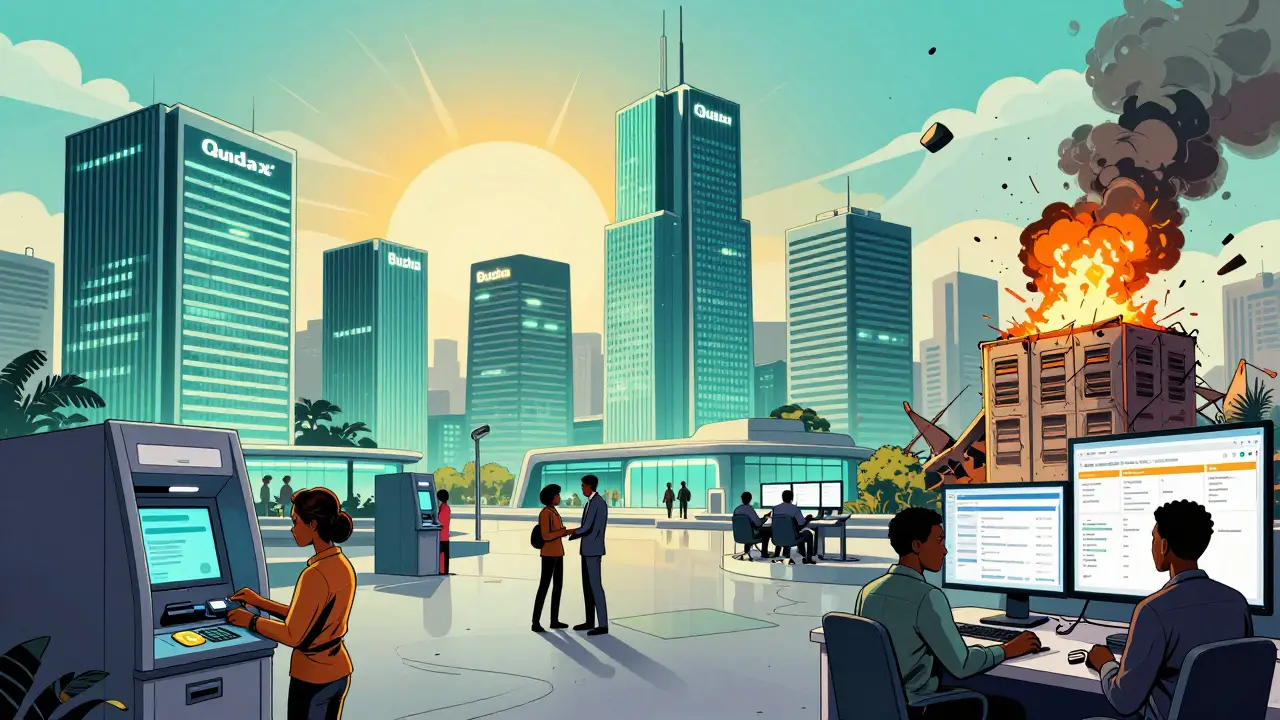
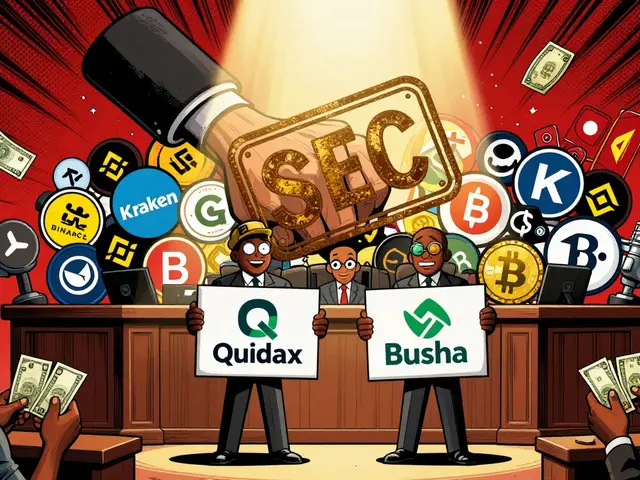
Only two exchanges have received full SEC approval as of early 2026: Quidax and Busha. These are Nigerian-based platforms that built their systems to meet the SEC’s strict standards. They’ve implemented full KYC (Know Your Customer), AML (Anti-Money Laundering), and transaction monitoring. They report to regulators. They’ve hired compliance officers. They’re auditable.Because they’re licensed, users can deposit and withdraw Naira directly. Customer support works within Nigerian time zones. Disputes can be escalated to the SEC. Many users report better service on these platforms compared to the chaos of unregulated exchanges before 2025.
Other local platforms like Luno and Coinmama are rumored to be in the licensing pipeline, but as of now, only Quidax and Busha are confirmed. If you want to trade legally in Nigeria, these are your only two options.
What Happens If You Use a Banned Exchange?
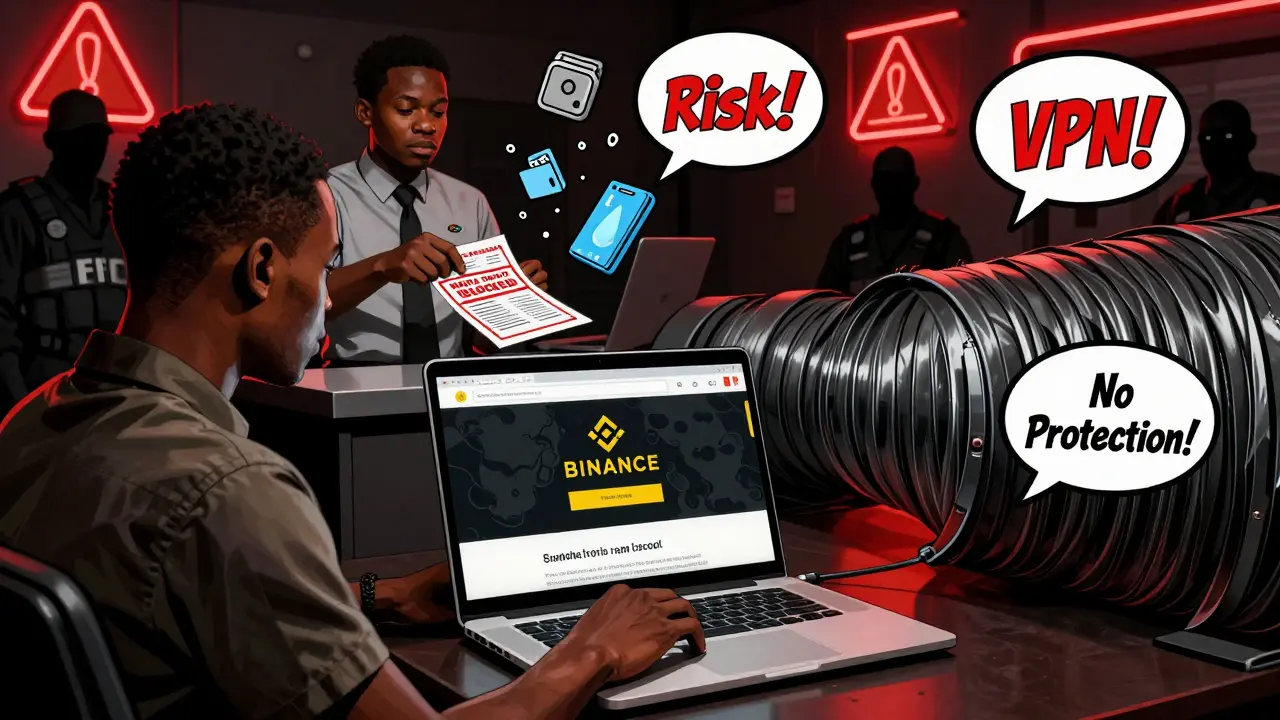
Using an unlicensed exchange isn’t a crime for the average user. But it’s risky. If you deposit Naira into a platform like Kraken or Binance (for trading), your bank might freeze the transaction. If you’re doing large-volume trades, the Economic and Financial Crimes Commission (EFCC) could investigate. Under NTAA 2025, which kicks in fully in 2026, you could be fined if you fail to report crypto income.For exchanges, the penalties are brutal. Unlicensed operators face immediate shutdown. The SEC can freeze assets, seize equipment, and refer cases to law enforcement. The first month of non-compliance costs ₦10 million ($6,693). Each month after that? Another ₦1 million ($669). That’s not a warning-it’s a death sentence for small operators.
Why Nigeria Chose This Path
Nigeria received $92.1 billion in cryptocurrency value between July 2024 and June 2025. That’s more than any other African country. Trying to ban crypto entirely was impossible. People were already using it to send money, pay bills, and protect savings from inflation.So instead of fighting adoption, Nigeria decided to regulate it. The goal? Protect users, stop scams, and bring crypto into the formal economy. The new rules ban Ponzi schemes outright. Regulators can now access telecom records to track fraud. They can freeze accounts linked to illegal activity. And they’re working with banks to make compliance easier for legitimate businesses.
This isn’t about stopping crypto. It’s about controlling it. Nigeria wants to be a fintech hub, not a black market. The licensed exchanges are proof that it’s possible to have innovation without chaos.
What About VPNs and Workarounds?
Many Nigerians still use VPNs to access Binance or other unlicensed platforms. It’s common. It’s easy. But it’s not legal. The SEC has made it clear: using a VPN to bypass restrictions violates the ISA 2025. While individual users aren’t being arrested for this, the message is loud: if you’re using an unlicensed exchange, you’re doing so at your own risk.Some users say they prefer Binance because it’s faster and cheaper. But they’re trading without legal protection. If Binance freezes your account or loses your funds, there’s no Nigerian authority to appeal to. With Quidax or Busha, you can file a complaint and get a response within days.
The Future of Crypto in Nigeria
More exchanges are applying for licenses. The SEC is reviewing dozens of applications. International platforms are starting to see Nigeria as a real market-not just a loophole. The licensing process takes 6 to 12 months. It’s expensive. It’s complex. But for those who make it through, the payoff is huge.By 2027, Nigeria could have 10 or more licensed exchanges. Stablecoins, DeFi protocols, and even NFT marketplaces might get their own rules soon. The framework is already in place. The regulators are learning. The market is growing.
For Nigerian crypto users, the choice is clear: use a licensed exchange and get protection, or use an unlicensed one and take your chances. The law isn’t going away. It’s getting stronger.
Pamela Mainama
February 2, 2026 AT 06:13Legal or not, if you're sending remittances or saving in crypto, you're doing what the system failed to do.
Richard Kemp
February 4, 2026 AT 00:54so binance still works if you use a vpn? weird that they just block naira but not the rest lol
Christopher Michael
February 4, 2026 AT 13:22Let me be clear: Nigeria didn’t ban crypto-they reclassified it. That’s not suppression; it’s integration. The SEC isn’t the enemy; it’s the bridge between chaos and legitimacy. If you think this is heavy-handed, look at how many scams collapsed after March 2025. The people who screamed the loudest? They were the ones running rug pulls.
Quidax and Busha? They’re not just exchanges-they’re compliance engines. KYC? Check. AML? Double-check. Transaction monitoring? Triple-check. And guess what? Users aren’t complaining. They’re getting faster support, real dispute resolution, and bank-grade security. That’s not a restriction-it’s an upgrade.
Meanwhile, Kraken and Coinbase? They’re sitting on their hands, waiting for Nigeria to beg them to come back. But Nigeria’s not begging. It’s building. And the people? They’re adapting. They’re learning. They’re choosing safety over convenience.
And yes-using a VPN to bypass the rules? Technically illegal. But the real crime? Thinking that global platforms owe you access. You don’t get to use a service that ignores your country’s laws and then cry when you lose money. That’s not freedom. That’s recklessness.
The future isn’t about bypassing regulation. It’s about participating in it. Nigeria’s not shutting crypto out-it’s letting the serious players in. And that’s exactly how you build a fintech hub.
Raymond Pute
February 4, 2026 AT 14:22Look, I get that Nigeria wants to control the narrative, but this whole 'license-or-stop' thing feels like a power play disguised as regulation. You’re telling me that a bunch of Nigerian startups with half a dozen employees and a WordPress site are now on equal footing with Binance’s global infrastructure? That’s not regulation-that’s favoritism wrapped in compliance jargon.
And let’s be real: if you’re forcing people to use Quidax or Busha because they're the only two licensed, you’re not protecting users-you’re creating a monopoly. Who’s auditing those guys? Who’s checking if they’re not just another layer of rent-seeking? The SEC? Please. They’re the same people who let banks freeze accounts for five years before this.
Also, the whole 'you can still trade BTC for ETH' thing? That’s not a gray zone-that’s a loophole with a neon sign. If you can still use the platform, why ban the Naira? It’s not about compliance-it’s about control. And control doesn’t equal safety. It equals dependency.
And don’t even get me started on the VPN thing. People aren’t using it because they’re criminals-they’re using it because the alternatives are slow, clunky, and lack liquidity. If you want people to stop using VPNs, make the licensed platforms better. Don’t punish the users for the system’s failure to innovate.
Also, $92 billion in crypto value? That’s not adoption-it’s desperation. People aren’t choosing crypto because they love blockchain. They’re choosing it because inflation is eating their salaries alive. Regulation doesn’t fix that. It just puts a fancy label on the bandage.
Jack Petty
February 5, 2026 AT 10:47SEC isn’t regulating crypto-it’s weaponizing it. You think they’re protecting users? Nah. They’re building a surveillance state under the guise of 'financial stability.' Every transaction on Quidax? Logged. Every withdrawal? Tracked. Every phone number? Linked to your ID. This isn’t finance. It’s behavioral control.
And don’t tell me 'it’s for anti-money laundering.' If they wanted that, they’d have regulated stablecoins and DeFi. Instead, they picked the easiest targets: retail traders. The big players? They’re already offshore. The little guy? Now he’s got a government dossier.
Also, 'Binance still works if you use a VPN'? Yeah, because the SEC can’t touch servers in Seychelles. But they can freeze your bank account. That’s not justice. That’s extortion.
And the 'licensed exchanges' are just frontmen for the state. Who do you think owns the backend of Quidax? Hint: it’s not the founders. It’s the same people who told banks to block crypto in 2021. Now they’re the gatekeepers. Same playbook. New uniforms.
Joshua Clark
February 7, 2026 AT 02:16I’ve been using Busha since March 2025, and honestly? It’s been a game-changer. Before, I’d lose days waiting for withdrawals, dealing with shady P2P traders who’d ghost you after you sent Naira. Now? I deposit Naira, trade in minutes, withdraw in under 10. Customer support actually replies within hours, not days. And when I had an issue with a failed transfer? They reversed it within 24 hours and apologized. That’s something Binance never did for me.
Yes, the KYC is annoying. Yes, I had to upload my BVN, utility bill, and a selfie holding my ID. But guess what? I haven’t been scammed since. Not once. And that’s more than I can say for the wild west days.
Also, the SEC’s enforcement? It’s not perfect-but it’s real. Last month, they shut down three fake exchanges that were pretending to be Nigerian. One of them had a website that looked just like Quidax. People lost over ₦200 million. That’s not hypothetical. That’s real people. And now? Those platforms are gone. Permanently.
I get that people miss the old days. But the old days were a minefield. I’d rather have slower withdrawals and real protection than fast trades and zero recourse.
And yeah, I use a VPN sometimes to check Binance for arbitrage-but I don’t deposit. I’m not stupid. I know the rules. And I’m not risking my money on a platform that doesn’t answer to Nigerian law.
Gavin Francis
February 8, 2026 AT 15:53Been in Lagos since 2023. Saw the chaos. Saw the scams. Saw people lose life savings. Now? My cousin uses Busha to send money to her mom in Kano. No drama. No delays. No sketchy middlemen. This isn’t perfect-but it’s progress. 🙌
Freddy Wiryadi
February 9, 2026 AT 04:02It’s funny how people treat crypto like it’s a right. It’s not. It’s a tool. And like any tool, it’s regulated when it impacts the economy. Nigeria didn’t ban crypto-they just stopped letting it be a free-for-all. The fact that you’re still mad about it means you were using it to dodge taxes or launder cash. Or both. 😅
Quidax and Busha? They’re not glamorous. But they’re real. They pay taxes. They hire accountants. They answer to regulators. And guess what? Their users are actually safer. I’ve seen friends lose money on Binance P2P. I’ve never heard of someone losing money on Busha.
Also, VPNs? Sure, they’re easy. But if you’re using one to bypass legal restrictions, you’re not a rebel-you’re a rule-breaker. And rules exist for a reason. Even if they’re annoying.
And yeah, I know Binance is faster. But speed doesn’t mean safety. And safety? That’s worth waiting for.
Dahlia Nurcahya
February 10, 2026 AT 12:34I used to be skeptical about the licensing thing. Thought it was just another way to control us. But after my uncle got scammed out of ₦800k on a fake exchange that looked like Binance, I changed my mind. Now I only use Quidax. It’s not perfect-but at least when something goes wrong, someone answers the phone. And that’s more than I can say for the old days.
Also, the SEC isn’t perfect, but they’re trying. That’s more than I can say for most governments.
Elle M
February 11, 2026 AT 02:44Of course Nigeria ‘regulates’ crypto. Because when your economy is collapsing, the only thing left to control is what your people use to survive. Sad. Pathetic. But predictable.
Katie Teresi
February 12, 2026 AT 09:32Let me get this straight: you’re praising a government that froze bank accounts for 3 years, then suddenly became the crypto police? This isn’t regulation-it’s opportunism. They didn’t want crypto. They wanted control. And now they’re charging you for the privilege of being exploited.
Moray Wallace
February 12, 2026 AT 14:04Interesting approach. Not perfect, but better than outright bans. At least now there’s accountability. Still, the licensing cost must be insane for small players.
mary irons
February 13, 2026 AT 20:39They say ‘protect users’ but they’re really just creating a state-controlled financial gate. You think your data is safe with Quidax? It’s not. It’s in a government database. And that’s scarier than any scam.
christal Rodriguez
February 15, 2026 AT 20:39Regulation is just control with a better PR team.
Gareth Fitzjohn
February 16, 2026 AT 20:36Legal or not, the fact that people still use Binance shows demand. Regulation should adapt, not suppress.
Wayne mutunga
February 18, 2026 AT 05:58Hard to judge from outside Nigeria, but it seems like they’re trying to build something stable. Not perfect, but better than chaos.
Gary Gately
February 20, 2026 AT 04:33Quidax is kinda clunky but at least my money doesn’t vanish into thin air anymore. Still wish they had better mobile app.
Mark Ganim
February 21, 2026 AT 09:09THIS ISN’T REGULATION-IT’S A CULTURAL SHIFT. NIGERIA DIDN’T JUST CHANGE LAWS-IT CHANGED THE NARRATIVE. FOR DECADES, THE WORLD SAID ‘AFRICA CAN’T HANDLE FINTECH.’ NOW? NIGERIA’S BUILDING A SYSTEM THAT’S MORE TRANSPARENT THAN MOST EUROPEAN MARKETS. AND YOU’RE COMPLAINING ABOUT KYC?!
Let me tell you something: in 2021, I watched my neighbor lose his entire life savings to a fake crypto ‘investment’ scheme. He didn’t even know what blockchain was. He just saw ‘get rich quick’ on WhatsApp. Now? He uses Busha. He knows his money is safe. He knows who to call if something goes wrong. That’s not oppression. That’s dignity.
And yes, the SEC is slow. Yes, the licensing fees are high. But guess what? The scams are GONE. The fake exchanges? Vanished. The P2P fraud? Cut by 80%. That’s not a cost-it’s a victory.
And if you think Binance is better? Fine. But tell me: when your account gets frozen and you have no Nigerian support? Who do you call? The SEC? No. You call a ghost. That’s not freedom. That’s abandonment.
This isn’t about control. It’s about responsibility. And Nigeria? They’re finally taking it.
Tressie Trezza
February 22, 2026 AT 15:56I used to think regulation was the enemy. Now I see it as the only thing keeping me from getting ripped off. Busha isn’t flashy, but it’s real. And that’s enough.
Brianne Hurley
February 23, 2026 AT 15:09Oh wow, so now we’re supposed to be grateful that Nigeria let two local companies monopolize crypto? What a revolution. The people who built this system are the same ones who froze accounts for years. Now they’re the gatekeepers. How poetic. 😒
Rob Duber
February 23, 2026 AT 18:39They turned crypto into a bureaucratic nightmare and called it ‘progress.’ I miss the days when you could just trade and not file a 12-page compliance form just to buy BTC. This isn’t innovation-it’s institutionalization.
Parth Makwana
February 24, 2026 AT 12:28Let’s not mince words: Nigeria’s ISA 2025 is a masterstroke in regulatory architecture. By classifying digital assets as securities, they’ve aligned their framework with global standards-SEC Rule 10b-5, MiCA, FATF Travel Rule-all embedded in a domestic, context-aware structure. The licensing regime isn’t restrictive-it’s selective. It filters out shell entities, pump-and-dump operators, and money laundering conduits. Quidax and Busha? They’re not just compliant-they’re exemplars of institutional maturity. The $10M penalty for non-compliance? That’s not punitive-it’s catalytic. It forces market entry only by entities with real capital, real compliance teams, and real intent. This isn’t suppression. It’s evolution. And the fact that $92B flowed through Nigeria’s crypto channels in a year? That’s not a problem-it’s proof of demand. Now, the state is capturing that value, channeling it into the formal economy, and ensuring tax compliance under NTAA 2025. This is how emerging markets ascend-not by rejecting global systems, but by mastering them.
laurence watson
February 25, 2026 AT 09:53I’m from the US, but I’ve got friends in Lagos who swear by Busha. They say it’s slower than Binance, but they sleep better at night. That’s worth something.
Freddy Wiryadi
February 26, 2026 AT 23:16Also, if you’re using a VPN to access Binance, you’re already breaking Nigerian law. So why act surprised when your bank blocks the deposit? You knew the risk. Just like you knew not to drive drunk. 😊