
You’re watching the charts. Your position is up 15%. You feel like a genius. Then, in the span of ten minutes, the price crashes, your account balance evaporates, and you get an email saying your assets have been sold off at the worst possible price. This isn’t bad luck; it’s math. It’s called liquidation, and it’s the inevitable consequence of ignoring a margin call.
If you trade with borrowed money-whether on traditional stock exchanges or crypto platforms-you are playing a high-stakes game where the house always has a mechanism to protect itself. That mechanism is the margin call. Understanding how it works isn’t just about knowing definitions; it’s about keeping your capital alive when markets turn violent. Let’s break down exactly what happens when your equity dips, why brokers force you out, and how you can avoid getting wiped out.
The Mechanics of Borrowing and Risk
To understand a margin call, you first need to grasp leverage. When you trade on margin, you aren’t using all your own cash. You’re borrowing funds from your broker or exchange to open a larger position than your capital alone would allow. In traditional finance, this dates back to Regulation T, established by the Federal Reserve Board in 1934 after the 1929 crash. The rule was simple: stop people from betting the farm on stocks they couldn’t afford. Today, FINRA Rule 4210 sets the baseline, requiring investors to maintain a minimum equity of 25% of their total portfolio value. But here’s the catch: that 25% is the absolute floor. Most brokers, including giants like Fidelity and Interactive Brokers, demand more-often 30% to 40%-especially for volatile assets.
In the crypto world, things move faster. Exchanges like Binance or Kraken might let you use 10x, 20x, or even 100x leverage. While traditional markets regulate this heavily, crypto platforms often operate with different rules, but the core principle remains identical. If you borrow $9,000 to buy $10,000 worth of Bitcoin, you only put up $1,000 of your own money. If Bitcoin drops 10%, your entire $1,000 equity is gone. At that point, the lender panics because their collateral (your Bitcoin) no longer covers the loan safely. They issue a margin call.
What Actually Triggers a Margin Call?
A margin call isn’t a suggestion; it’s a demand. It occurs when your account equity falls below the maintenance margin. This is the minimum amount of equity you must keep in your account to keep the position open. Think of it as a safety cushion for the lender. If your cushion gets too thin, they want it thicker immediately.
Let’s look at the numbers. Suppose you have a $10,000 account and you buy $20,000 worth of Ethereum using 2x leverage. Your initial margin requirement might be 50%, meaning you used $10,000 of your own cash. Now, imagine the maintenance margin is set at 25%. If the value of your Ethereum holdings drops enough that your remaining equity (Account Equity / Total Position Value) falls below that 25% threshold, the alarm bells ring.
Different platforms calculate this differently. On Interactive Brokers, for most equities, the maintenance margin is 25%, but for penny stocks, it jumps to 50%. For crypto, Binance.US issues margin calls when your maintenance margin ratio hits 130%, which effectively means you’ve utilized about 76.9% of your available margin. Coinbase Pro is stricter, triggering alerts at a 125% ratio. These differences matter because a drop that triggers a call on one platform might leave you safe on another.
| Platform | Maintenance Margin Requirement | Trigger Threshold | Liquidation Strategy |
|---|---|---|---|
| Traditional Broker (e.g., Schwab) | 25-30% | Below 25-30% Equity | May allow 4 days to meet call |
| Interactive Brokers | 25% (Equities), 50% (Penny Stocks) | Real-time SMA monitoring | Automatic "Margin Escape" feature |
| Binance.US | 25% | 130% Maintenance Ratio | Auto-liquidation if not met |
| Kraken | Varies by pair | Best market price execution | FIFO basis, immediate sale |
The Difference Between a Call and Liquidation
Many traders confuse these two terms, but they represent different stages of a crisis. A margin call is your chance to fix the problem. You receive a notification-via email, SMS, or app alert-that your account is underfunded. Traditionally, FINRA rules allowed four business days to deposit more cash or sell assets to restore the equity level. However, don’t rely on that timeline. Many modern brokers, especially in crypto, give you hours or even minutes.
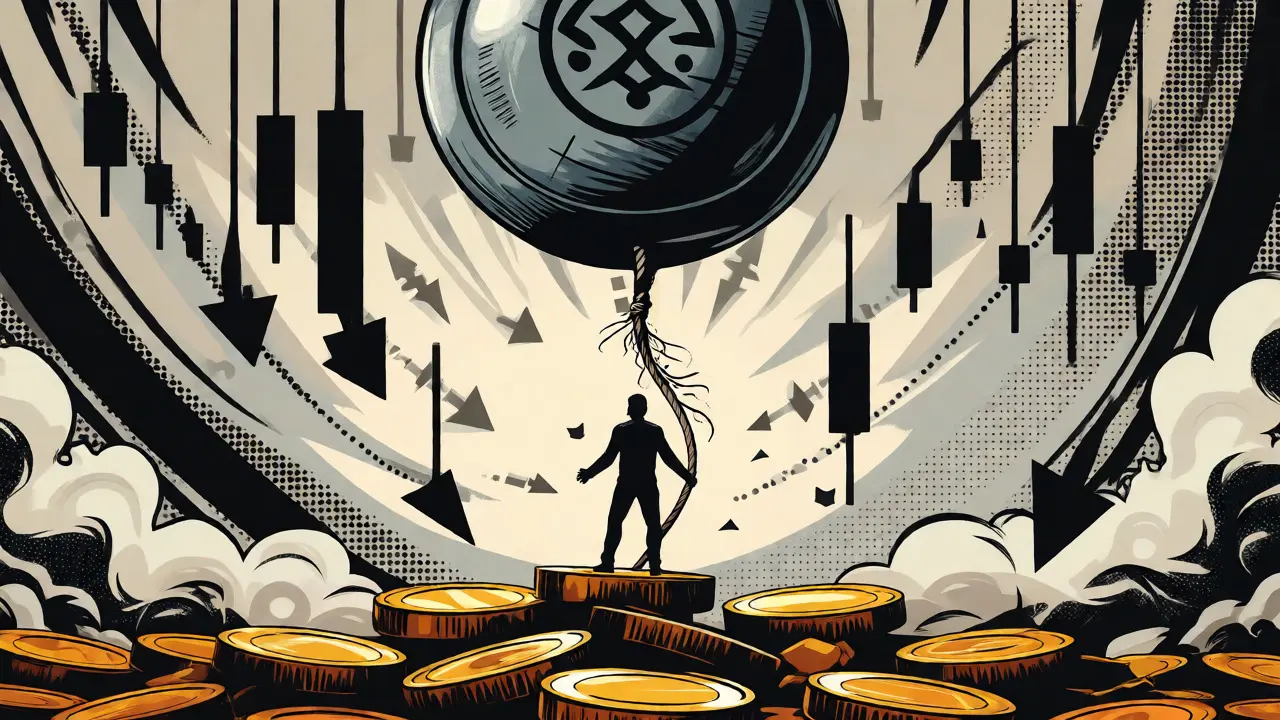
Liquidation is what happens if you ignore the call or if the market moves too fast for you to react. The broker forcibly sells your assets to cover the loan. This is often done at the "best possible market price," which sounds nice but usually means the lowest price available during a panic sell-off. During the March 2020 crash, data from the SEC showed that 68% of retail margin accounts were liquidated at prices 15-25% worse than pre-crash levels. Why? Because liquidity vanished. Everyone was selling, and there were no buyers except the forced sellers.
Some platforms try to soften the blow. Interactive Brokers introduced a "Margin Escape" feature that automatically converts eligible positions to cash for a small fee (0.15%) rather than dumping them into the market at rock-bottom prices. This saved 92% of users from full liquidation losses in recent tests. But if you’re on a standard exchange without such features, you’re at the mercy of the order book.
Why Retail Traders Get Wiped Out More Often
It’s not just about being unlucky. There’s a structural reason why retail traders face higher liquidation rates. According to FINRA statistics, retail traders average a leverage ratio of 3.2:1, while institutional traders stick closer to 1.5:1. Higher leverage amplifies both gains and losses. A 20% drop in a 4:1 leveraged position wipes out 100% of your equity. As Liz Ann Sonders, Chief Investment Strategist at Charles Schwab, puts it, "Leverage is a time accelerator for losses."
Moreover, many new traders misunderstand the Special Memorandum Account (SMA). This is essentially your buying power buffer. Fidelity reports that 78% of new margin traders don’t fully grasp how SMA calculations work. They think they have room to breathe when they actually don’t. If you sell a winning position to free up cash, you might inadvertently reduce your SMA below the required level, triggering a violation even though you made a profit. It’s counterintuitive, but it happens constantly.
Another factor is the lack of a liquidity buffer. Financial Edge Training found that traders who kept at least 15% extra cash above the minimum maintenance requirement reduced their margin call incidents by 63%. Most retail traders run hot, keeping their utilization near 90-95%. One bad candlestick pattern, and they’re out.
How to Manage Margin Risk Like a Pro
You don’t have to quit leverage to survive. You just need to respect the mechanics. Here’s how experienced traders handle the threat of liquidation:
- Set Stop-Losses Before Entry: Don’t wait for the margin call to tell you to exit. Set a stop-loss well before your liquidation price. If your liquidation price is $100, set your stop at $110. Yes, you’ll take smaller losses, but you’ll stay in the game.
- Monitor Real-Time Utilization: Use tools like TradingView or your broker’s dashboard to track your margin utilization percentage. If you see it creeping past 80%, start reducing exposure.
- Understand Overnight Gaps: Crypto trades 24/7, but traditional stocks close. If you hold a leveraged stock position overnight and bad news hits, the stock can gap down 20% at the open. You won’t get a warning email before the market opens; you’ll wake up to a liquidation notice.
- Use Tiered Margin Systems: Platforms like Interactive Brokers offer tiered margins. If you have more capital, you might qualify for lower requirements. Conversely, highly volatile assets require more collateral. Know which bucket your asset falls into.
Also, consider the "liquidity buffer" strategy mentioned earlier. Keep 15-20% of your account in unencumbered cash. This acts as a shock absorber. If the market dips, you can top up your margin instantly without selling your best-performing assets at a loss.
The Systemic Risk of Margin Calls
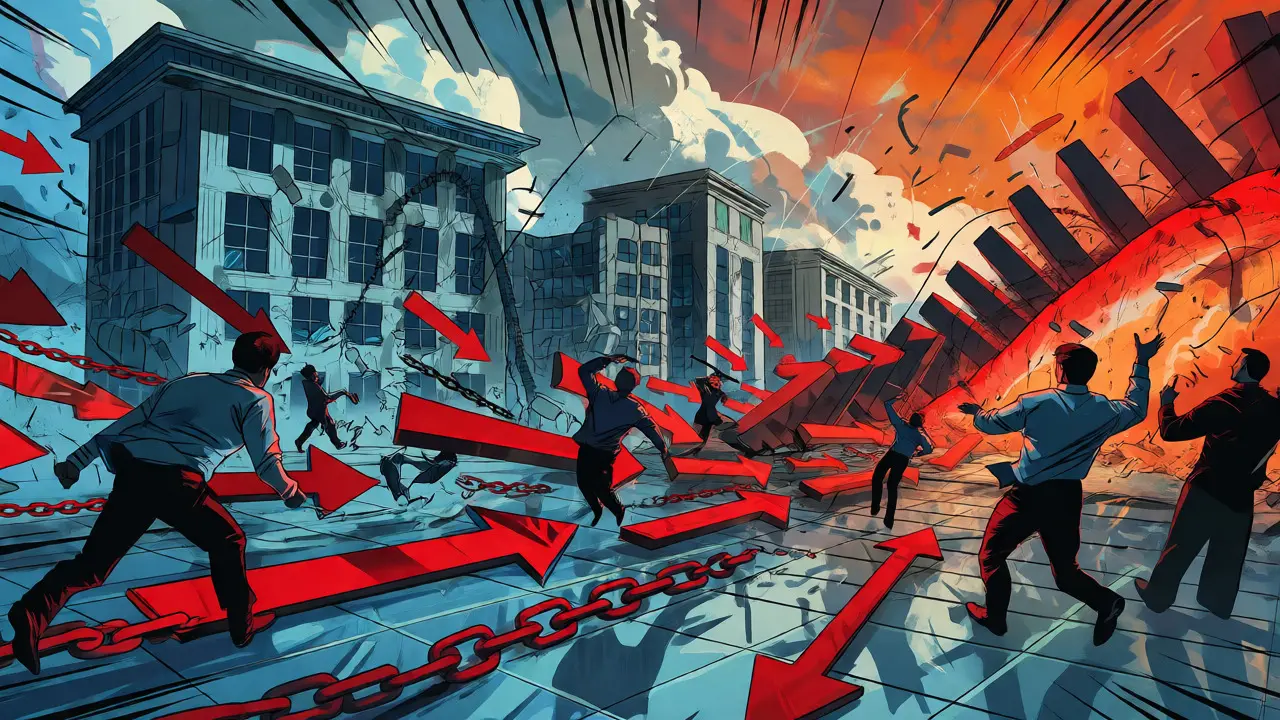
It’s worth noting that individual margin calls can ripple outward. When Archegos Capital Management collapsed in 2021, their failure triggered billions in forced liquidations across multiple banks. This is known as contagion. Dr. Darrell Duffie from Stanford University warned that interconnected margin systems create pathways for crises. If everyone gets margin-called at the same time, they all sell at once, driving prices down further, which triggers more margin calls. It’s a feedback loop that can destabilize entire sectors.
For you, as an individual trader, this means volatility can spike unexpectedly due to external events. A large institution getting liquidated can drag the market down, hitting your stop-losses even if your fundamental thesis hasn’t changed. Staying nimble and maintaining lower leverage protects you from these systemic shocks.
Frequently Asked Questions
Can I choose which positions get liquidated?
Usually, no. Most brokers use a First-In-First-Out (FIFO) method or liquidate the positions contributing most to the margin deficiency. Some platforms, like Interactive Brokers, may allow some discretion, but generally, you do not control which specific asset is sold to meet the call.
How long do I have to meet a margin call?
In traditional US equities, FINRA rules theoretically allow four business days. However, brokers can shorten this period, and in crypto or highly volatile markets, liquidation can happen within minutes or seconds. Always check your specific broker’s agreement.
Is a margin call the same as losing all my money?
Not necessarily. A margin call means you need to add funds or sell assets. You only lose all your money if you fail to meet the call and are liquidated at a price that wipes out your equity. If you respond quickly, you might only realize a partial loss.
Why did I get liquidated even though I had a stop-loss?
Stop-losses become market orders when triggered. In a flash crash or low-liquidity event, the price can gap through your stop-loss level. You might get filled at a much lower price than expected, potentially leading to liquidation if the gap is severe enough.
Do crypto exchanges follow the same rules as stock brokers?
No. Stock brokers are regulated by FINRA and the SEC, with strict reporting and dispute resolution processes. Crypto exchanges often operate under lighter regulatory frameworks, allowing for higher leverage and faster, automated liquidations with less human intervention.