
When you stake your cryptocurrency, you’re usually locked in. Your ETH, SOL, or ATOM sits idle, earning rewards-but you can’t trade it, lend it, or use it in DeFi. That’s where liquid staking changes everything. Instead of sitting still, your staked assets turn into tradable tokens that keep earning rewards while letting you move freely across DeFi protocols. In 2025, the choice of platform isn’t just about convenience-it’s about how much you earn and how much risk you’re willing to take.
How Liquid Staking Works (Simple Version)
Imagine you stake 1 ETH. Normally, you’d get rewarded over time, but you can’t touch that ETH until you unstake-which can take days. With liquid staking, you send your ETH to a platform like Lido or Rocket Pool. In return, you get a token-like stETH-that’s worth 1 ETH. That stETH can be used anywhere: you can put it in a lending app, trade it on a DEX, or use it as collateral. Meanwhile, your original ETH keeps earning staking rewards. The platform takes a small cut (usually 2-10%), and the rest goes to you.This isn’t magic. It’s smart contracts and validator networks working behind the scenes. But the real question isn’t how it works-it’s which platform gives you the best return without putting your money at unnecessary risk.
Ethereum Liquid Staking: The Big Three
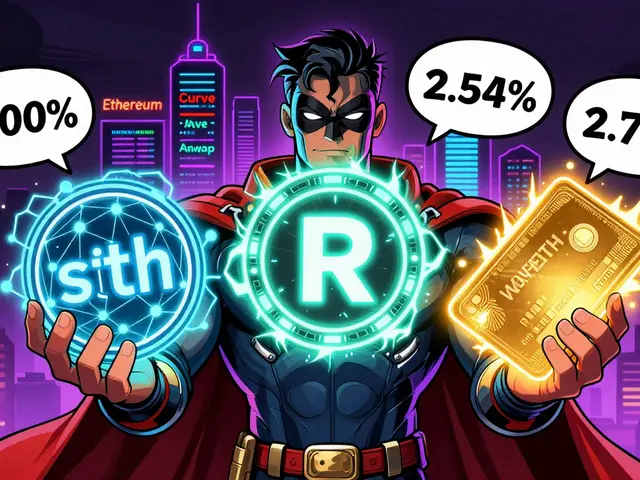
Ethereum remains the largest liquid staking market, with over $15 billion locked in. Here’s how the top three compare:- Lido Finance (stETH): Offers around 3.00% APY. It’s the most popular, with nearly 30% of all staked ETH. Why? Because stETH works everywhere-Curve, Aave, Uniswap, MakerDAO. You can earn extra yield by using stETH in DeFi. But Lido is centralized in one key way: it controls over 80% of its own validators. That’s a single point of failure if something goes wrong.
- Rocket Pool (rETH): Delivers about 2.54% APY. It’s more decentralized. You don’t need 32 ETH to run a node; Rocket Pool lets you pool ETH with others. Validators are spread across thousands of independent operators. The catch? rETH has less liquidity than stETH. Fewer DeFi protocols support it, and trading pairs can be thin. If you care about decentralization over convenience, this is your pick.
- Binance (WBETH): Pays 2.71% APY. It’s simple. Log in to Binance, click ‘Stake,’ and you’re done. WBETH is backed by Binance’s own validators. No need to manage a wallet. But you’re trusting Binance with your ETH. If they get hacked, regulated, or shut down, your access could vanish. For beginners, it’s the easiest. For purists, it’s the riskiest.
Beyond Ethereum: Higher Yields, Higher Risks
If you’re chasing higher returns, look outside Ethereum. The trade-off? More volatility and less proven security.- Solana (mSOL): Around 6-8% APY. Solana’s network rewards are higher because it’s younger and needs more participants to secure the chain. mSOL is liquid and widely supported on Solana DeFi apps like Marinade Finance and Jupiter. But Solana has had network outages. If the chain goes down, your rewards pause. And mSOL has seen price slippage during crashes. It’s a high-yield gamble.
- Cosmos (ATOM): Up to 18.5% APY. This is the highest yield in the top 10 blockchains. ATOM staking through platforms like Keplr or Cosmostation gives you aATOM, a liquid token. But Cosmos is a network of independent blockchains. If one chain fails, it can affect your staking. Also, 18.5% isn’t guaranteed-it fluctuates with network participation. You’re betting on Cosmos’ long-term growth.
These yields aren’t just from staking. They include rewards from governance, liquidity mining, and network incentives. But they’re also more fragile. Ethereum’s APY is stable. Solana’s and Cosmos’ can swing by 2-5% in weeks.

Platform Fees: The Hidden Cut
Don’t just look at the APY number. Ask: what’s the gross yield before the platform takes its cut?Ethereum’s base staking yield is around 3.5-4%. Lido’s 3.00% APY means they’re taking 15% of the rewards. Rocket Pool’s 2.54% means they’re taking closer to 25%. Why? Because Rocket Pool pays node operators and covers infrastructure costs. Binance’s 2.71% is lower because they’re using their own infrastructure and don’t need to pay third parties.
On Solana, platforms like Marinade take 10% of rewards. On Cosmos, some validators charge up to 20%. That means if a network offers 10% APY, you might only get 8%. Always check the fee structure. Some platforms hide it behind technical jargon.
What Users Are Saying
Reddit and Twitter are full of real experiences. Lido users love that stETH is accepted everywhere. One user said: “I used stETH as collateral on Aave to borrow USDC, then staked that USDC for more yield. My ETH was working 24/7.”Rocket Pool users praise decentralization but complain about liquidity. “I tried to sell rETH on Uniswap and got a 3% slippage. Took 3 hours to complete the trade.”
Binance users are split. “I trust Binance more than a smart contract,” said one. Another: “I don’t want my ETH stuck in a centralized exchange. What if they freeze withdrawals?”
On Solana, users report rewards dropping during outages. “I lost 3 days of rewards when Solana went down. No warning. No compensation.”
Who Should Use What?
- Beginners: Start with Lido or Binance. Easy setup, wide compatibility. Stick with ETH.
- DeFi power users: Use stETH and rETH together. Diversify between them. Add stETH to Curve pools for extra yield.
- Yield hunters: Try mSOL or ATOM. But allocate no more than 10-15% of your portfolio. These are speculative.
- Decentralization purists: Go with Rocket Pool. You’ll earn less, but you’ll help keep Ethereum truly decentralized.
What’s Next in 2026?
Liquid staking is evolving fast. Lido is rolling out V2, which spreads validator control across more operators. Rocket Pool is changing its tokenomics to reward node operators better. And new players like EigenLayer are letting you “restake” your stETH to earn extra rewards on Ethereum’s security layer.Regulators are watching. The U.S. SEC hasn’t labeled LSTs as securities yet-but they’re asking questions. Europe is moving toward clearer rules. If LSTs get classified as financial instruments, platforms might need to change how they operate.
By 2026, experts predict liquid staking TVL could hit $100 billion. But that growth depends on trust. If one major platform gets hacked or mismanaged, the whole space could lose confidence.
Final Rule: Don’t Put All Your ETH in One LST
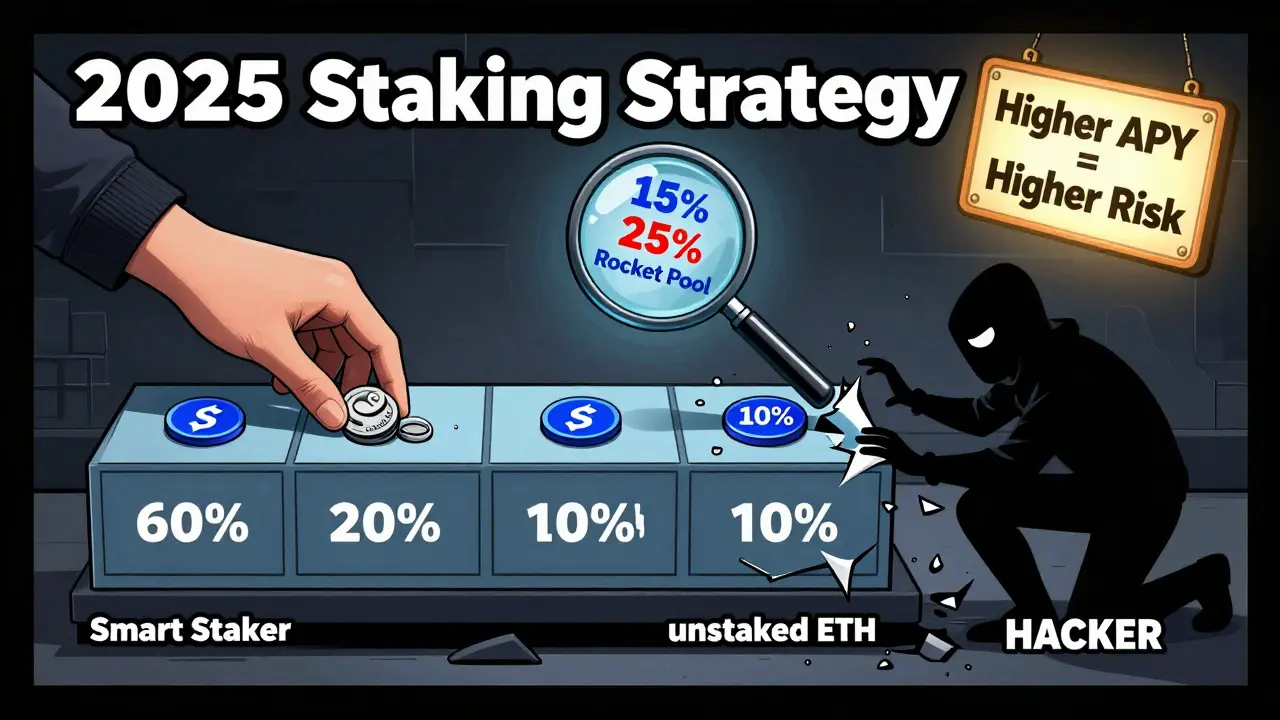
The biggest mistake? Staking all your ETH with Lido. Yes, it’s convenient. But if Lido’s validators get slashed or the DAO votes to change rules you dislike, you’re stuck.Split your staking. Put 60% in stETH, 20% in rETH, 10% in WBETH. Keep 10% unstaked for emergencies. That way, you get the best of both worlds: high yield and safety.
And always remember: higher APY doesn’t mean better. It means more risk. The smartest stakers aren’t chasing the highest number. They’re building balanced, resilient positions.
What’s the safest liquid staking option for ETH?
Rocket Pool is the most decentralized, with no single entity controlling validators. But if you want simplicity and wide DeFi compatibility, stETH from Lido is the most battle-tested. For most users, a mix of both is ideal. Avoid putting all your ETH into one platform.
Can I lose money with liquid staking?
Yes. If a validator gets slashed for going offline or signing conflicting blocks, your LST value can drop temporarily. If the platform’s smart contract has a bug, funds could be locked. Centralized platforms like Binance can freeze withdrawals. And if the underlying blockchain crashes (like Solana in 2022), your rewards pause. Always diversify.
Why is APY higher on Solana and Cosmos than Ethereum?
Newer blockchains need more participants to secure their networks. They pay higher rewards to attract stakers. Ethereum, being older and more secure, has lower base yields. Higher APY means higher risk-not better value. Solana has had network outages. Cosmos is a network of chains, so one failure can ripple.
Do I pay taxes on liquid staking rewards?
Yes. In most countries, staking rewards are taxed as income when you receive them-even if you don’t sell the LST. Swapping your LST for another token (e.g., stETH to rETH) can trigger a taxable event. Keep detailed records of every transaction. Tax tools like Koinly or CoinTracker help track this automatically.
Can I unstake my ETH from a liquid staking platform?
You can’t directly unstake. You sell your LST (like stETH) on a DEX for ETH. But because these tokens trade at parity, it’s nearly the same. During extreme market stress, LSTs can depeg-stETH might trade at 0.98 ETH. Wait for recovery or accept a small loss. Always have a backup plan for liquidity.
Kaz Selbie
February 9, 2026 AT 10:20SAKTHIVEL A
February 9, 2026 AT 17:52krista muzer
February 10, 2026 AT 11:24Tammy Chew
February 10, 2026 AT 21:48Lindsey Elliott
February 11, 2026 AT 05:29Santosh kumar
February 12, 2026 AT 09:13Claire Sannen
February 12, 2026 AT 11:51Grace Mugambi
February 14, 2026 AT 06:27Elijah Young
February 14, 2026 AT 11:38Benjamin Andrew
February 14, 2026 AT 22:16Donna Patters
February 16, 2026 AT 18:16Peggi shabaaz
February 16, 2026 AT 23:57Holly Perkins
February 18, 2026 AT 07:01Will Lum
February 19, 2026 AT 09:31Sanchita Nahar
February 20, 2026 AT 17:29Ben Pintilie
February 20, 2026 AT 18:37Sakshi Arora
February 22, 2026 AT 09:17bala murali
February 24, 2026 AT 05:04Ekaterina Sergeevna
February 25, 2026 AT 19:55Desiree Foo
February 26, 2026 AT 04:21Robbi Hess
February 27, 2026 AT 17:49Keturah Hudson
February 28, 2026 AT 18:54Ace Crystal
March 2, 2026 AT 13:50Brittany Meadows
March 3, 2026 AT 13:47Elizabeth Choe
March 4, 2026 AT 22:17Crystal McCoun
March 5, 2026 AT 15:47