Is KyotoSwap Worth Your Attention in 2026?
You might have stumbled upon KyotoSwap, a decentralized exchange (DEX) that promises to combine cryptocurrency trading with environmental sustainability. The pitch sounds appealing: swap tokens on the BNB Smart Chain while helping plant trees through its native governance token, KSWAP. But does the reality match the marketing? As of early 2026, the short answer is no. KyotoSwap suffers from critically low liquidity, massive price discrepancies between data providers, and a user base so small it barely registers on industry radars.
If you are looking for a reliable place to trade crypto, this review will save you time and money. We break down the hard numbers, compare KyotoSwap to established giants like PancakeSwap, and explain why most experts advise caution. You will learn about the hidden costs of trading on low-liquidity platforms, how the tree-planting feature actually works, and whether there is any future potential for this niche project.
The Hard Numbers: Liquidity and Market Cap Crisis
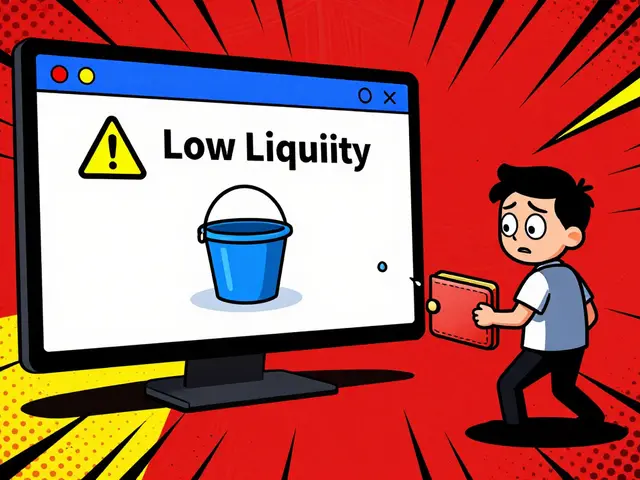
When evaluating a decentralized exchange, liquidity is king. It determines how easily you can buy or sell without moving the market price against yourself. For KyotoSwap, the numbers are alarming. According to CoinGecko data from January 2026, the platform’s total liquidity sits at a mere $23,810. To put that in perspective, if you try to swap just $50 worth of BNB for KSWAP, you could face slippage exceeding 15%. That means you lose 15% of your value instantly just by executing the trade.
| Metric | KyotoSwap | PancakeSwap | Uniswap |
|---|---|---|---|
| Total Value Locked (TVL) | $63,130 | $1.52 Billion | $4.1 Billion |
| Market Cap Rank | #6993 | #42 | #15 |
| 24h Trading Volume | $46 (CoinGecko) | $120 Million+ | $250 Million+ |
| Unique Holders | 938 | Millions | Millions |
The disparity between major tracking platforms adds another layer of confusion. CoinGecko reported a KSWAP price of $0.05023, while CoinMarketCap showed $0.02534 during the same period. This isn’t just a rounding error; it indicates a lack of standardized pricing due to negligible trading volume. With only 938 token holders recorded, KyotoSwap is effectively a ghost town compared to the millions of users on Uniswap or PancakeSwap.
How KyotoSwap Works: The AMM Model
Automated Market-Maker (AMM) is a protocol that allows peer-to-peer trading without traditional order books, using liquidity pools instead. KyotoSwap operates as an AMM on the BNB Smart Chain. This means you don’t match with another buyer; you trade against a pool of funds provided by other users.
Here is the catch: because the pool is tiny ($23k), large trades drain the pool rapidly. If you want to buy KSWAP, you must connect a Web3 wallet like MetaMask or Binance Web3 Wallet. The process involves:
- Connecting your wallet to the KyotoSwap interface.
- Selecting the pair you want to trade (e.g., BNB/KSWAP).
- Adjusting slippage tolerance manually, often up to 15%, to ensure the transaction doesn’t fail.
- Paying gas fees on the BNB network.
Unlike centralized exchanges where you see a clear buy/sell order book, here you are blind to the depth until you execute. For beginners, this can be costly. A user on Reddit noted losing 15% on a $50 trade due to slippage-a common experience on such thin markets.
The Environmental Angle: Tree Planting with KSWAP
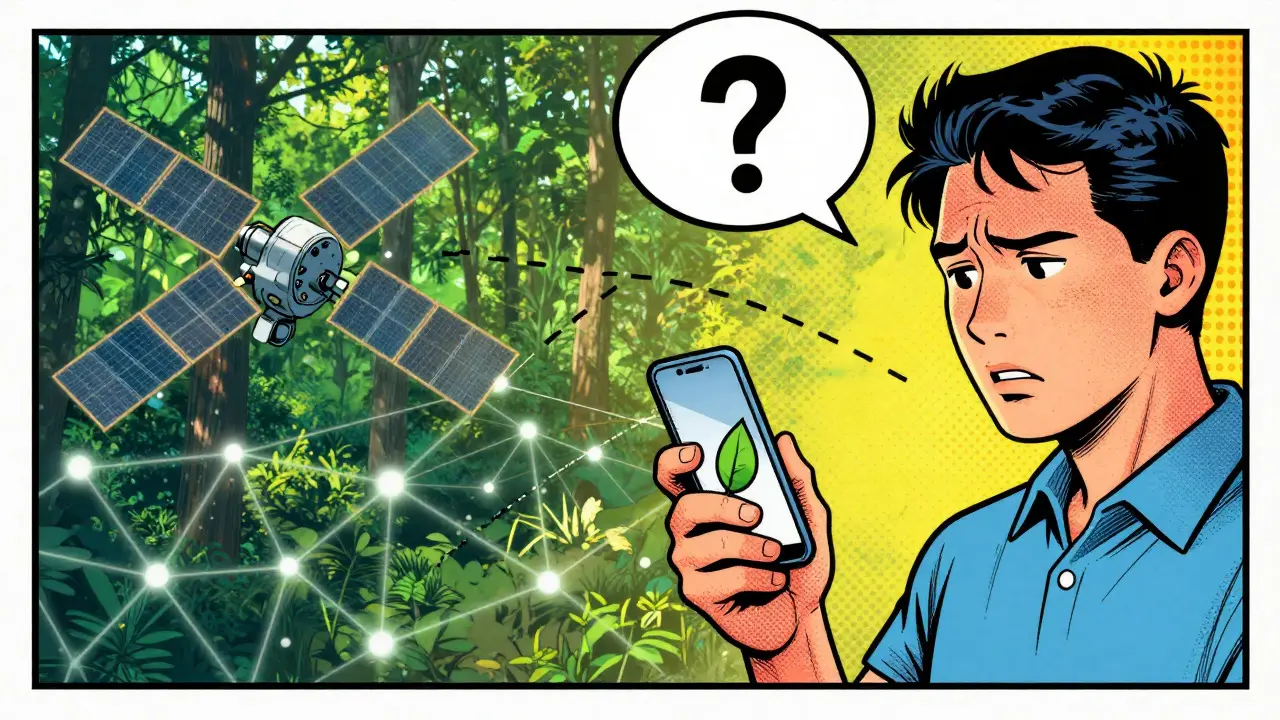
KyotoSwap’s unique selling proposition is its integration with Veritree, a platform that uses satellite imagery and blockchain verification to track real-world reforestation efforts. The promise is simple: provide liquidity or hold KSWAP tokens, and the protocol plants trees. Liquidity providers supposedly earn rewards that allow them to "plant trees at zero cost."
This gamification of sustainability is innovative in theory. However, execution has been sparse. Users report difficulty verifying exactly which trees were planted or where. While Veritree is a legitimate partner, the connection between holding a volatile, low-liquidity token and tangible environmental impact feels tenuous when the primary activity is speculative trading rather than ecological stewardship. As one user commented, "I haven't seen any real proof my tokens actually planted trees." Without transparent, real-time dashboards linking specific transactions to specific saplings, skepticism remains high.
Risks and Red Flags for Traders
Before you connect your wallet, consider these critical risks associated with KyotoSwap in 2026:
- Extreme Slippage: With less than $25k in liquidity, even small trades move the price significantly. You pay a premium to enter and exit positions.
- Impermanent Loss Claims: The platform advertises "zero risk of impermanent loss" for stablecoin farming. While technically possible in specific isolated pools, this claim lacks independent audit verification and contradicts standard DeFi mechanics for volatile pairs.
- Lack of Audits: There is no public record of third-party security audits for the smart contracts. Operating on BNB Chain provides baseline security, but unverified code always carries risk.
- Token Depreciation: KSWAP is down 98.94% from its all-time high of $2.40 in March 2023. Recovering from such a drop requires massive capital influx, which hasn’t happened.
- Regulatory Uncertainty: As the SEC increases scrutiny on DeFi platforms in 2025-2026, small, unregistered exchanges like KyotoSwap face higher legal risks than established entities.

Comparison: Why Not Use PancakeSwap?
If you are on the BNB Smart Chain, why use KyotoSwap instead of PancakeSwap, the dominant DEX on the network with over $1.5 billion in TVL? The comparison is stark. PancakeSwap offers deep liquidity, meaning minimal slippage even for large trades. It has a robust ecosystem including NFTs, prediction markets, and launchpads. Most importantly, it has undergone multiple security audits and has a proven track record since 2020.
KyotoSwap’s only advantage is its niche focus on tree planting. But if your goal is efficient trading, PancakeSwap is objectively superior. If your goal is environmental impact, donating directly to verified NGOs or buying carbon credits on established platforms may be more effective than speculating on a failing token. The opportunity cost of locking funds into KyotoSwap’s illiquid pools is significant.
Future Outlook: Is There Hope?
Industry analysts are pessimistic. Delphi Digital categorized KyotoSwap as a "low-activity DEX project with minimal prospects for growth" in their January 2026 report. Historical data from Messari shows that DEXs with TVL below $100,000 have a 97.3% failure rate within 18 months. Given KyotoSwap’s TVL of $63,130, it fits this profile perfectly.
The last GitHub commit was in October 2025, suggesting development has slowed. Roadmap plans for cross-chain expansion to Ethereum and Polygon remain unverified. Unless the team secures a major partnership or injects significant liquidity, the project is likely to fade into obscurity within the next year. For now, it serves as a case study in how good intentions (environmentalism) cannot overcome poor economic fundamentals (liquidity).
What is the minimum amount I should trade on KyotoSwap to avoid high slippage?
Due to extremely low liquidity (~$23k), it is recommended to keep trades under $20. Even then, you should expect slippage of 5-10%. Trades above $50 often result in 15%+ slippage, making them economically inefficient.
Is KyotoSwap safe to use?
While operating on the secure BNB Smart Chain, KyotoSwap lacks published third-party smart contract audits. This introduces inherent risk. Additionally, the low liquidity makes it easy for malicious actors to manipulate prices. Proceed with extreme caution and never invest more than you can afford to lose.
How does the tree-planting feature work?
KyotoSwap partners with Veritree. Users who provide liquidity or hold KSWAP tokens earn rewards that theoretically fund tree planting. However, transparency is limited, and users have reported difficulty verifying the direct impact of their holdings.
Why is the KSWAP price different on CoinGecko and CoinMarketCap?
The discrepancy ($0.05 vs $0.025) is due to negligible trading volume. With almost no trades occurring, each platform’s algorithm calculates price based on different, sparse data points, leading to inaccurate and conflicting valuations.
Should I buy KSWAP as an investment?
Most analysts advise against it. The token is down ~99% from its peak, has minimal liquidity, and faces a high probability of project failure. It is better suited for speculative micro-trades if you believe strongly in the environmental mission, not as a serious investment.