
Imagine trying to buy groceries when your bank account is frozen, or needing to send money home but facing a 10% fee just to cross the border. For millions of people in banking-restricted countriesnations where governments limit or ban access to traditional financial services and cryptocurrency exchanges, this is daily life. From Nigeria’s central bank bans to China’s comprehensive crypto crackdown, regulatory walls keep rising. Yet, the demand for financial freedom hasn’t vanished; it has simply moved underground, into digital backdoors that require cleverness, caution, and the right tools.
You don’t need to be a tech wizard to navigate these waters, but you do need to understand the landscape. This guide breaks down exactly how citizens in these regions are accessing global markets in 2026, moving beyond vague advice to specific, actionable methods. We will look at the trade-offs between privacy and safety, the hidden costs of workarounds, and the practical steps to get started without losing your savings to scams.
The Reality of Banking Restrictions in 2026
Before picking a tool, you need to know what you’re up against. Restrictions aren’t one-size-fits-all. Some countries, like Algeria and Bangladesh, have outright banned crypto use, with penalties ranging from fines to prison sentences under anti-money laundering laws. Others, like Turkey and Vietnam, allow holding assets but ban using them for payments, creating a gray zone where users face heavy fines if caught transacting.
In Nigeria, the Central Bank has maintained a banking ban on crypto transactions since 2017, meaning local banks often freeze accounts flagged for crypto activity. In China, the ban targets everything from mining to exchange operations, pushing users toward decentralized solutions. Understanding your specific country’s legal stance is step one. Are you risking a fine, a frozen bank account, or criminal charges? This risk assessment dictates which access method is viable for you.
Peer-to-Peer Trading: The Most Common Workaround
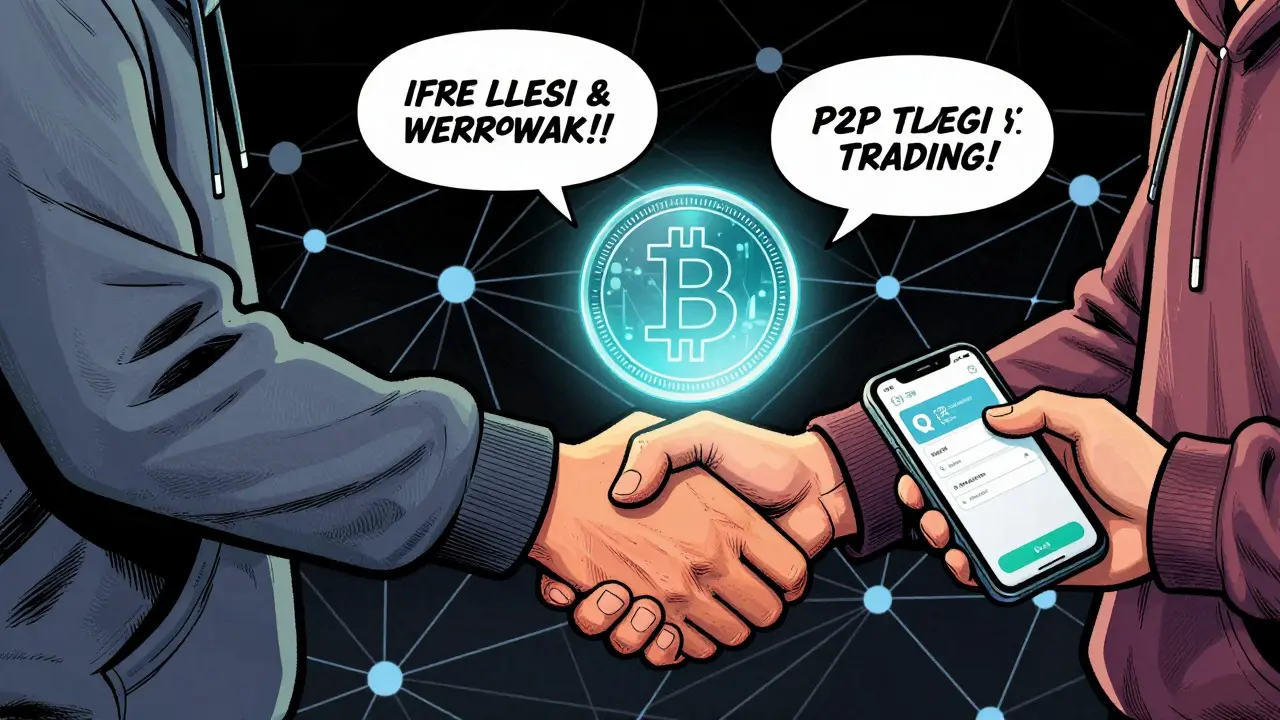
For most users in restricted zones, Peer-to-Peer (P2P) tradinga method where individuals buy and sell cryptocurrency directly with each other, often using local payment methods remains the primary gateway. Platforms like Binance P2P and Paxful act as middlemen, providing an escrow service that holds your funds until both parties confirm the transaction is complete.
Why does this work? Because it bypasses the centralized bank system entirely. You pay a seller via a local mobile money transfer, a bank wire to a personal account, or even cash-in-person. In Q1 2025, Binance P2P processed $8.7 billion in volume from restricted countries, proving its dominance. However, it’s not without friction. Users in Vietnam report paying a 2.5% premium over market rates due to high demand and limited liquidity. In Bangladesh, account closures on P2P platforms are frequent, with hundreds of accounts frozen monthly, locking up user funds.
- Pros: High liquidity, familiar local payment methods, large user base.
- Cons: Higher fees/premiums, risk of counterparty default, platform account freezes.
No-KYC Exchanges and Decentralized Options
If you want to avoid handing your passport data to a third party, no-KYC exchanges offer a path forward. These platforms, such as Bisq or Hodl Hodl, operate on peer-to-peer principles but with a stronger emphasis on privacy. They don’t require identity verification, making them attractive to users in countries with strict surveillance.
Then there are Decentralized Exchanges (DEXs) like Uniswap and PancakeSwap. Unlike centralized platforms, DEXs run on smart contracts. You connect your wallet directly to the protocol, and trades happen on-chain. There is no company to freeze your account and no customer support to call if something goes wrong. Since January 2025, when OKX expanded its list of restricted countries, Uniswap saw a 187% jump in users from these regions. It’s pure code, offering total autonomy but demanding higher technical literacy.
| Method | Avg. Daily Volume | Privacy Level | Main Risk |
|---|---|---|---|
| P2P Platforms (Binance/Paxful) | High ($1B+) | Moderate (KYC often required) | Account freezes, counterparty scams |
| No-KYC CEXs (Bisq/Hodl Hodl) | Low ($1.2M avg) | High | Low liquidity, interface complexity |
| DEXs (Uniswap/PancakeSwap) | Medium-High | High (On-chain anonymity) | Smart contract bugs, gas fees |
| Gift Card Arbitrage | N/A (OTC) | Low-Medium | Discounted cards, fraud |
Technical Barriers: VPNs, Tor, and Wallets
Accessing these platforms often requires masking your location. Virtual Private Networks (VPNs) are the standard first line of defense. NordVPN reported a 342% increase in users from Nigeria between late 2023 and late 2024, showing how essential this tool has become. However, not all VPNs are created equal. Free or low-cost options often leak IP addresses, which can flag your account for review. Premium services like ExpressVPN or NordVPN are worth the $12/month investment for reliability.
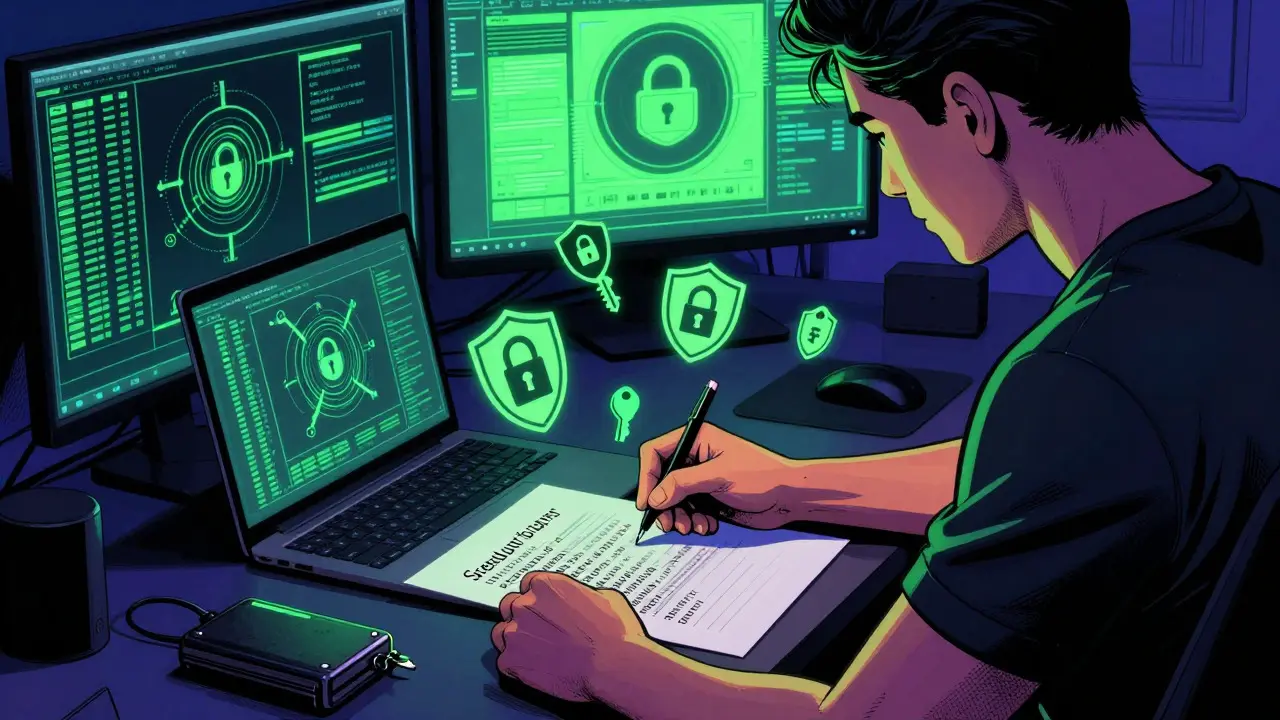
For deeper privacy, the Tor browser offers layered encryption, though it can be slow and difficult to set up. Once connected, you need a secure way to store your assets. Non-custodial wallets like Trust Wallet or MetaMask give you control over your private keys. This is crucial because if a centralized exchange collapses or bans your region, your funds remain safe in your wallet. Just remember: if you lose your seed phrase, no one can recover your money. Keep it offline, written on paper, away from moisture and fire.
Hidden Costs and Security Risks
Convenience comes with a price tag. Gift card arbitrage-buying Steam or Amazon cards locally and selling them for crypto-is popular but inefficient. Chainalysis documented $427 million in gift-card-based transactions in 2024, but users typically lose 5-10% in value compared to direct purchase. Similarly, P2P premiums can eat into your profits if you’re trading frequently.
Security is the biggest silent killer. Professor David Yermack noted that 67% of users in restricted countries have experienced at least one security incident. Scams targeting no-KYC users are rampant, with fake support agents and phishing sites posing as legitimate exchanges. In Nigeria, 41% of users reported pressure to use unregulated platforms that later collapsed, resulting in $217 million in losses in 2024 alone. Always verify URLs, double-check contract addresses on DEXs, and never share your seed phrase with anyone, including "support" staff.
Step-by-Step: Establishing Reliable Access
Setting up a robust crypto access channel takes time. Don’t rush. Here is a streamlined process used by experienced users in Iran and Nigeria:
- Secure Your Connection: Install a reputable paid VPN. Test it for leaks before proceeding.
- Create a Non-Custodial Wallet: Download Trust Wallet or similar. Write down your 12-word recovery phrase on paper. Do not take a photo of it.
- Acquire Initial Crypto: Use a P2P platform or gift card arbitrage to buy a small amount of Bitcoin or Ethereum. Start small to test the waters.
- Bridge to DeFi (Optional): If you want better rates or privacy, move funds to a DEX like Uniswap via a bridge or direct swap.
- Execute Trades: Perform your intended trades. Keep records of every transaction for tax purposes, even if local taxes are unclear.
- Withdraw to Cold Storage: For significant amounts, consider a hardware wallet like Ledger or Trezor for long-term storage.
- Establish Recurring Method: Identify which payment method (mobile money, bank transfer, etc.) works best for your regular needs and stick to trusted counterparties.
This process typically takes 3-5 weeks to master. Community resources like the 'Crypto Without Borders' Telegram channel, with 147,000 members, provide country-specific guides and real-time alerts about platform issues. Joining these communities is not optional; it’s survival.
Frequently Asked Questions
Is it legal to use a VPN to access crypto exchanges?
In most cases, yes, unless your country specifically bans VPN usage. However, using a VPN doesn’t make the underlying crypto activity legal. It only masks your location from the exchange. Check your local telecommunications laws to be sure.
Which is safer: P2P platforms or No-KYC exchanges?
It depends on your risk tolerance. P2P platforms like Binance have more liquidity and established escrow systems but carry the risk of corporate account freezes. No-KYC exchanges like Bisq offer more privacy and no corporate oversight but have lower liquidity and higher technical barriers. For beginners, major P2P platforms are generally safer due to larger user bases and dispute resolution mechanisms.
What happens if my bank account gets frozen for crypto activity?
This is a common risk in countries like Nigeria and Turkey. Banks may freeze accounts if they detect transfers to known crypto merchants. To mitigate this, use multiple bank accounts, vary transfer amounts, and avoid using keywords like "crypto" in transfer notes. Having a backup payment method, like mobile money, is essential.
Do I need to pay taxes on crypto bought through P2P?
Yes, in most jurisdictions, crypto is treated as property or currency for tax purposes. Even if you buy via P2P, the cost basis is established at the moment of purchase. Keep detailed records of every transaction, including fees and premiums paid, to calculate capital gains accurately when you sell.
Are privacy coins like Monero better for restricted users?
Privacy coins offer enhanced anonymity, which is appealing in surveillance-heavy environments. However, they have lower liquidity and higher volatility than Bitcoin or Ethereum. Adoption spiked in China and Iran, but they represent a small fraction of the market. Use them selectively for privacy-sensitive transactions, but keep your main portfolio in major assets for ease of exit.
Jennifer Ulmer
August 20, 2026 AT 00:26It is really interesting to see how people adapt when the system locks them out. I always think about how money should just be a tool for helping others, not a wall. The part about using paper for seed phrases makes sense to me because phones can break or get lost so easily.
Jade Brown
August 21, 2026 AT 10:42Let's cut through the fluff here folks. This guide is basically a masterclass in regulatory arbitrage and liquidity fragmentation. You're looking at a classic case of supply-side constraints driving up transaction costs, specifically the bid-ask spread widening on P2P markets due to counterparty risk premiums. The mention of Bisq is quaint; it's a relic from the early Bitcoin days with negligible order book depth compared to the institutional-grade OTC desks that now dominate the high-volume flows. If you're not utilizing atomic swaps or multi-sig setups for anything over $5k, you're leaving alpha on the table. The 'hidden costs' section undersells the slippage you'll face on DEXs during volatility spikes; it's not just gas fees, it's the impermanent loss if you're providing liquidity. Stop thinking like a retail HODLer and start thinking like a market maker or go home.
Stephanie Millar
August 22, 2026 AT 03:00From a British perspective!... one might argue that... the concept of 'financial freedom' is... quite different here... where we have... robust consumer protection laws... however... for those in... more restrictive jurisdictions... this is... certainly a lifeline... don't you think?... it is... fascinating to observe... how technology... bridges these... cultural and legal gaps...
Nikki keller
August 22, 2026 AT 11:41I appreciate the balanced view here. It’s easy to look down on people in restricted zones, but they are often the most resourceful traders. The advice to start small is crucial. Many people lose everything because they try to move their entire life savings in one go without testing the waters first. It’s a slow process, but it works if you are patient.
miranda gamboa
August 22, 2026 AT 22:20Love the energy of this thread! 🚀 But let's talk about the UX friction. The 'technical barriers' section is where most newbies drop off. We need better onboarding flows for no-KYC platforms. Imagine if Bisq had a mobile app with biometric login instead of command-line interfaces. The adoption curve would be exponential. Also, the security incident stats are scary. We need standardized KYC-lite protocols that protect privacy but reduce scam vectors. Let's build the future together!
Kiran Jayaram
August 23, 2026 AT 03:56typical western bias in this post. everyone talks about nigeria and china as if india isn't struggling with its own tax raids and tds issues. the 'practical guide' is full of assumptions that don't hold water in emerging markets with unstable internet infrastructure. stop preaching to us. we know our own struggles better than some blog writer in the US does
Uday N M
August 23, 2026 AT 18:49India has its own unique challenges. The TDS on crypto transactions is a burden. But the ban is not total. We have regulations. That is good for stability.
Melissa G
August 23, 2026 AT 21:55There is a profound philosophical question embedded in this topic: does financial exclusion create a moral imperative for decentralized finance? When a state denies its citizens basic economic agency, does the citizen acquire a right to bypass that state's monetary sovereignty? The use of VPNs is merely a symptom; the root issue is the centralization of trust. By moving trust to code, we do not just evade taxes or bans; we restructure the social contract between the individual and the institution. It is a quiet revolution, conducted not with bullets, but with private keys.
Patrick Pat
August 24, 2026 AT 02:35So, you're telling me I need a $12/month VPN just to buy a coffee in digital form? Because from where I'm standing, that's just another subscription fee dressed up as 'freedom'. The article paints a very dramatic picture, but let's be real: for 90% of people, the complexity is too high. They'd rather keep their cash under the mattress than risk losing it all to a 'smart contract bug'.
Claudio Perrone
August 25, 2026 AT 19:33oh wow big words smart contract bug lol. you guys dont get it. its all a psyop by the banks to keep us poor. i bought some doge coins last week and they doubled in a day. pure magic. no kyc needed. best time ever. wake up sheeple. the matrix is breaking down. just trust the process and ignore the red flags. its all about vibes man. vibes are the only thing that matters in this economy. stop thinking so hard and just feel the blockchain.
Aaron Morrissey
August 27, 2026 AT 10:06One must consider the sheer audacity required to navigate such labyrinthine bureaucratic mazes. It is, in a sense, a testament to human resilience. However, let us not romanticize the struggle. The 'underground' nature of these transactions carries a weight of uncertainty that cannot be understated. Yet, here we are, witnessing a digital renaissance born from necessity. It is both terrifying and magnificent.
Patrick Quairoli
August 29, 2026 AT 08:25they are watching you. did you notice how the article mentions specific countries? its a trap. the NSA is tracking every p2p trade. bisq is front run by the feds. uniswap is a honeypot. you think your seed phrase is safe? ha. they have quantum computers ready. sell your btc now before the next halving crash which is engineered by the deep state to reset the fiat system. wake up. the truth is out there. join the telegram channel i linked in my bio. free info. no strings attached. probably.
Zothana Pachuau
August 29, 2026 AT 10:42Great read, but seriously, who has the patience for Tor browser in 2026? 😂 My grandma uses WhatsApp faster than I can set up a node. The step-by-step is solid though. Just remember, if you mess up the seed phrase, it's game over. No undo button in crypto land. Keep it simple, keep it safe.
Linda Leeuwesteijn
August 29, 2026 AT 20:57This is such a helpful resource! 💡 I love how it breaks down the risks. For anyone starting out, I highly recommend joining a local community group. Learning from someone who has actually done it is way better than reading articles. Don't be afraid to ask questions in the forums. We are all in this together! 🌟
Ami Elizabeth
August 30, 2026 AT 07:32meh. feels like a sales pitch for nordvpn. but the p2p stuff is true. i used binance p2p in 2021 and it was a nightmare. got scammed once. never again. now i just use cold storage and wait for the moon. chill vibes only.
Walker Perry
August 31, 2026 AT 19:37The real story here is how global elites use crypto to launder wealth while regular people in restricted countries suffer. This 'guide' is just a way for Wall Street to find new markets. Watch out for the SEC coming after these 'decentralized' exchanges. It's all a sham. The American dream is dead, long live the crypto anarchy. But don't forget, the government will always win. Always. They have the drones. They have the data. They have the power. Submit or be crushed. That's the reality.
Calliope Clio
September 1, 2026 AT 16:55Finally, a post that doesn't treat us like children. 🧐 Most crypto content is either overly technical gibberish or hype-driven nonsense. This strikes a nice balance. The comparison table is particularly useful for quick reference. I do wish they had included more on stablecoin adoption in these regions, though. USDC is becoming king in places where inflation is rampant. But overall, a well-crafted piece. Bravo. 👏