
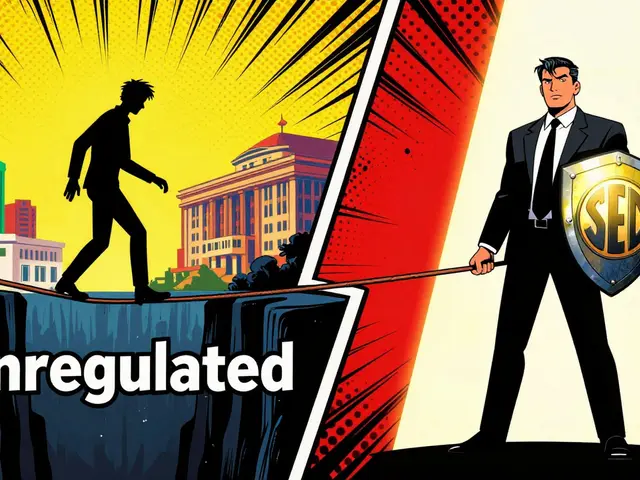
For years, running a crypto business in Nigeria felt like walking a tightrope without a net. The Central Bank of Nigeria (CBN) restricted bank accounts for crypto firms, while the Securities and Exchange Commission (SEC) hovered over the industry with vague threats. But if you are planning to launch or scale a virtual asset service provider (VASP) in Nigeria today, the landscape has shifted dramatically. Since the passage of the Investments and Securities Act 2025, cryptocurrencies are officially recognized as securities under strict SEC jurisdiction. This isn't just paperwork; it is a complete overhaul of how digital assets operate in Africa's largest economy.
If you want to operate legally-whether you are running an exchange, offering staking services, or processing crypto payments-you need a VASP license. Without it, you are not just risking fines; you are operating in the shadows, cut off from traditional banking and legal recourse. This guide breaks down exactly what it takes to get licensed in 2026, from the hefty capital requirements to the accelerated pathways that might save you time.
What Exactly Is a VASP License in Nigeria?
A Virtual Asset Service Provider (VASP) license is your ticket to legitimacy. Under the new regulatory framework, the Securities and Exchange Commission (SEC) defines a VASP broadly. It covers anyone who facilitates transactions between virtual assets and fiat currencies, or between different types of virtual assets.
This includes:
- Cryptocurrency exchanges
- Digital wallet custody services
- Token issuance platforms
- Mining operations
- Staking and yield farming services
- Airdrop distribution mechanisms
- Crypto-based payment processors
The key takeaway here is scope. You don't need a separate license for each activity if they fall under the VASP umbrella, but your application must clearly detail which specific services you offer. The SEC wants transparency. They want to know exactly how money moves through your platform.
The Money Talk: Capital and Corporate Structure
Let’s address the biggest hurdle first: money. The SEC has set a high bar to ensure only serious players enter the market. To apply for a standard VASP license, you must demonstrate a minimum paid-up capital of N500,000,000 (Five Hundred Million Naira). As of mid-2026, this translates to roughly $325,000 USD, though exchange rate fluctuations can impact this figure.
This capital requirement is non-negotiable for the standard route. It serves as a buffer against insolvency and ensures you have the resources to implement robust security and compliance measures. Beyond the cash in the bank, your corporate structure must be rock-solid. You must be incorporated with the Corporate Affairs Commission (CAC). This means you need:
- A valid Certificate of Incorporation
- Memorandum and Articles of Association (MEMART)
- A current Status Report from the CAC
- Audited financial statements (or audited statements of affairs for new entities)
You also cannot be a ghost company. The SEC requires a physical office presence in Nigeria. More importantly, at least one director must be a resident of the country. If you are an international firm looking to expand into Nigeria, this means you’ll likely need to hire a local executive or partner with a local entity to meet this residency rule.
Compliance: AML, KYC, and Record Keeping
Having the money and the office is only half the battle. The SEC, in tandem with guidelines from the Central Bank of Nigeria (CBN), demands rigorous Anti-Money Laundering (AML) and Know Your Customer (KYC) protocols. In the world of crypto, anonymity is no longer a feature-it’s a liability.
Your systems must prevent anonymous transactions. This means implementing real-time customer identification and verification. You need technology that can flag suspicious activities instantly. Think about transaction patterns, unusual login locations, and rapid fund movements.
Record-keeping is another critical area. You are required to maintain comprehensive customer records for a minimum of seven years. This includes:
- Identity verification documents
- Transaction histories
- Communication logs
- Risk assessment profiles
Failing to keep these records up to date can lead to immediate revocation of your license. Additionally, you must register with Nigerian tax authorities. The government is keen on capturing revenue from the crypto sector, aiming to boost tax collection significantly by 2027. Regular reporting to financial intelligence units is mandatory.

The Fast Track: Accelerated Regulatory Incubation Program (ARIP)
What if you don’t have the full N500 million ready immediately, or you want to test the waters before committing fully? The SEC offers a lifeline called the Accelerated Regulatory Incubation Program (ARIP). This is a regulatory sandbox designed to help promising startups get off the ground.
Under ARIP, you can obtain preliminary approval in principle. This allows you to commence limited operations under direct SEC oversight before completing all formal registration requirements. Here is how it works:
- Application: You file for ARIP participation, proving you are legally incorporated and have a clear business model.
- Commitment: You undertake to follow program conditions, including having a CEO or Managing Director resident in Nigeria.
- Incubation: You begin operations under supervision. You submit quarterly progress reports detailing your growth, compliance efforts, and technical infrastructure development.
- Review: At the 10-month mark, the SEC provides regulatory guidance based on your performance.
- Exit: At 12 months, you either graduate to full VASP registration or cease operations if you haven’t met the criteria.
ARIP is ideal for innovative projects that need time to raise capital or refine their tech stack. However, do not mistake it for a permanent solution. It is a bridge, not a destination.
Documentation and Operational Frameworks
The application process is document-heavy. Expect to spend weeks preparing your dossier. Beyond the basic incorporation papers, you need to present a comprehensive business model. What makes your exchange unique? How do you protect investors? How do you handle conflicts of interest?
You must provide detailed internal rules covering:
- Customer protection procedures
- Dispute resolution frameworks
- Conflict of interest policies
- Investor protection mechanisms
Technology risk management is scrutinized heavily. You need to prove your cybersecurity protocols are enterprise-grade. This includes data encryption, multi-signature wallets for cold storage, regular penetration testing, and system resilience plans. If you operate in other regulated sectors, you’ll also need letters of no objection from those respective regulators.
Finally, a director or company secretary must provide a sworn undertaking to comply with all SEC rules and the Investments and Securities Act. This is a legal commitment that carries personal liability.

Comparison: Standard VASP vs. ARIP
| Feature | Standard VASP License | ARIP (Incubation) |
|---|---|---|
| Minimum Capital | N500,000,000 | Flexible (during incubation) |
| Time to Launch | 6-12 months (depending on review) | Immediate (under supervision) |
| Operational Scope | Full commercial operations | Limited operations, monitored |
| Duration | Ongoing (renewable) | 12 months max |
| Best For | Established firms with capital | Startups seeking validation/funding |
Challenges and Market Realities
Getting licensed is expensive and complex. Industry experts note that compliance costs will inevitably rise. You will need to hire compliance officers, legal counsel, and cybersecurity specialists. These costs will likely be passed on to users through higher trading fees or withdrawal charges.
Furthermore, the requirement for resident directors poses a challenge for global platforms. Many international exchanges may choose to exit the Nigerian market rather than establish a local physical presence. This could reduce competition, potentially benefiting licensed local players but limiting user choice.
However, the benefits are significant. Licensed VASPs can now access traditional banking services, which was previously blocked by CBN directives. This integration with the formal financial system is crucial for liquidity and user trust. It signals to institutional investors that Nigeria is a serious player in the global crypto economy.
Next Steps for Crypto Entrepreneurs
If you are ready to pursue a VASP license, start by auditing your current corporate structure. Ensure you are registered with the CAC and have a physical office in Nigeria. Engage with a local law firm specializing in fintech regulation to navigate the SEC’s specific documentation requirements.
If you are a startup, seriously consider the ARIP program. It provides a structured environment to prove your concept while building the capital base needed for full licensure. Remember, the regulatory landscape is still evolving. Stay updated with SEC circulars and engage proactively with regulators. Transparency and cooperation will go a long way in securing your license and maintaining it.
How much does it cost to get a VASP license in Nigeria?
The primary financial requirement is a minimum paid-up capital of N500,000,000 (approx. $325,000 USD). On top of this, you must budget for legal fees, audit costs, office rent, and compliance software. Total setup costs often exceed the capital requirement due to operational overheads.
Can foreign companies apply for a VASP license in Nigeria?
Yes, but they must incorporate a local entity with the Corporate Affairs Commission (CAC). Crucially, at least one director must be a resident of Nigeria, and the company must maintain a physical office within the country.
What is the difference between SEC and CBN roles in crypto regulation?
The SEC regulates virtual assets as securities, issuing VASP licenses and overseeing market conduct. The CBN focuses on monetary policy and banking stability. While the CBN previously banned banks from servicing crypto firms, the new framework allows licensed VASPs to interact with the banking system under strict AML/KYC guidelines.
How long does the VASP licensing process take?
For the standard route, it typically takes 6 to 12 months depending on the completeness of your application and SEC review timelines. The ARIP program allows for immediate limited operations but lasts only 12 months before requiring full graduation or cessation.
Do I need a VASP license for mining operations?
Yes. The 2025 Investments and Securities Act expanded the definition of regulated activities to include mining, staking, and airdrops. Any business engaged in these activities must obtain a VASP license or participate in the ARIP program.
What happens if I operate without a VASP license?
Operating without a license is illegal. Penalties can include heavy fines, seizure of assets, and criminal prosecution. Additionally, unlicensed firms cannot access banking services, making daily operations nearly impossible.
Tawny Holmes
July 14, 2026 AT 20:59Half a billion naira is a joke.
Linda Hilliard
July 16, 2026 AT 10:50Oh, please. You clearly haven't read the fine print regarding the ARIP incubation period, which serves as a mere bridge to full compliance rather than a permanent loophole for those lacking the requisite fiscal discipline. The SEC’s mandate under the Investments and Securities Act 2025 is unequivocal: without the N500M paid-up capital, you are merely operating in the shadows, devoid of legal recourse and banking access. It is not 'a joke' but a necessary barrier to entry that ensures only serious, solvent entities participate in this high-risk ecosystem. Your dismissal of these regulatory frameworks suggests a fundamental misunderstanding of institutional risk management protocols. One does not simply 'wing it' in securities regulation; one adheres to the rigorous AML/KYC standards mandated by both the SEC and the CBN. Furthermore, the requirement for a resident director is not arbitrary but designed to ensure local accountability and physical presence, which is crucial for enforcement actions if things go south. To suggest otherwise is to ignore the geopolitical realities of financial oversight in emerging markets. We must respect the bureaucratic machinery that keeps the market from collapsing into chaos. The jargon-heavy reality of crypto regulation is precisely what separates the professionals from the hobbyists who treat their portfolios like slot machines. So, perhaps educate yourself before making such reductive statements about capital requirements. :)
DJ Maleko
July 17, 2026 AT 15:52Yeah right, Linda, keep telling yourself that while your portfolio bleeds out 😂📉
Kristine Lawson
July 18, 2026 AT 05:31I find it utterly preposterous that anyone would consider this a viable path for small-scale entrepreneurs; the barriers to entry are deliberately constructed to exclude all but the most well-capitalized institutions, thereby stifling innovation and entrenching oligopolistic control over digital asset distribution channels. Moreover, the assertion that this framework 'protects investors' is laughable when one considers the historical track record of regulatory bodies in developing nations, which often prioritize revenue generation over consumer protection. The seven-year record-keeping requirement is an administrative nightmare that will inevitably lead to data breaches or non-compliance penalties, neither of which benefits the average user. Additionally, the mandatory residency of at least one director creates an artificial bottleneck for international firms, effectively forcing them to hire local proxies who may lack the technical expertise required to manage complex blockchain infrastructure. This is not regulation; it is rent-seeking behavior disguised as oversight. The SEC’s role here is less about safeguarding the public interest and more about capturing tax revenue from a sector they previously sought to criminalize. One must question the motives behind such sudden shifts in policy, especially when accompanied by such exorbitant capital requirements. It is highly probable that this legislation was drafted with input from large financial institutions eager to eliminate competition from agile startups. Therefore, I urge caution and skepticism towards any narrative that portrays this licensing regime as a triumph for decentralization. In truth, it is a victory for centralization and state control.
Jessie Smith
July 19, 2026 AT 07:49its just another way for the man to squeeze us dry... real freedom is off grid, no licenses needed, just code and trust in the math. but hey, play nice with the suits i guess 🤷♂️
Winston Lacewing
July 19, 2026 AT 23:12You are missing the bigger picture entirely! This isn't just about money; it's about morality and the soul of our digital future. By allowing the SEC to dictate terms, we are surrendering our autonomy to a system that has failed us time and again. How can you justify participating in a structure that demands you identify every single transaction? That is the death of privacy! It is the death of liberty! I am literally shaking with rage reading this. Do you realize what you are signing up for? You are becoming a cog in a machine designed to surveil and control. And don't get me started on the 'resident director' rule-it's a trap to hold people hostage locally. This is evil. Pure and simple. We need to resist, not comply. 😡😡😡
Josephine Finlayson
July 20, 2026 AT 10:27I think we should try to see the positive side here; perhaps this regulation brings much-needed stability and trust to the Nigerian crypto market, which could ultimately benefit everyone involved in the long run. It is understandable to feel frustrated with the high costs, but having clear rules might attract institutional investment and protect users from scams. Let's hope for the best outcome for all parties. 🙂
Shay Thomson
July 21, 2026 AT 23:49Wow, the drama is palpable! But honestly, isn't there a middle ground where we can embrace security without sacrificing our dreams? I believe that with enough passion and community support, even the toughest regulations can be navigated. Let's focus on building bridges rather than burning them down. After all, we are all in this together, striving for a better financial future. 🌈✨
Erika Pozzetto
July 23, 2026 AT 16:44It is indeed a complex situation requiring careful consideration of all stakeholders interests including regulators investors and end users who ultimately bear the brunt of any systemic failures or inefficiencies introduced by overly burdensome compliance regimes which may stifle innovation and reduce competitiveness in the global marketplace thus necessitating a balanced approach that prioritizes both security and growth opportunities for emerging fintech enterprises within the region
Ella Collinson
July 25, 2026 AT 01:22The implementation of robust KYC/AML protocols is non-negotiable for any legitimate VASP seeking interoperability with traditional fiat rails. Without these controls, you are essentially facilitating illicit finance, which exposes your entity to severe reputational and legal risks. The N500M capital requirement acts as a solvency buffer against operational shocks and cyber incidents, ensuring that customer assets remain protected during periods of market volatility. Furthermore, the ARIP program provides a structured pathway for early-stage ventures to demonstrate regulatory readiness before committing full capital. Ignoring these structural necessities leads to market fragmentation and increased counterparty risk. Compliance is not a hurdle; it is the foundation of sustainable business operations in regulated jurisdictions.
Johan Otto
July 26, 2026 AT 00:10Boring stuff. Just want to HODL.
Tuan Nguyen
July 27, 2026 AT 21:12Your simplistic view ignores the intricate web of regulatory arbitrage that exists globally. While you 'HODL', sophisticated actors are navigating these frameworks to maximize yield and minimize exposure. Ignorance is not bliss; it is liability.
Alicia Hull
July 27, 2026 AT 23:53I have a question regarding the ARIP exit strategy. If a startup fails to meet the criteria after 12 months, what happens to the user funds? Are they frozen? Is there a grace period for migration to a licensed entity? This seems like a critical gap in the consumer protection framework that needs clarification. Please advise.
Mark Tuason
July 28, 2026 AT 08:40That is a very valid concern. It appears that the current guidelines do not explicitly detail the escrow mechanisms for ARIP participants upon failure to graduate. However, standard corporate law would likely require the liquidation of assets to satisfy creditor claims, which includes user withdrawals. It is advisable to consult with a local legal expert to draft specific clauses in your terms of service that address this scenario proactively. Transparency with users during the incubation phase is also key to maintaining trust.
Hazel Fruitman
July 29, 2026 AT 22:15i mean its kinda messed up that they can just take ur money if u fail tho... feels like a scam waiting to happen lol. but whatever, rich people problems i guess.
Autumn Story
July 31, 2026 AT 09:14I really hope everything works out smoothly for everyone involved!!! It sounds like a lot of work but maybe it will be worth it in the end?? Fingers crossed for good luck and safety for all the users!!! 🍀💖
Deep Rahman
August 1, 2026 AT 02:32When we look at the deeper meaning of regulation we see that it is not just about rules but about how society chooses to organize itself around value exchange and trust which are fundamental human constructs that evolve over time and reflect our collective desire for order amidst chaos and uncertainty in an increasingly digital world where boundaries between physical and virtual assets become blurred and difficult to define clearly
Russ Fincham
August 2, 2026 AT 07:51This analysis is superficial. The real issue is the enforcement capacity of the SEC. Do they have the technical expertise to audit smart contracts? Probably not. This creates a false sense of security. Users will still lose money to rug pulls because the regulator is playing catch-up with technology they don't understand. The capital requirement is a band-aid on a bullet wound.
Melissa Beckwith
August 3, 2026 AT 10:39I have been following the developments in Nigerian fintech for several years and I find the current trajectory concerning because it prioritizes short-term revenue generation over long-term technological sovereignty and innovation which could lead to a brain drain of talented developers and entrepreneurs who seek more supportive environments elsewhere in Africa or globally thus diminishing the potential for Nigeria to become a true leader in the digital economy rather than just a consumer of foreign solutions
Drew M
August 5, 2026 AT 07:42Look, I get the frustration, but let's not throw the baby out with the bathwater. Having a license means you can actually use banks again. That's huge for liquidity. Sure, it's expensive, but so is getting shut down. Maybe it's time to level up? 🚀💸