Most crypto exchanges want to be everything to everyone - spot trading, margin, NFTs, launchpads, you name it. But Velodrome Finance V2 doesn’t play that game. It’s built for one thing: making liquidity work better on Optimism, Ethereum’s fast and cheap Layer 2. If you’re trading or providing liquidity on Optimism, this isn’t just another DEX. It’s the backbone.
What Velodrome Finance V2 Actually Is
Velodrome Finance V2 isn’t a typical crypto exchange. You won’t find a login screen, KYC forms, or customer support chatbots. It’s a decentralized automated market maker (AMM) - meaning trades happen through smart contracts, not order books. Think of it like Uniswap, but tuned for Optimism’s speed and low fees. It launched in 2025 as the upgraded version of the original Velodrome, merging the best parts of Curve, Convex, and Uniswap into one optimized system. It supports 59 tokens and 163 trading pairs, all on Optimism. That includes major tokens like USDC, WETH, OP, and even lesser-known Optimism-native projects. The catch? It doesn’t serve Bitcoin or Solana users. If you’re not on Optimism, you’re not its target audience.How It Makes Money - And How You Do Too
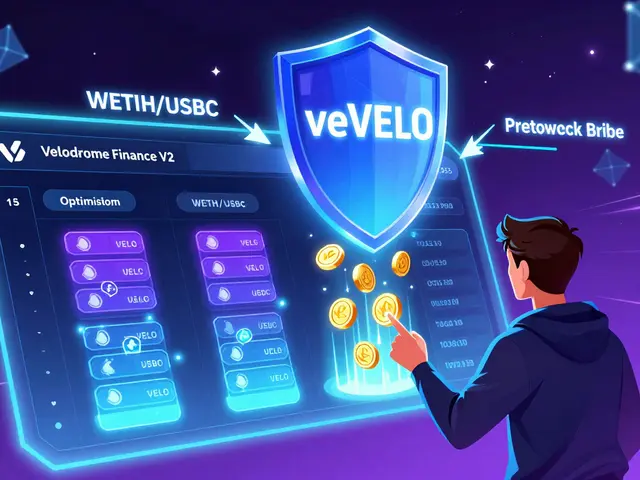
Here’s the twist: Velodrome doesn’t charge trading fees. Zero. Nada. Maker fees? 0%. Taker fees? Also 0%. That’s rare. Most DEXes charge 0.05% to 0.3%. Velodrome makes money by rewarding liquidity providers - and that’s where you make money too. Every week, on Thursday, the platform distributes VELO tokens as rewards to people who lock their tokens in liquidity pools. But here’s the real engine: the veVELO system. When you lock your VELO tokens for up to four years, you get veVELO - a governance token that gives you voting power. The more veVELO you hold, the more influence you have over where new token emissions go. Protocols can even pay you (called “bribes”) to vote for their liquidity pools. That’s not just passive income - it’s active strategy. So if you provide liquidity in the WETH/USDC pool, you earn:- Trading fees (even though they’re 0%, some pools still collect small fees from partner protocols)
- VELO token rewards
- Potential bribes from projects wanting your vote
Performance and Traffic - Real Numbers
As of early 2026, Velodrome Finance V2 has a market cap of $46.9 million and a circulating supply of over 1.04 billion VELO tokens. That sounds big until you compare it to Uniswap, which has a market cap over $1 billion. Velodrome’s daily trading volume hovers around $193,000 - tiny compared to top exchanges. It ranks 234th out of all crypto exchanges by volume. But volume isn’t everything. Its organic traffic is solid: nearly 150,000 visits per month, mostly from users who already know what they’re doing. People spend over 4 minutes per visit and view nearly 8 pages. That’s high engagement. They’re not just swapping tokens - they’re digging into governance, rewards, and pool strategies. The bounce rate is 40%, which is actually good for DeFi. Most users leave because they don’t understand veVELO, not because the site is broken.Who Should Use Velodrome Finance V2
This isn’t for beginners. If you’re new to crypto and just want to buy ETH with a credit card, look elsewhere. Velodrome has no fiat on-ramps. No credit card purchases. No mobile app for casual trading. It’s for three types of users:- Liquidity providers who want to earn multiple streams of income - fees, VELO, and bribes.
- DeFi power users who understand governance, locking, and emissions.
- Protocol teams building on Optimism who need deep, reliable liquidity.

Pros and Cons - No Fluff
Pros:- Zero trading fees - saves you money on every swap
- Double or triple rewards for liquidity providers
- Strong integration with Optimism ecosystem projects
- Transparent, on-chain governance with real voting power
- Weekly reward cycles make income predictable
- No fiat on-ramp - you need ETH or OP already
- veVELO system is complex - takes weeks to master
- Low overall trading volume means slippage on large trades
- VELO token emissions could dilute value over time
- Only works on Optimism - useless if you’re on Arbitrum or Polygon
How It Compares to Other DEXes
| Feature | Velodrome Finance V2 | Uniswap V3 (Optimism) | Curve Finance |
|---|---|---|---|
| Trading Fees | 0% | 0.01%-0.05% | 0.02%-0.04% |
| Primary Reward | VELO tokens + bribes | Trading fees only | CRV tokens |
| Governance System | veVELO (locking required) | UNI token (no locking) | CRV + veCRV |
| Optimism Focus | Yes - built for it | Yes - but general-purpose | No - Ethereum-first |
| Best For | Liquidity providers, advanced users | General traders | Stablecoin swaps |
Learning Curve - It’s Real
Most users take 2-3 weeks to feel comfortable. The veVELO system isn’t intuitive. Locking tokens for years feels risky. Understanding bribes and emissions requires reading docs, watching YouTube videos, and joining Discord. The official documentation is thorough - but dense. There’s math. There’s tokenomics. There’s incentive alignment. But once you get it? It’s powerful. You’re not just a user. You’re a participant shaping where liquidity flows. That’s the kind of control most DeFi platforms don’t give you.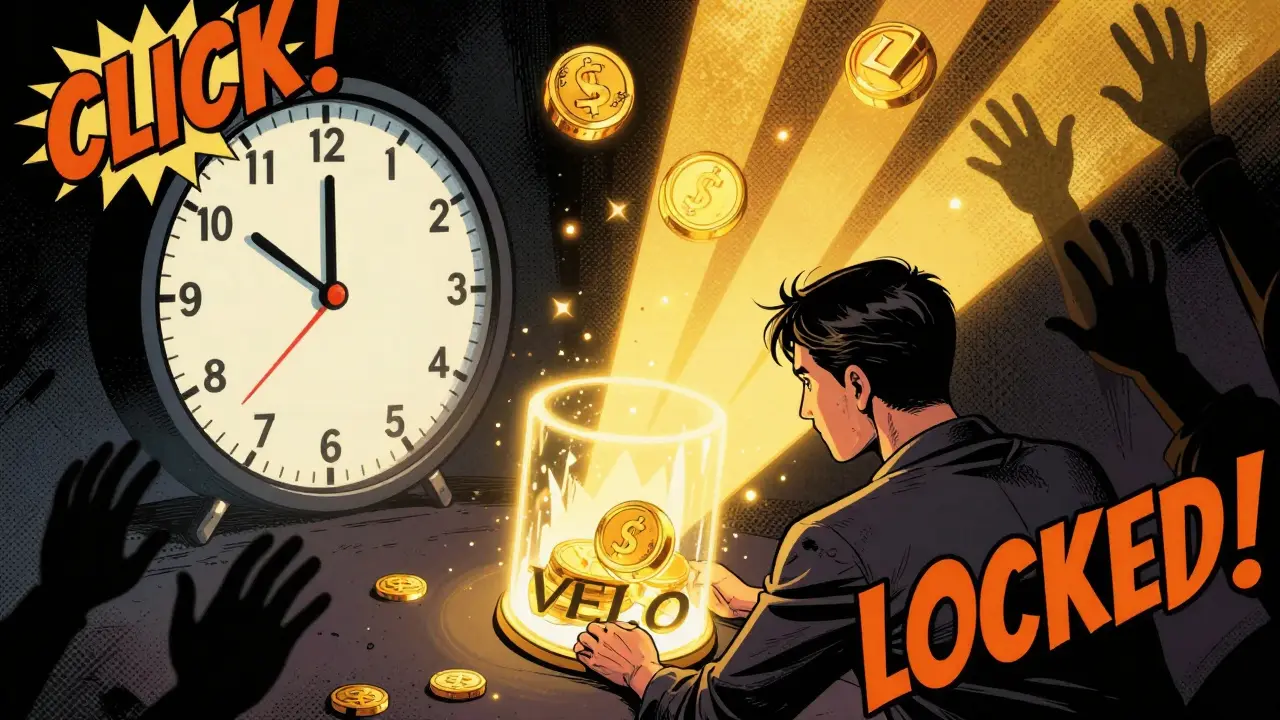
Is It Safe?
Yes - as safe as any well-audited DeFi protocol. Velodrome’s smart contracts have been reviewed by multiple firms, including CertiK and OpenZeppelin. No major exploits since launch. But safety here isn’t about hacks - it’s about tokenomics. If VELO emissions keep growing without demand, the token’s value could drop. That’s a risk you’re taking when you lock your tokens.What’s Next?
Velodrome’s roadmap focuses on deeper integrations with Optimism’s ecosystem - think more protocol bribes, better user interfaces, and expanded token support. Analysts expect institutional DeFi teams to increasingly use Velodrome as their go-to liquidity hub in 2026. But it’s still a niche product. It won’t dethrone Uniswap. But it doesn’t need to. It’s the preferred tool for a growing slice of DeFi users - those who care more about earning than convenience.Is Velodrome Finance V2 a centralized exchange?
No. Velodrome Finance V2 is a fully decentralized exchange (DEX) built on Optimism’s blockchain. All trades happen through smart contracts. There’s no company controlling funds, no KYC, and no central server. You keep your keys and your crypto.
Can I buy VELO with a credit card?
No. Velodrome does not offer fiat on-ramps. You need to buy VELO or other tokens on a centralized exchange like Binance or Coinbase first, then bridge them to Optimism using a wallet like MetaMask. Once on Optimism, you can use Velodrome.
How do I earn rewards on Velodrome?
You earn rewards by providing liquidity to trading pairs. For example, depositing WETH and USDC into a pool gives you LP tokens. You then stake those LP tokens on Velodrome to start earning VELO tokens every Thursday. You can also lock your VELO to get veVELO, which lets you vote on where emissions go - and sometimes earn bribes from projects.
Is Velodrome better than Uniswap?
It depends. If you’re a casual trader or want to swap tokens quickly, Uniswap is easier. But if you’re providing liquidity on Optimism and want to maximize earnings through fees, VELO rewards, and bribes, Velodrome is superior. It’s not a replacement - it’s a specialized upgrade for Optimism users.
What happens if I lock my VELO tokens?
When you lock VELO, you get veVELO, which gives you voting power in governance. The longer you lock (up to 4 years), the more voting weight you get. You can’t trade or move your VELO while locked, but you still earn rewards. Unlocking early means you lose some of your voting power and may face penalties.
Does Velodrome work on mobile?
There’s no official mobile app, but you can use Velodrome through mobile wallets like MetaMask or Rainbow. The website is responsive and works fine on phones. Just don’t expect a native app with push notifications or one-tap trading.
Are there any risks with veVELO locking?
Yes. The main risk is token dilution - if too many VELO tokens are emitted, the price could drop. Also, locking ties up your capital for years. If Optimism loses popularity, Velodrome’s value could fall. Always do your own research before locking tokens.
Bill Sloan
January 14, 2026 AT 18:43ASHISH SINGH
January 15, 2026 AT 18:55Vinod Dalavai
January 15, 2026 AT 19:41Chidimma Okafor
January 17, 2026 AT 08:46Andre Suico
January 18, 2026 AT 15:45Jill McCollum
January 19, 2026 AT 17:12Hailey Bug
January 21, 2026 AT 08:14Stephen Gaskell
January 23, 2026 AT 06:37CHISOM UCHE
January 23, 2026 AT 20:14Patricia Chakeres
January 24, 2026 AT 15:28Alexis Dummar
January 24, 2026 AT 23:02kristina tina
January 25, 2026 AT 06:19Anna Gringhuis
January 26, 2026 AT 03:10Michael Jones
January 26, 2026 AT 18:55Lauren Bontje
January 28, 2026 AT 15:08Stephanie BASILIEN
January 28, 2026 AT 19:28Deb Svanefelt
January 28, 2026 AT 23:16Telleen Anderson-Lozano
January 29, 2026 AT 18:57Haley Hebert
January 31, 2026 AT 15:41Dustin Secrest
February 2, 2026 AT 06:01Josh V
February 4, 2026 AT 00:52Hannah Campbell
February 4, 2026 AT 11:09