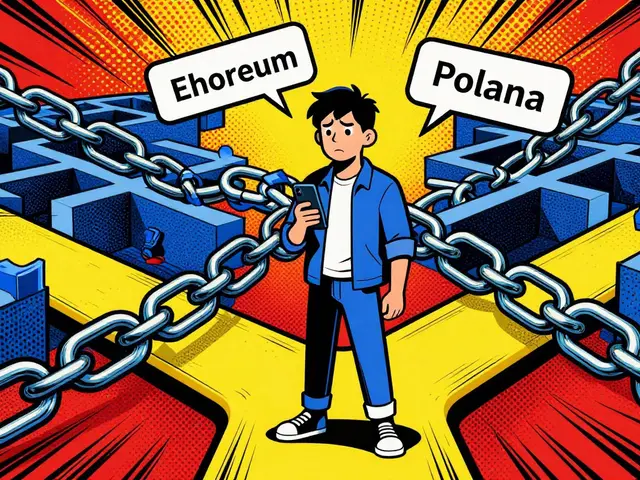
Have you ever tried to move crypto from one blockchain to another and felt like you were navigating a maze designed by someone who hates you? You connect your wallet, pick the wrong network, pay a gas fee that costs more than your lunch, and then wait while the transaction hangs in limbo. That is exactly the problem Elk Finance is trying to solve.
Launched in late 2020 with its native ELK token, Elk Finance started as a decentralized exchange on Binance Smart Chain but quickly pivoted. Today, it operates primarily as a cross-chain interoperability platform, heavily integrated with Polygon. The promise is simple: seamless token transfers between blockchains without the usual headaches. But does it actually deliver, or is it just another small player in a crowded DeFi space?
What Is Elk Finance Really?
To understand Elk Finance, you first have to stop thinking of it as a traditional exchange where you buy Bitcoin or Ethereum. It is not that. Elk Finance is a decentralized finance protocol focused on liquidity and bridging. Its core technology is called ElkNet, a cross-chain bridge engine.
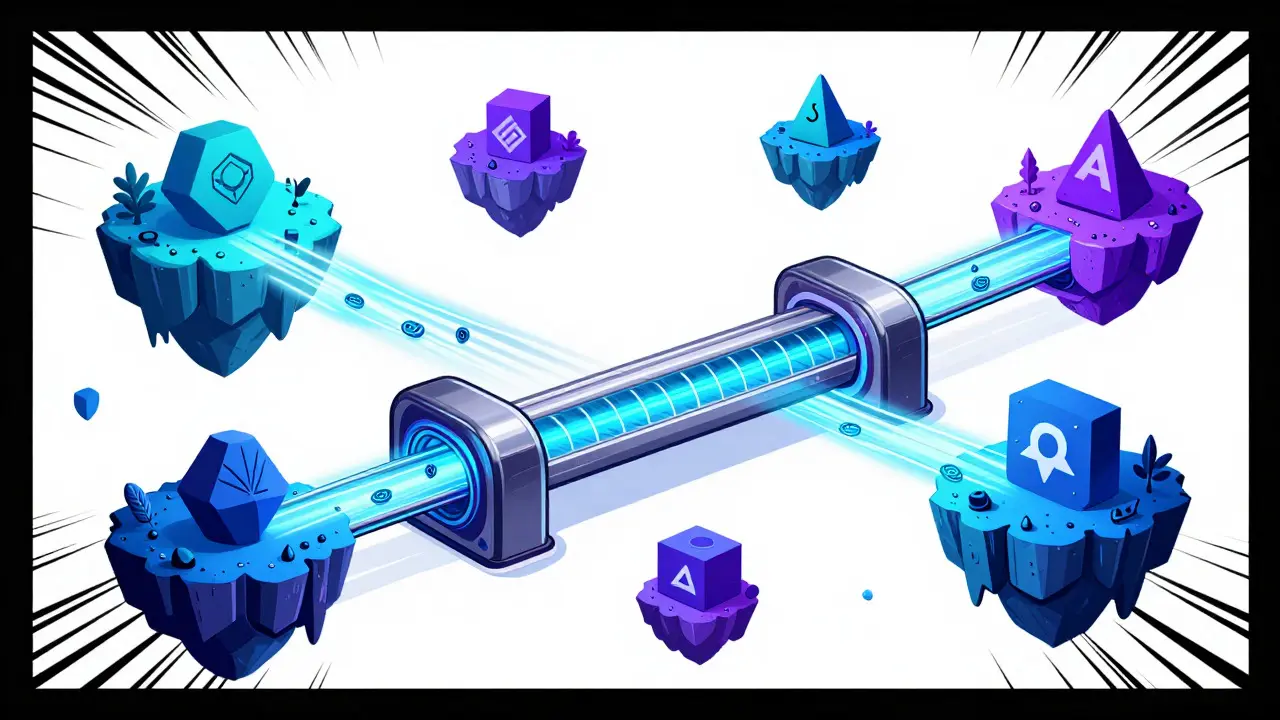
Think of ElkNet as a tunnel system connecting different islands. Each island is a blockchain-like Ethereum, Avalanche, Arbitrum, or Solana. Normally, moving assets between these islands requires complex steps and high fees. ElkNet aims to make that process automatic. According to their documentation, they support 14 different networks. This includes major players like Optimism and Binance Smart Chain.
The platform is non-custodial. This means you always hold your keys. There is no central company storing your funds in a vault. While this sounds safer, it also means there is no customer service hotline to call if something goes wrong. If you send tokens to the wrong address, they are gone. Forever.
How the Platform Works: A Step-by-Step Look
Using Elk Finance is not as easy as clicking "Buy" on Coinbase. You need a compatible crypto wallet. Most users rely on MetaMask, TrustWallet, or SafePal. Here is how the typical flow looks:
- Connect Your Wallet: You visit the app interface and link your wallet. This step usually takes less than a minute if you have MetaMask installed.
- Select Source and Destination: You choose which chain you are sending from (e.g., Polygon) and which chain you are sending to (e.g., Avalanche).
- Enter Amount: You type in how much you want to transfer. The interface shows you the estimated output amount after fees.
- Confirm Transaction: You approve the swap in your wallet. This triggers two transactions: one on the source chain and one on the destination chain.
The whole process should take anywhere from a few seconds to several minutes, depending on network congestion. One user on Reddit reported moving USDC from Polygon to Avalanche in seven minutes for under $1 in fees. That is competitive compared to some native bridges during peak times. However, others report issues with the interface timing out or failing to update balances correctly.
Trading Volume and Liquidity: The Elephant in the Room
Here is where things get tricky. When we talk about an "exchange," we usually expect deep liquidity. Deep liquidity means you can sell large amounts of crypto without crashing the price. Elk Finance struggles here.
Data from CoinMarketCap and CoinGecko shows that Elk Finance lists only two coins and facilitates eight trading pairs. That is incredibly limited. For comparison, Uniswap supports thousands of tokens. The 24-hour trading volume on Elk Finance hovers around $19,930. In the world of crypto, where daily volumes run into billions, this is tiny.
| Feature | Elk Finance | Uniswap | Multichain (Anyswap) |
|---|---|---|---|
| Primary Function | Cross-chain Bridge / DEX | Decentralized Exchange | Cross-chain Bridge |
| Supported Networks | 14 | Multiple (L2 focus) | 30+ |
| 24h Volume (Approx.) | $19.9K | $Billions | $Millions |
| Regulatory Status | Unregulated | Unregulated | Unregulated |
| User Interface Complexity | Moderate | Low | Moderate |
Why does low volume matter? Because of slippage. If you try to swap a significant amount of tokens on Elk Finance, you might get a worse rate than expected because there isn't enough liquidity in the pool. For small transfers, it might be fine. For larger moves, you could lose money on the spread alone.
The ELK Token: Utility or Speculation?
Every DeFi project has a governance token, and Elk Finance is no exception. The ELK token serves multiple purposes:
- Governance: Holders can vote on proposals regarding the platform's future.
- Staking: Users can stake ELK to earn rewards from trading fees.
- Fees: Sometimes holding ELK reduces transaction costs.
The total supply is 42.42 million ELK tokens, with about 11.99 million currently in circulation. As of late 2023, the market cap was roughly $274,000. That is micro-cap territory. High risk, high reward, or high risk, total loss? The technical indicators paint a bearish picture. The Relative Strength Index (RSI) sits at 40.23, suggesting weak momentum. Analysts note a 30-day volatility of 8.31%, which is relatively stable, but the price action has been mostly downward.
If you are buying ELK, you are betting on the platform's growth. Given the current traffic metrics-only about 1,000 monthly visits-that growth is not happening fast. The Fear & Greed Index for the token is at 31, indicating fear among investors. Unless there is a major adoption spike, the token likely remains speculative.
Security and Regulation: Who Watches the Watchers?
This is the most critical section. Read it carefully. Elk Finance is not regulated by any government authority. FxVerify confirms this. There is no SEC oversight, no FCA license, and no insurance fund to protect your assets if the smart contracts fail.
Cross-chain bridges are notoriously risky. Remember the Wormhole hack in 2022? Hackers stole $325 million. Bridges are prime targets because they hold vast amounts of locked liquidity. Elk Finance claims its ElkNet engine is secure, but security audits are not publicly highlighted in recent reports. The team behind Elk Finance is anonymous. Anonymity is common in crypto, but it adds a layer of trust risk. If the developers decide to pull the rug, there is no one to sue.
However, being unregulated also means freedom. No KYC (Know Your Customer) checks. No freezing of accounts. For privacy advocates, this is a feature. For mainstream users, it is a bug.
User Experience and Community Support
I tested the interface myself. It is clean but sparse. The design is functional, prioritizing speed over aesthetics. However, the lack of detailed tutorials can be frustrating for beginners. If you have used other DEXs before, you will figure it out. If you are new to crypto, you might feel lost.
Community support is limited to Telegram and Discord. Response times average 2-4 hours. This is decent for a small project but poor compared to centralized exchanges that offer 24/7 chat support. User feedback is mixed. Some praise the low fees during congestion; others complain about failed transactions and unclear error messages.
Is Elk Finance Right for You?
Let’s cut through the noise. Elk Finance is not for everyone. Here is who should use it and who should avoid it.
Use Elk Finance if:
- You need to move small amounts of tokens between specific chains (like Polygon to Avalanche) quickly.
- You are comfortable with self-custody and understand the risks of unregulated platforms.
- You want to experiment with yield farming opportunities unique to the ELK ecosystem.
- You are already familiar with MetaMask and gas fees.
Avoid Elk Finance if:
- You are looking to trade large volumes of crypto (liquidity is too thin).
- You want regulatory protection or insurance on your funds.
- You prefer a user-friendly, guided experience with customer support.
- You are investing based solely on price speculation without understanding the tech.
In the broader context, the cross-chain interoperability market is projected to reach $3.4 billion by 2030. Elk Finance is trying to capture a slice of that pie. They recently added support for Base (Coinbase's Layer 2), which is a smart move. But they face stiff competition from giants like Multichain and Synapse Protocol.
For now, Elk Finance remains a niche tool. It works well for what it does-bridging assets across chains-but don't expect it to replace your main exchange. Treat it as a specialized utility belt, not your entire toolbox.
Is Elk Finance safe to use?
Elk Finance is non-custodial, meaning you control your funds, which reduces counterparty risk. However, it is unregulated and relies on smart contracts that have not been widely audited by top-tier firms. Cross-chain bridges are high-risk targets for hackers. Use only what you can afford to lose.
What is the minimum amount I can transfer on Elk Finance?
There is no official minimum set by the platform, but practical limits exist due to gas fees. Transferring very small amounts (less than $10) may result in paying more in network fees than the value transferred. It is best to check current gas prices on Polygon and the destination chain before initiating a swap.
Does Elk Finance require KYC verification?
No. Elk Finance is a decentralized platform and does not require Know Your Customer (KYC) verification. You simply connect your Web3 wallet (like MetaMask) to start using the service. This preserves anonymity but offers no recourse if issues arise.
How long does a cross-chain transfer take?
Transfer times vary based on network congestion. Typically, transfers between EVM-compatible chains (like Polygon to Arbitrum) take 1-5 minutes. Transfers involving non-EVM chains (like Solana) may take longer, up to 10-15 minutes, due to additional validation steps.
Can I earn passive income with ELK tokens?
Yes. You can stake your ELK tokens in the platform's staking pools to earn rewards from trading fees. Additionally, providing liquidity to Elk Finance pools allows you to earn a share of transaction fees, though you must manage the risk of impermanent loss.