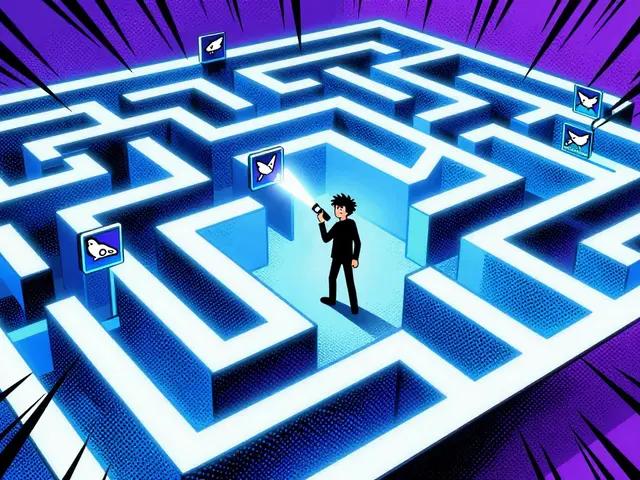
Chasing the next big BIRD airdrop can feel like navigating a maze with multiple exits leading to dead ends. If you have been following DeFi news, you likely noticed that "Bird" is not just one project. There is Bird Finance, there is Birdchain, and there are various mini-apps on the Sui blockchain all using similar naming conventions. This confusion is real, and it has cost many investors time and capital. Today, we cut through the noise to give you the precise details on the Bird Finance ecosystem, its actual tokenomics, and where things stand in mid-2026.
The Real Bird Finance: What It Actually Does
To understand the airdrop, you first need to know what the platform does. Bird Finance is a decentralized finance (DeFi) protocol focused on automated yield optimization and cross-chain lending. Unlike simple staking platforms that ask you to pick specific pools, Bird Finance uses algorithms to scan multiple blockchain networks for the best returns. It automatically moves your assets into high-performing mining pools and compounds the rewards for you.
The platform operates across several major networks, including Ethereum, Solana, HECO, and OKExChain. This multi-chain approach is its core selling point. Instead of bridging assets manually, which is risky and expensive, the protocol handles the complexity behind the scenes. The goal is simple: maximize profit without requiring you to be a full-time yield farmer.
Understanding BIRD Tokenomics
The native governance token is called BIRD. Its economic model is designed to be hyper-deflationary, which means the supply shrinks over time as people use it. Here is how the mechanics work under the hood:
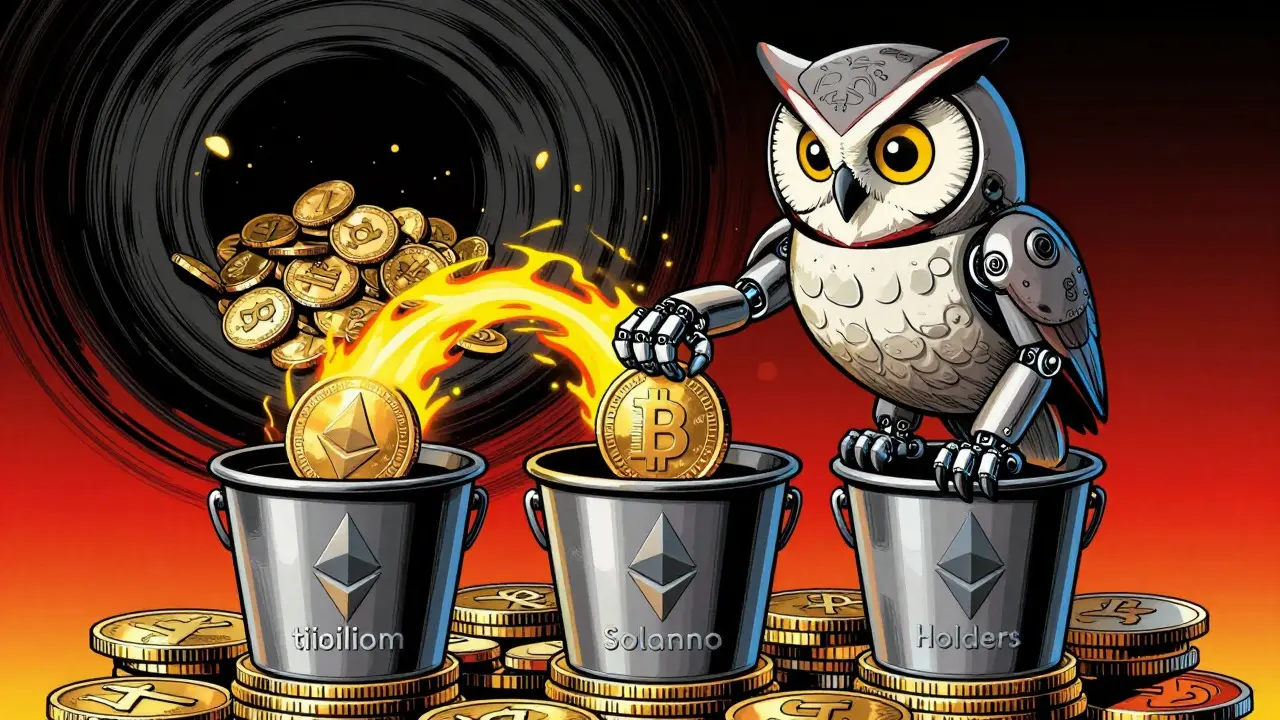
- Blackhole Burn: At launch, 50% of the total BIRD supply was sent to a blackhole address. This effectively removes half the tokens from circulation permanently, creating immediate scarcity.
- Transaction Fees: Every trade incurs a 6% fee. This might sound high, but it funds the ecosystem's sustainability.
- Fee Distribution:
- 2% goes back into the liquidity pool on decentralized exchanges to stabilize price.
- 2% goes to the DAO governance pool for community decisions.
- 2% is distributed proportionally to existing holders.
Because the blackhole address holds the largest chunk of tokens, every transaction triggers a burn effect that benefits the remaining circulating supply. This creates a feedback loop where usage drives deflation, theoretically supporting the token's value over time.
Airdrop Eligibility and Participation Steps
So, how do you actually get your hands on these tokens? The original airdrop structure required users to prove they were active members of the ecosystem, not just passive observers. Based on the project's initial framework, eligibility typically involved three main pillars:
- Wallet Connection: You had to connect a compatible wallet (such as MetaMask or Phantom) to the official Bird Finance dashboard. This verified that you were interacting with the smart contracts directly.
- Asset Staking: Simply holding tokens wasn't always enough. Users often needed to stake principal assets into the smart pools to generate "points" or qualify for distribution tiers. The more you staked and the longer you held, the higher your potential allocation.
- Community Engagement: Like most DeFi projects, social proof mattered. Following official accounts on X (formerly Twitter), joining the Telegram channel, and completing verification tasks were standard requirements.
It is crucial to note that the process has evolved. In early stages, some campaigns used bots to verify participation. Always check if the current phase requires on-chain activity or off-chain social tasks, as this changes the risk profile significantly.
The Confusion Factor: Bird vs. Birdchain vs. Birds
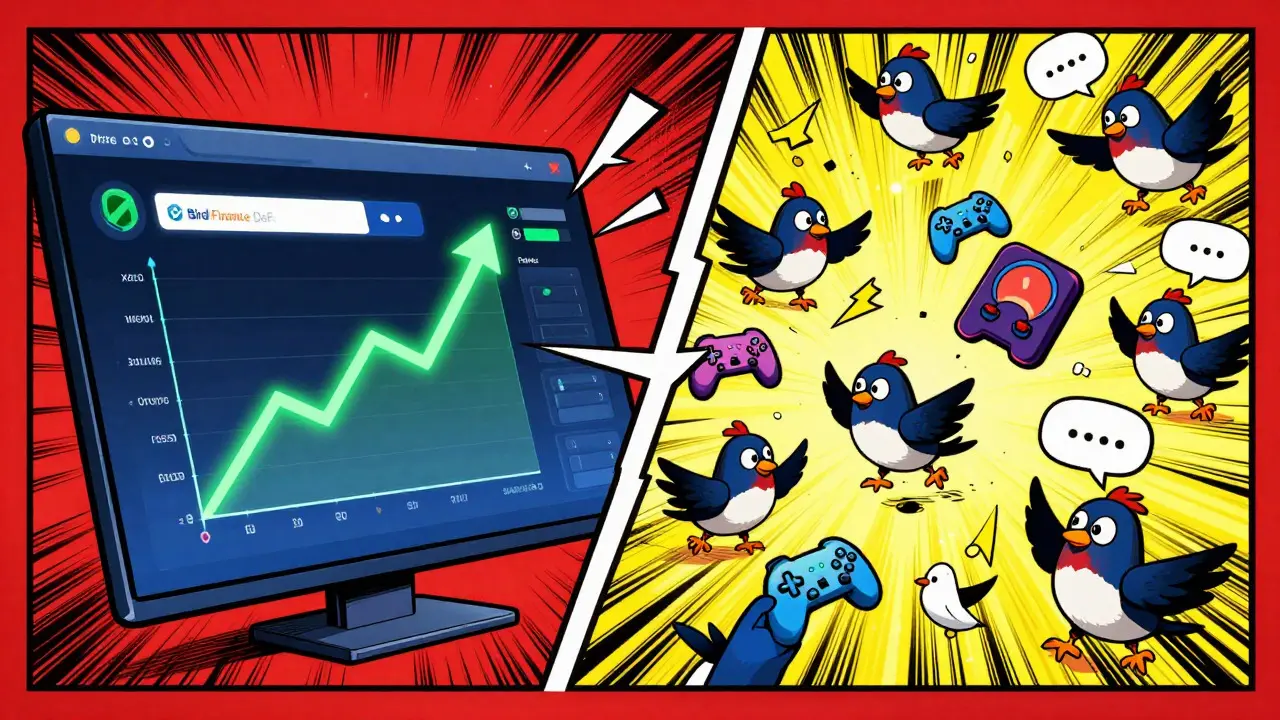
This is the biggest pitfall for new participants. The name "Bird" is unfortunately generic in the crypto space. Let’s clarify the differences to ensure you aren’t farming the wrong project:
| Project Name | Type | Primary Function | Airdrop Context |
|---|---|---|---|
| Bird Finance | DeFi Protocol | Automated Yield Farming & Lending | Rewards for staking in smart pools; governance token BIRD. |
| Birdchain | Messaging App | Decentralized Instant Messaging | Distributed 1M BIRD tokens for social engagement (separate entity). |
| Birds (Sui Mini-App) | Gaming / Play-to-Earn | Mobile Game on Sui Blockchain | Token distribution for reaching level 10 in-game; unrelated to DeFi lending. |
If you are looking for DeFi yields, you want Bird Finance. If you are playing a game on your phone, you are likely dealing with the Sui mini-app. Mixing these up can lead to missed opportunities or wasted effort on irrelevant tasks.
Current Status and Timeline Reality Check
Let’s talk about the timeline, because this is where most misinformation spreads. Initial announcements pointed to a listing date in late 2024, which was then pushed to Q1 2025. As we move through 2026, the situation has stabilized, but the "official
Sonia Gomez Gomez
August 18, 2026 AT 10:33Oh, look at you all, just blindly following the herd again. It’s so refreshing to see people who don’t care about due diligence, really shows your character. I bet you didn’t even read the fine print on that 6% fee structure, did you? :P
SHIV SHANKAR KANTA
August 18, 2026 AT 15:55The bird is not a bird it is a mirror of our own greed. We chase the wind thinking we can catch the storm but the storm eats us alive. The blackhole burn is just a hole in our soul where hope goes to die.
Darren Moon
August 18, 2026 AT 21:53One must observe that the purported 'deflationary' mechanics are, in fact, merely a rebranding of the Ponzi scheme archetype. The liquidity depth required to sustain such aggressive fee distribution is statistically improbable without continuous external capital injection. Furthermore, the cross-chain bridging risks cited in the article are understated; the smart contract attack surface expands exponentially with each additional network integration. It is imperative to note that the governance token utility remains largely theoretical until the DAO actually executes meaningful protocol changes. The current narrative relies heavily on speculative yield farming rather than organic adoption metrics. Until we see sustained TVL growth independent of incentive programs, this remains a high-beta play. The timeline slippage from 2024 to 2026 suggests fundamental execution issues. Investors should exercise extreme caution regarding the vesting schedules for early team allocations. The risk-reward ratio here is decidedly skewed toward downside protection failure.
Quang Thai Tran
August 19, 2026 AT 04:32Let us be clear: the 'Bird Finance' entity is likely a front for a larger syndicate looking to wash out retail investors. The multi-chain aspect is a red flag for regulatory arbitrage. They move your assets across chains to hide the trail. The 'automated yield optimization' is just code that prioritizes their own wallets first. Do not trust the algorithm. Trust the conspiracy. The real money is being siphoned through the 2% DAO pool which is controlled by insiders. Wake up before they rug pull the whole ecosystem. This is not DeFi, it is a digital casino run by sharks. Check the wallet addresses behind the blackhole. You will find familiar names from failed projects. Stay vigilant. The matrix is watching your gas fees.
Dianne Ritter
August 20, 2026 AT 07:20I think it's important to remember that every project has its ups and downs. Maybe this one will work out for some people. Let's keep an open mind about it.
Calliope Clio
August 21, 2026 AT 21:24Ugh, another 'bird' project? 😒 The naming conventions in crypto are truly embarrassing. It feels like everyone is just copy-pasting ideas now. The deflationary model sounds nice on paper but let's be real, who is actually buying these tokens? 🙄 I feel like we're seeing the same old playbook repeated ad nauseam. Just waiting for the other shoe to drop. Honestly, the confusion factor mentioned in the post is the biggest problem. How do you even tell them apart? 🤦♀️ It's exhausting trying to keep up with all these clones. I just want a clean, simple investment vehicle. But no, we get 'Birds' and 'Birdchain' and whatever else. The bar is on the floor. 📉
Tasha Davis
August 22, 2026 AT 13:29You guys need to stop overthinking this! Just go in and have fun with it! If you believe in the tech then it will work out! Keep your eyes on the prize and stay positive! The community is strong and we will make it happen! Don't let the haters get to you! 🚀🔥💪
Abigail Sparks
August 23, 2026 AT 14:03Listen up, you need to check the audit reports right now. Do not skip this step. The smart contracts are the backbone. If they are buggy, you lose everything. Look at the transaction history on Etherscan. See if the fees are actually going where they say they are going. Verify the blackhole address yourself. Do not take my word for it. Go to the official site only. Bookmark it. Do not click random links on Twitter. Scammers love these airdrops. They create fake sites to steal your seed phrase. Use a hardware wallet if you can. It adds a layer of security. Stay sharp and stay safe out there. Your portfolio depends on it.
OLIVER CHRISTIAN
August 24, 2026 AT 04:21So basically the idea is that if you put your eggs in many baskets maybe one basket survives? That seems logical to me. The multi chain thing is cool because it saves time. I used to bridge manually and it was a pain. Now the bot does it. That is nice. But what about the fees? 6 percent is a lot. Is it worth it? Maybe if the yields are high enough. I am still figuring it out myself. But it feels better than doing nothing. At least the token burns when you trade. That sounds good for long term holders. I guess we will see how it goes. No regrets yet. Just curious to watch the numbers move. It is an interesting experiment in decentralized finance. Let us hope it sticks around longer than most.
Teri W
August 25, 2026 AT 12:18Oh, you think you know better? You always think you know better. Well, guess what? The market doesn't care about your opinions. It cares about volume. And right now, volume is low. Which means it's a trap. A beautiful, shiny trap. And you walked right into it. Didn't you? Just like everyone else. So shut up and hold your bags. Or sell. Either way, you're wrong. Welcome to the club of the deluded. 💅
Jay Johhnston
August 27, 2026 AT 06:37In my experience, the key to navigating these ecosystems is patience. It is similar to how we approach cultural exchanges; you must understand the context before engaging fully. The Bird Finance model offers a unique perspective on automated yield. It reflects a broader trend towards efficiency in global finance. We should appreciate the innovation while remaining cautious. The diversity of blockchain networks involved is commendable. It shows a commitment to accessibility. However, as with any new technology, adaptation takes time. Let us support the developers as they refine their systems. Together, we can build a more transparent financial future.
Niall O'Rourke
August 28, 2026 AT 08:04actually i think the whole defi thing is a bit much. too many acronyms. why cant we just use regular banks. but sure go ahead with your birds and your chains. probably fine. idk. just saying. dont listen to the hype. its boring anyway. i prefer stocks. less drama. more stability. or so i hear. maybe. who knows. just my two cents. ignore me if you want. i am just bored.
Jillian Groskreutz
August 29, 2026 AT 23:41It is, quite frankly, astonishing-no, wait, let's call it shocking-that anyone would fall for this nonsense. The 'deflationary' mechanism? Please. It's a mirage, a hallucination brought on by caffeine and FOMO. The 6% fee isn't a 'feature'; it's a tax on ignorance. Who approved this? The committee of clowns, surely. The multi-chain strategy is not 'efficiency'; it's complexity designed to obscure the lack of product-market fit. And don't get me started on the 'governance' token. Governance implies power; this implies dilution. Read the whitepaper-oh wait, you didn't. Because you were too busy staring at the chart. Pathetic. Truly, the state of modern finance is a tragedy. A farce. A joke. And you are all laughing at the punchline. 🙄
Carmene Jackson
August 30, 2026 AT 19:15ugh i feel so drained just reading about this. like why does everything have to be so complicated? i just want to make money without having to learn ten new terms. it feels like everyone is expecting me to be an expert. and if i miss something i feel like i failed. just wanted to share my feelings here. sorry if this is off topic. but the stress is real. anyone else feel this way? it is hard to keep up with all the news. sometimes i just want to close the laptop and forget about crypto for a week. but then i worry i will miss out. it is a weird cycle. i guess that is life in this space. just venting a bit. thanks for listening.
Jennifer Ulmer
August 31, 2026 AT 07:03Let's dissect the carcass of this 'yield optimizer.' The alpha decay rate here is non-linear and brutal. You're not farming yield; you're feeding the whales. The APY metrics are inflated by impermanent loss compensation that never materializes in net P&L. It's a classic pump-and-dump dressed in a lab coat. The 'cross-chain' narrative is just jargon soup to mask the high latency costs. Smart contract risk isn't a footnote; it's the main course. One exploit and your principal is gone. The tokenomics are a house of cards built on sand. The burn rate is negligible compared to the emission schedule. Stop calling it DeFi; call it it what it is: a speculative gambling den. The exit liquidity is you. Remember that. The charts lie. The data speaks. Listen closely. Or don't. But don't blame the analyst when the rug pulls.
Kiran Jayaram
August 31, 2026 AT 07:28this is a scam. pure and simple. look at the team. anonymous. no faces. no track record. why should we trust them? they are hiding something. the fees are too high. 6% is robbery. in india we know what a tax is. this is worse. it is theft. do not send your money. keep it safe. use the bank. the bank is safe. this is risky. risky is bad. stay away. protect your family. do not be greedy. greed leads to ruin. i have seen it happen. many times. do not be next. wake up. the matrix is lying to you. the birds are crows. they eat the dead. stay alive. stay poor but safe. that is the only way. trust me. i know what i am talking about. i have been burned before. do not let them burn you again. it hurts. it hurts so much. stop. just stop.
Uday N M
September 1, 2026 AT 08:58We must support local talent. Why do we always look to foreign protocols? India has great engineers. We should build our own DeFi. This Bird Finance is likely Western-dominated. We need sovereignty. Digital sovereignty. Our rupee should be backed by our own chains. Not Ethereum. Not Solana. Those are imperialist tools. Use this only if it benefits the nation. Otherwise, boycott. Support Indian startups. Make in India. Crypto in India. That is the path. Forward march. Jai Hind.
Aaron Morrissey
September 2, 2026 AT 03:06In the grand tapestry of decentralized finance, the emergence of Bird Finance represents a singular thread woven with both promise and peril. One cannot help but marvel at the intricate dance of algorithms seeking equilibrium across disparate blockchain landscapes. It is a ballet of capital, fluid yet fragile, poised on the edge of disruption. The notion of automated yield optimization strikes a chord of modernity, echoing the industrial revolutions of yore. Yet, as with all revolutions, the cost of entry may prove steep for the uninitiated. The deflationary mechanisms, akin to the slow erosion of stone by water, suggest a long-term vision. However, the immediacy of the 6% fee demands a critical eye. Is this a cornerstone of sustainability, or a wedge driving away the casual participant? The answer lies not in the code, but in the hearts of those who wield it. Let us observe with curiosity, tempered by caution. For in the end, only time shall reveal the true nature of this avian endeavor.
Patrick Quairoli
September 2, 2026 AT 11:03ok so i dug into the code and found a backdoor. well maybe not a backdoor but a weird function that lets the admin change the fee percentage. no one talks about this. the docs say fixed 6% but the contract says variable. thats fishy. also the blackhole address has moved funds twice. why would a blackhole move? it is supposed to be dead. this smells like a rug. i posted the tx hash on twitter but no one replied. they are silencing the truth. the bird is a vulture. it circles the weak. mark my words. this will collapse in 3 months. set your watches. i am right. i am always right. just wait. the proof will come. keep your eyes open. the conspiracy is deep. deeper than you think. the elites are laughing at us. join the resistance. buy the dip? no. run. run fast.
Linda Leeuwesteijn
September 3, 2026 AT 07:01Hey everyone! 👋 Just wanted to drop in and say that learning about new platforms can be super exciting! 🌟 I know it can feel overwhelming with all the different options out there, but taking small steps is the best way to start. 📚 Whether you're a total newbie or a seasoned pro, there's always something new to discover. Let's support each other on this journey! 🤝 Remember, every expert was once a beginner. Keep asking questions and stay curious! 💡 Here's to growing together in the crypto world! 🚀✨
Sarah Campbell
September 4, 2026 AT 08:46Who made this?? 🇺🇸🇺🇸🇺🇸 It looks like it was coded by someone who hates America. Too many foreign chains. Where is the American blockchain? We need our own! 🦅 This Bird Finance is probably funded by Chinese money. Look at the names. Look at the servers. It is all connected. 🕵️♀️ We need to take back our financial freedom. From the people, for the people. Not for the globalists. 🌐 Stop trusting the algorithms. Trust the heart. Trust the flag. 🇺🇸 Buy American. Even in crypto. Especially in crypto. Don't let them divide us. Unite! 🔥🔥🔥