
You’ve probably seen the ads promising easy crypto trading and high returns. Maybe you clicked on a link for B4U Wallet is a centralized cryptocurrency exchange and wallet platform designed to enable users to store, buy, sell, and exchange multiple cryptocurrencies through a single interface. The site looks clean, the promises sound tempting, and the process seems simple. But in the world of digital assets, simplicity often hides complexity-or worse, danger. Before you send even a single dollar to this platform, you need to know what’s really going on behind the curtain.
We are in August 2026. The crypto market has matured significantly since the early days. We now have strict regulations in many countries, established exchanges with billions in volume, and clear red flags that separate legitimate platforms from fraudulent schemes. When we look at B4U Wallet & Exchange, the picture isn’t just blurry; it’s concerning. This review cuts through the marketing noise to give you the facts, the risks, and the hard truths about whether this platform deserves your trust.
The Core Offering: What Is B4U Wallet?
At its surface level, B4U Wallet presents itself as a straightforward tool for managing digital currency. It claims to be a centralized exchange is a type of cryptocurrency platform where a third party controls the blockchain wallets and transactions, unlike decentralized exchanges where users retain control of their private keys. This means you deposit funds, they hold them, and you trade within their ecosystem. For beginners, this sounds convenient. You don’t want to deal with complex seed phrases or hardware wallets yet. You just want to buy Bitcoin or Ethereum easily.
The platform supports a specific list of major cryptocurrencies. According to their documentation, you can hold and trade:
- Bitcoin (BTC)
- Ethereum (ETH)
- Litecoin (LTC)
- Ripple (XRP)
- Dash Coin
- ZCash
- Bitcoin Cash
- RSCoin
That’s a decent selection for a basic trader. They also claim to support fiat currencies like the US Dollar, Euro, Malaysian Ringgit, and Singapore Dollar. This suggests they are targeting both Western users and those in Southeast Asia. However, supporting these currencies doesn’t mean they are licensed to operate in all regions where these currencies are used. That distinction matters immensely when it comes to legal protection.
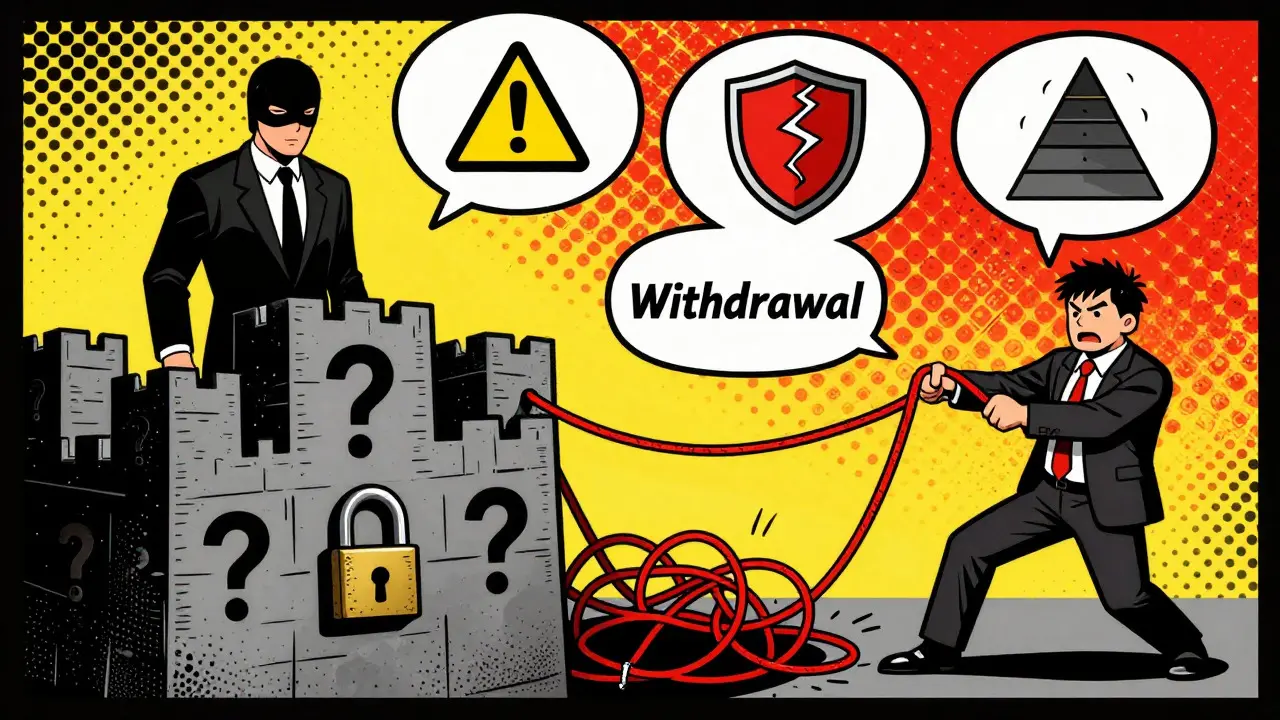
The Red Flags: Security and Transparency Gaps
When evaluating any financial platform, especially one handling volatile assets like crypto, transparency is non-negotiable. Legitimate exchanges publish regular security audits, detail their insurance policies, and provide clear information about their regulatory status. B4U Wallet falls short in almost every one of these areas.
First, let’s talk about security. The website mentions “multilayer security protocols” and “secure private keys.” These are buzzwords. Every scam site uses them. What matters is the specifics. Do they use cold storage for the majority of user funds? Are there multi-signature requirements for withdrawals? Have they undergone independent security audits by firms like CertiK or SlowMist? As of March 2026, none of this information is publicly available. If an exchange doesn’t tell you how they protect your money, assume they aren’t protecting it well.
Then there’s the issue of anonymity. The platform touts “anonymous transactions” and “enhanced privacy measures.” While privacy is a valid concern for some users, in the context of a centralized exchange, it often works against you. If you’re anonymous, who do you complain to if your account is frozen? Who do you sue if the platform disappears? Regulated exchanges require Know Your Customer (KYC) verification precisely so that users have recourse. Anonymity in a centralized model usually benefits the operators, not the customers.
| Feature | B4U Wallet | Established Exchanges (e.g., Coinbase, Kraken) |
|---|---|---|
| Regulatory Status | Unclear / Unverified | Licensed in multiple jurisdictions |
| Security Audits | None published | Regular third-party audits |
| Insurance | Not mentioned | Cold storage insurance available |
| User Reviews | Virtually none | Thousands of verified reviews |
| API Access | Contradictory info | Well-documented APIs |
| Fees | Unknown | Transparent fee schedules |
Look at that table. The contrast is stark. Established players compete on fees, speed, and customer service because they have millions of users to keep happy. B4U Wallet competes on... nothing verifiable. The lack of transparent fee structures is another major warning sign. In finance, hidden fees are where profits are made. If you don’t know what you’re paying, you’re likely paying more than you think.
The Elephant in the Room: B4U Trades Investment
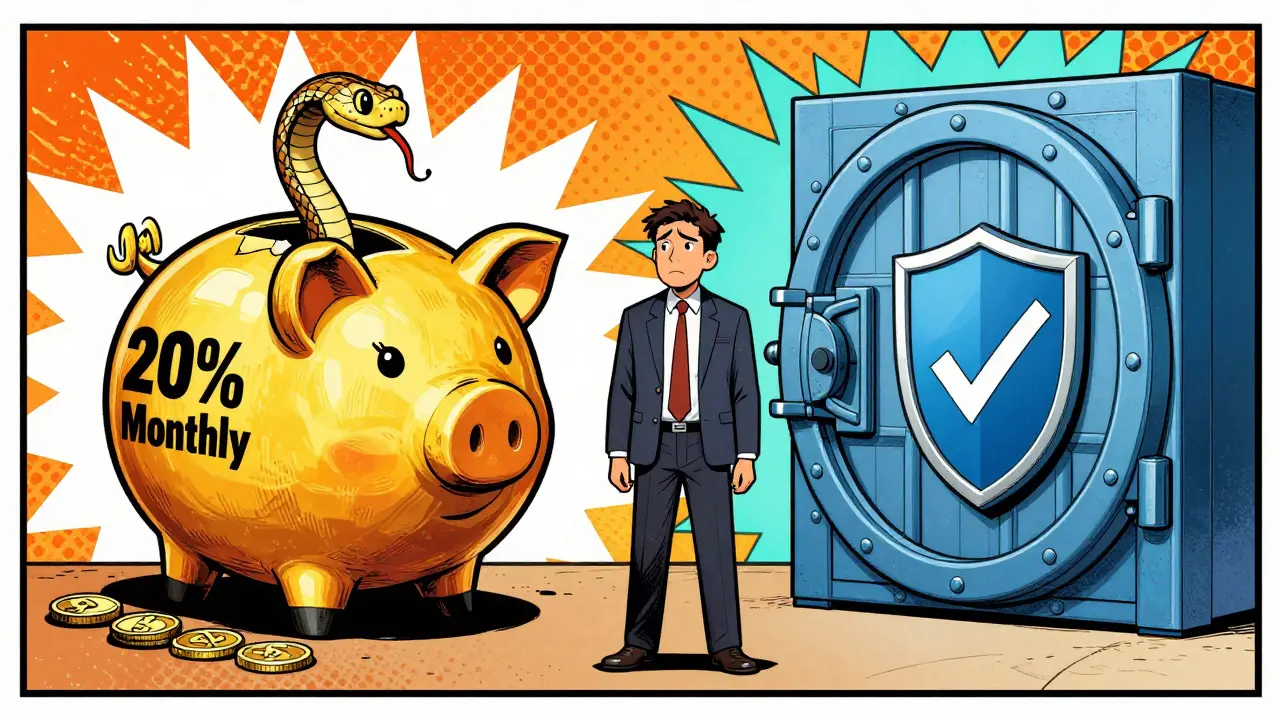
Here is where things get dangerous. During research, a significant connection emerged between B4U Wallet and an entity called B4U Trades Investment is an associated investment product linked to the B4U brand, claiming to generate monthly profits of 7-20% for investors.. This is not just a side feature; it’s a massive red flag that should make any rational investor pause.
B4U Trades Investment claims to allocate 60% of deposits to cryptocurrency trading and 40% to other business sectors. In return, they promise monthly profits of 7% to 20%. Let’s break down why this is virtually impossible.
In the traditional stock market, a 10% annual return is considered excellent. A 7% *monthly* return compounds to over 1000% annually. Even the most successful hedge funds in history rarely double that. In the volatile crypto market, while spikes happen, consistent monthly returns of this magnitude without extreme risk are a myth. When a platform guarantees high returns, they are usually using new investors’ money to pay old investors-a classic Ponzi scheme structure.
The fact that this investment arm is linked to the exchange platform creates a conflict of interest. Why would you trust an exchange to hold your assets if the same company is running a potentially fraudulent investment scheme? It suggests that the exchange might exist primarily to funnel users into the high-yield investment program. Once you’re in, getting your money out could become difficult.
Technical Contradictions and Operational Opacity
Even the technical details provided by B4U Wallet are confusing. Aggregator sites list their API status as “Active,” but the platform’s own documentation states they do not have an API available. Which is it? For a tech-driven product, consistency in basic information is expected. This contradiction suggests poor management or outdated maintenance.
Furthermore, there is no clear information about the founding team. Who built this? Where are they based? Are they anonymous? Legitimate companies have founders with public profiles, LinkedIn pages, and industry reputations. Anonymity in leadership is common in crypto startups, but it becomes a liability when combined with vague security practices and aggressive investment promises.
The platform appears on aggregators like CoinMarketCap and Blockspot.io. Don’t let this fool you into thinking they are vetted. These sites list thousands of tokens and exchanges. Being listed does not mean being safe. It just means someone paid a listing fee or submitted the data. Many scams have been listed on major trackers before vanishing overnight.
Who Is This Platform Actually For?
If you strip away the hype, who benefits from B4U Wallet? It seems tailored for inexperienced traders who are drawn in by the promise of ease and high returns. The “user-friendly” interface is a lure. The “anonymous” nature appeals to those wary of KYC, perhaps for legitimate privacy reasons, but often for less scrupulous purposes. The association with B4U Trades targets the dreamer-the person who wants to get rich quick without understanding the risks of leverage or market volatility.
For experienced traders, this platform offers little value. No advanced charting tools, no deep liquidity pools, no spot/futures markets, and no clear fee structure. You wouldn’t use B4U Wallet to execute a serious trading strategy. You’d use Binance, Kraken, or Coinbase Pro. So why does B4U exist? To capture the low-hanging fruit of novice users.
Verdict: Proceed with Extreme Caution
So, is B4U Wallet a scam? Without a court ruling, it’s hard to say definitively. But it exhibits nearly every characteristic of a high-risk or fraudulent operation. The lack of regulatory clarity, the absence of security audits, the contradictory technical information, and most importantly, the linkage to an investment scheme promising unrealistic returns, create a perfect storm of risk.
In 2026, you have better options. Regulated exchanges offer bank-grade security, insurance on holdings, and legal recourse if something goes wrong. They may require ID verification, but that’s the price of safety. With B4U Wallet, you are gambling on the honesty of an unknown entity. In my experience reviewing dozens of platforms, I’ve learned that if a platform has to hide its basics, it’s hiding something bad.
My advice? Keep your funds on reputable, regulated exchanges. If you must try B4U Wallet, treat it like a casino. Only put in money you are 100% prepared to lose. Never invest life savings, never chase the 20% monthly returns promised by B4U Trades, and always withdraw your profits immediately if you manage to make any. But honestly, the safest move is to walk away.
Is B4U Wallet regulated?
As of August 2026, there is no clear evidence that B4U Wallet holds licenses from major financial regulators such as the SEC (USA), FCA (UK), or ASIC (Australia). The lack of regulatory disclosure is a significant risk factor for users.
Are the profit claims from B4U Trades realistic?
No. Claims of guaranteed 7-20% monthly returns are statistically unrealistic for sustainable investments. Such high yields are typical indicators of Ponzi schemes or high-risk binary options trading, where most users eventually lose their capital.
What cryptocurrencies does B4U Wallet support?
The platform lists support for Bitcoin, Ethereum, Litecoin, Ripple, Dash, ZCash, Bitcoin Cash, and RSCoin. However, the liquidity and availability of these pairs may vary, and trading fees are not transparently disclosed.
Does B4U Wallet have an API?
There is conflicting information. Some aggregator sites list the API as active, while the platform’s own documentation suggests it is unavailable. This inconsistency raises doubts about the platform's technical reliability and maintenance.
How does B4U Wallet compare to Coinbase or Binance?
Compared to giants like Coinbase or Binance, B4U Wallet lacks transparency, regulatory compliance, security audits, and user trust. Major exchanges publish fee schedules and security reports, whereas B4U Wallet operates with significant opacity, making it a much riskier choice for storing assets.
Can I trust anonymous transactions on B4U Wallet?
While anonymity protects privacy, it removes accountability. If the platform freezes your funds or goes offline, anonymous registration makes it nearly impossible to recover your assets through legal channels. Regulated exchanges require KYC to ensure user protection.


Matthew Smith
August 9, 2026 AT 21:44the moral decay of society is evident in how we blindly trust digital promises over tangible reality. it is a sin to gamble with one's livelihood on such opaque structures. the soul requires stability not these fleeting crypto mirages.
Dominic Greco
August 10, 2026 AT 04:01they are watching you 🕵️♂️ the whole thing is a psyop designed to track your spending habits while they steal your identity. don't let them win stay offline and keep your cash under the mattress 💰🔒
Sean Rowland
August 11, 2026 AT 15:02you are all missing the nuanced geopolitical implications of decentralized ledger technology vis-à-vis state sovereignty. the API contradiction is merely a red herring to distract from the deeper existential crisis of fiat currency hegemony. furthermore the notion that anonymity is bad is a construct of the surveillance state itself.
Aryan MISHRA
August 12, 2026 AT 05:06Listen!; You must understand!; The liquidity depth is shallow!; Do not deposit!; It is dangerous!;
Ryan Robinson
August 13, 2026 AT 09:26i mean its kinda sus but maybe they just havent updated their docs yet? people should chill out a bit before calling it a total scam lol
Earl Kott65
August 13, 2026 AT 16:51Oh wow, look at all these panic buttons being pressed 😱 Are we really this scared of a little volatility? I bet if you just held tight, you'd be laughing all the way to the bank 🏦💸 But sure, call me crazy for seeing potential where others see danger 🤷♂️
Ethan Yuwono
August 14, 2026 AT 20:06it is interesting to consider the philosophical underpinnings of trust in a digital age. perhaps the fear stems from a lack of understanding rather than actual malice. we must remain open to new paradigms even when they challenge our established norms.
Jack Delasquez
August 15, 2026 AT 21:42guyz i tried it last week and my account got frozen so yeah maybe listen to the article bro dont do it ok bye
Harman Singh
August 17, 2026 AT 07:39why does everyone always leave me out of the crypto gains? i feel so ignored by this community it hurts my feelings deeply please notice me
Qolbina Islami
August 18, 2026 AT 05:46This is exactly why America is losing its financial dominance!!! We need strict regulation NOW!! These foreign entities are stealing our jobs and our money!!! Wake up patriots!!!!
SUBHAM CHOUDHURY
August 19, 2026 AT 03:07Just take a deep breath and assess the situation calmly. There is no need for aggression. Every platform has its learning curve. Stay positive and keep learning about blockchain technology.
Joy Kwant
August 19, 2026 AT 18:42I am so tired of reading these same complaints. It is exhausting dealing with people who cannot handle basic risk. Just deal with it and move on without making a fuss.
amy miranda
August 21, 2026 AT 16:03The sheer audacity of promising 20% monthly returns is absolutely breathtaking in its stupidity. One would think after decades of financial education, humans would have evolved past believing in free lunches. It is tragic, really.
Pernelia Wahkan
August 22, 2026 AT 17:11Think of the blockchain as a digital ledger written in stone, yet here we have a house of cards built on smoke. The technical inconsistencies are like cracks in a dam waiting to burst. A fascinating study in operational failure.
Subhash Kashyap Dm
August 22, 2026 AT 23:25its obvious they are using quantum encryption to hide their tracks from the NSA. you fools are looking at surface level data. the real game is played in the darknet nodes. wake up sheeple.
Ed Wallace
August 23, 2026 AT 14:54It is quite the rabbit hole we have fallen into isn't it? The intersection of greed and technology creates such strange beasts. I wonder if the founders sleep well knowing they are playing russian roulette with strangers' savings.
Joshua Hofford
August 24, 2026 AT 10:15Hey folks, let's remember that innovation often comes with bumps in the road. Maybe B4U is just misunderstood. Let's give them a chance to grow and improve their transparency. Positivity wins!
Marcia Albert
August 25, 2026 AT 20:19Sitting back and watching the drama unfold. It's like a soap opera but with more zeros in the bank accounts. Pretty colorful display of human nature right there.
Emma Smith
August 27, 2026 AT 10:30you really think KYC protects you? nah its just another layer of control. the true freedom lies in the chaos of unregulated markets. stop letting the big brother narrative scare you into compliance.
Ed Mitchell
August 28, 2026 AT 16:35The evidence points to a coordinated effort to destabilize local economies through fraudulent digital assets. They want you dependent on their platform. It is a conspiracy of the highest order and you are walking right into the trap.
Michael Mostyn
August 29, 2026 AT 13:44One must examine the structural integrity of the argument presented. The lack of regulatory oversight is indeed a significant variable in the equation of trust. Does the absence of evidence constitute evidence of absence?
Erica Johnson
August 30, 2026 AT 01:41Well actually, if you look at the whitepaper from 2024, they mentioned a beta phase for the API. So it's not contradictory, it's just phased rollout. You guys are jumping to conclusions again. 🙄
Ken G
September 1, 2026 AT 00:00only the elite understand the true value of privacy. the masses cling to their regulated chains like children to security blankets. let them have their safe little cages while we soar in the wild unknown.