
Have you ever tried swapping tokens on a decentralized exchange and watched your funds get eaten up by high fees or poor rates? It’s a frustrating experience that many crypto traders know too well. Enter Piteas, a protocol designed to fix exactly that problem. But before you rush to buy the PTS token, you need to understand what it actually does, how it works, and whether it’s worth your attention in today’s crowded crypto market.
Piteas isn’t just another meme coin hoping for a viral moment. It’s a utility tool built specifically for the PulseChain blockchain. Think of it as a smart router for your trades. Instead of forcing you to pick one specific exchange, Piteas scans multiple platforms at once to find you the best possible price. This guide breaks down everything you need to know about this micro-cap asset, from its technical features to the risks involved.
What Exactly Is Piteas?
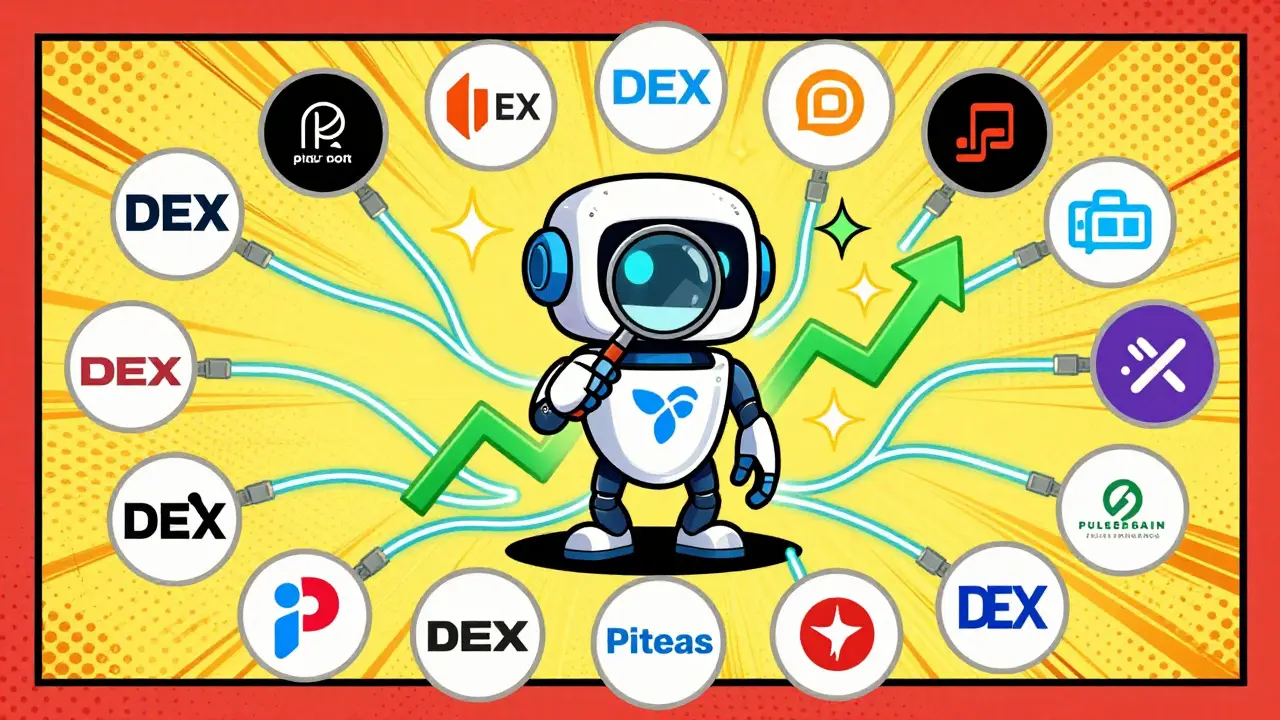
To put it simply, Piteas is a decentralized exchange (DEX) aggregator operating on the PulseChain network. In the world of DeFi (Decentralized Finance), liquidity-the money available to trade against-is often scattered across dozens of different exchanges. If you want to swap Token A for Token B, you might have to check five different sites to see who offers the best rate. That takes time, gas fees, and effort.
Piteas automates this process. It connects to over 13 different decentralized exchanges within the PulseChain ecosystem. When you initiate a swap, Piteas’ algorithm instantly checks all these sources. It then splits your trade if necessary to ensure you get the most tokens out for every dollar in. According to data from late 2023, the protocol aggregates more than $641 million in total liquidity across thousands of active pools. For a user, this means better prices and less headache.
The Role of the PTS Token
So, what is the PTS token? It serves two main roles: governance and utility.
- Governance: Holders can potentially vote on future updates to the protocol, such as which new exchanges to integrate or how fees are structured.
- Utility: While specific fee discounts haven't been heavily emphasized yet, the token is designed to be the native fuel for the Piteas ecosystem, incentivizing developers and users alike.
It’s important to note the supply details. The total fixed supply of PTS is 100,000,000 tokens. However, circulating supply figures vary wildly between data providers. Some trackers report around 70 million in circulation, while others show discrepancies that affect market cap calculations. This lack of clarity is common in early-stage projects but adds a layer of complexity when trying to value the token accurately.
How Piteas Works: The Technology Behind the Scenes
The magic of Piteas lies in its routing algorithm. Here’s how it functions step-by-step:
- Input: You connect your Web3 wallet (like MetaMask or Rabby) and select the tokens you want to swap.
- Scanning: Piteas queries its integrated liquidity sources simultaneously.
- Optimization: The system calculates the path with the lowest slippage (price impact) and highest output.
- Execution: The swap is executed automatically, often splitting the order across multiple exchanges to maximize efficiency.
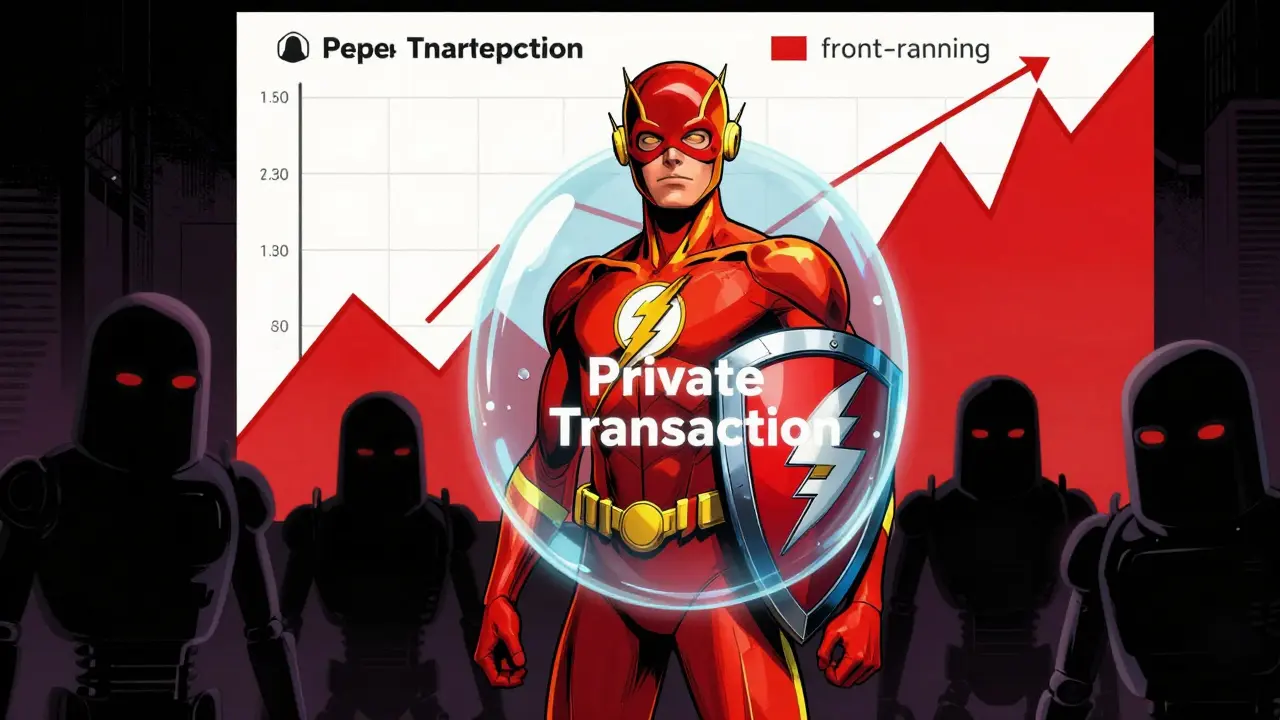
A standout feature here is Flashbot Protection. In crypto, "front-running" bots often detect large pending transactions and buy ahead of you, driving up the price so you pay more. Piteas uses private transaction bundles to hide your intent until the moment of execution, protecting you from these predatory practices. Additionally, users report that gas fees on Piteas are typically 20-35% lower than executing direct swaps on individual DEXs, thanks to optimized contract interactions.
Market Performance and Price History
If you’re looking at Piteas as an investment, you need to look at the numbers. As of late 2023, PTS was trading in the micro-cap range. Prices hovered around $0.025, with a market capitalization estimated between $1.7 million and $1.9 million depending on the data source.
This is a far cry from its all-time high of approximately $0.18. The token has seen significant volatility, underperforming the broader crypto market during downturns. For context, while the general market dropped by about 5% in a given week, PTS fell nearly 11%. This high beta coefficient (volatility relative to Bitcoin) means it’s a risky play. It’s not a stable store of value; it’s a speculative asset tied closely to the fortunes of the PulseChain ecosystem.
| Metric | Value / Detail |
|---|---|
| Total Supply | 100,000,000 PTS |
| Network | PulseChain |
| All-Time High | ~$0.188 |
| Primary Function | DEX Aggregation & Governance |
| Risk Level | High (Micro-Cap, Low Liquidity) |
Pros and Cons of Using Piteas
No project is perfect. Before you dive in, weigh these factors carefully.
The Good:
- Better Rates: By aggregating liquidity, you consistently get better swap rates than using a single DEX.
- Cost Efficiency: Lower gas fees save you money on every transaction.
- Security Features: Flashbot protection keeps your trades safe from front-running.
- Niche Focus: It’s optimized specifically for PulseChain, meaning it handles that network’s quirks better than generic aggregators like 1inch.
The Bad:
- Low Liquidity for PTS: While Piteas aggregates liquidity for *other* tokens, buying the PTS token itself is hard. There’s very little depth in the order books, meaning even small buys can cause massive slippage.
- Limited Exchange Support: PTS isn’t listed on major centralized exchanges. You’ll mostly find it on smaller platforms like Phux.
- Single-Chain Dependency: If PulseChain struggles to gain adoption, Piteas loses its primary use case. It doesn’t support Ethereum or Solana directly.
- Unclear Utility: Critics argue that the token lacks strong demand drivers beyond speculation right now.
Piteas vs. Competitors
You might wonder, "Why not just use 1inch or Matcha?" Those are excellent tools, but they are multi-chain giants. Piteas is a specialist. Because it focuses solely on PulseChain, it can integrate deeper into that specific ecosystem. It understands PulseChain’s unique mechanics, such as its low-cost transaction model and specific community preferences.
However, this specialization is also its weakness. As cross-chain bridges improve, users may prefer aggregators that let them swap assets across different blockchains without leaving their favorite interface. Piteas must prove that being the "best at PulseChain" is enough to survive in a broader market.
Community Sentiment and User Experience
User feedback paints a mixed picture. On forums like Reddit’s r/PulseChain, users praise the simplicity of the interface. Many report saving 1-2% on swaps compared to going direct to exchanges like PulseX. The learning curve is minimal-if you can use a basic DEX, you can use Piteas.
However, complaints often center on the token itself. Users frustrated by the difficulty of buying PTS due to low liquidity are vocal. Mobile responsiveness has also been cited as an area needing improvement. The community size is modest, with Telegram channels numbering in the low thousands, indicating a niche but engaged user base rather than mass adoption.
Is Piteas a Good Investment?
This depends entirely on your risk tolerance. If you believe PulseChain will become a major player in the crypto space, Piteas could benefit as essential infrastructure. It’s a "pick-and-shovel" play: if mining booms, shovel makers profit. If PulseChain grows, aggregators thrive.
However, analysts warn of the risks. Messari and other research firms have noted that the tokenomics are unclear. With a high risk score assigned by data aggregators due to low liquidity and undefined utility, PTS is not suitable for conservative investors. It’s a high-beta asset that can swing violently based on news or sentiment shifts in the PulseChain community.
Getting Started with Piteas
If you decide to try it out, here’s how to proceed safely:
- Set Up a Wallet: Ensure you have a Web3 wallet compatible with PulseChain, such as MetaMask configured for the PulseChain network or the dedicated PulseWallet.
- Fund Your Wallet: Load it with PLS (PulseChain’s native token) or USDC to cover gas fees and provide the base currency for swaps.
- Visit Piteas.io: Connect your wallet securely. Never share your seed phrase.
- Select Tokens: Choose the pair you wish to swap. Review the quote provided by the aggregator.
- Adjust Slippage: If the transaction fails, you may need to increase your slippage tolerance, especially during periods of high network activity.
- Confirm: Sign the transaction in your wallet. The swap should execute quickly with optimized rates.
Remember, always do your own research (DYOR). The crypto space moves fast, and conditions change daily. What worked last month might not work today.
What is the total supply of Piteas (PTS)?
The total fixed supply of the PTS token is 100,000,000. However, the circulating supply varies by data source, with some reporting around 70 million tokens in circulation.
Which blockchain does Piteas operate on?
Piteas operates exclusively on the PulseChain blockchain. It is designed to aggregate liquidity specifically within this ecosystem.
Can I use Piteas to swap tokens on Ethereum?
No, Piteas is currently optimized for PulseChain only. It does not support Ethereum, Binance Smart Chain, or other networks directly.
Is Piteas safe to use?
Piteas includes security features like Flashbot Protection to prevent front-running. However, as with any DeFi protocol, users should exercise caution, verify contract addresses, and start with small amounts to test functionality.
Why is it difficult to buy the PTS token?
The PTS token itself has low liquidity on exchanges. This means there aren't many buyers and sellers, leading to high slippage and difficulty executing large orders without significantly impacting the price.