
Have you ever tried to send a transaction on a blockchain and watched it sit in limbo for minutes because the network was too busy? It’s frustrating. That’s exactly the problem Massa, a high-performance Layer-1 blockchain designed to process over 10,000 transactions per second while maintaining true decentralization, aims to solve.
If you’ve seen the ticker MAS or MASSA pop up on exchanges like Bybit or MEXC, you might be wondering what makes this project different from Ethereum or Solana. The short answer is its unique approach to scaling called Blockclique, which uses parallel processing threads instead of a single linear chain. But before you buy or stake, you need to understand how it works, where the price has been, and whether the hype matches the reality.
The Core Technology: How Blockclique Works
Most blockchains you know-like Bitcoin or early Ethereum-work like a single-lane highway. Cars (transactions) have to go one after another. If traffic gets heavy, everyone waits. This is why those networks struggle with speed.
Massa takes a different route. Imagine a highway with multiple lanes running side-by-side. In Massa’s world, these are called "threads." The network processes blocks in parallel across these threads simultaneously. This architecture allows Massa to claim a throughput of over 10,000 transactions per second (TPS).
Here is how the consensus mechanism handles this chaos without crashing:
- Multithreaded Block Graph: Instead of one long chain, Massa creates a graph of blocks that reference each other. This keeps the history consistent even when blocks are produced at the same time.
- Transaction Sharding: Transactions are split into smaller chunks and processed independently on different threads. This means if one thread is busy, others keep moving.
- Low Hardware Requirements: Unlike some high-speed chains that require expensive servers to run nodes, Massa is designed so regular computers can participate. This supports its goal of being "fully decentralized" rather than controlled by a few big companies.
This design isn’t just about speed; it’s about resilience. By spreading the load, the network stays alive even if parts of it get congested. For developers building apps (dApps), this means their users won’t face the dreaded "network congestion" errors during peak times.
Tokenomics: Supply, Inflation, and Rewards
Understanding the money behind the tech is crucial. The native coin, MASSA (ticker: MAS), is used for paying transaction fees and staking to secure the network. But how many coins are there, and will they lose value due to inflation?
Let’s look at the numbers. At its launch, Massa started with an initial supply of 1 billion MASSA tokens. However, data from various aggregators suggests the effective maximum supply is closer to 1.1 billion tokens. This extra 100 million was likely reserved for team allocations, ecosystem growth, and public sales.
One major event changed the game recently. On May 26, 2025, the community voted on a governance proposal known as MIP-0. This vote successfully reduced the reward miners and validators earn per slot. Before this change, the network minted up to 1.02 MASSA per slot. After the vote, that dropped to just 0.40001 MASSA per slot.
Why does this matter? Less new supply entering the market means lower inflation. Initially, the annual inflation rate was around 6.4%, but thanks to this adjustment, it has fallen to approximately 2.5% and continues to decrease as the total supply grows. For investors, this is generally a positive sign-it shows the protocol can self-regulate to protect token value.
| Metric | Value / Detail |
|---|---|
| Ticker Symbol | MAS / MASSA |
| Initial Supply | 1,000,000,000 MASSA |
| Effective Max Supply | ~1,100,000,000 MASSA |
| Reward Per Slot (Post-MIP-0) | 0.40001 MASSA |
| Slots Per Second | 2 |
| Current Inflation Rate | ~2.5% (decreasing annually) |
Market Performance and Price History
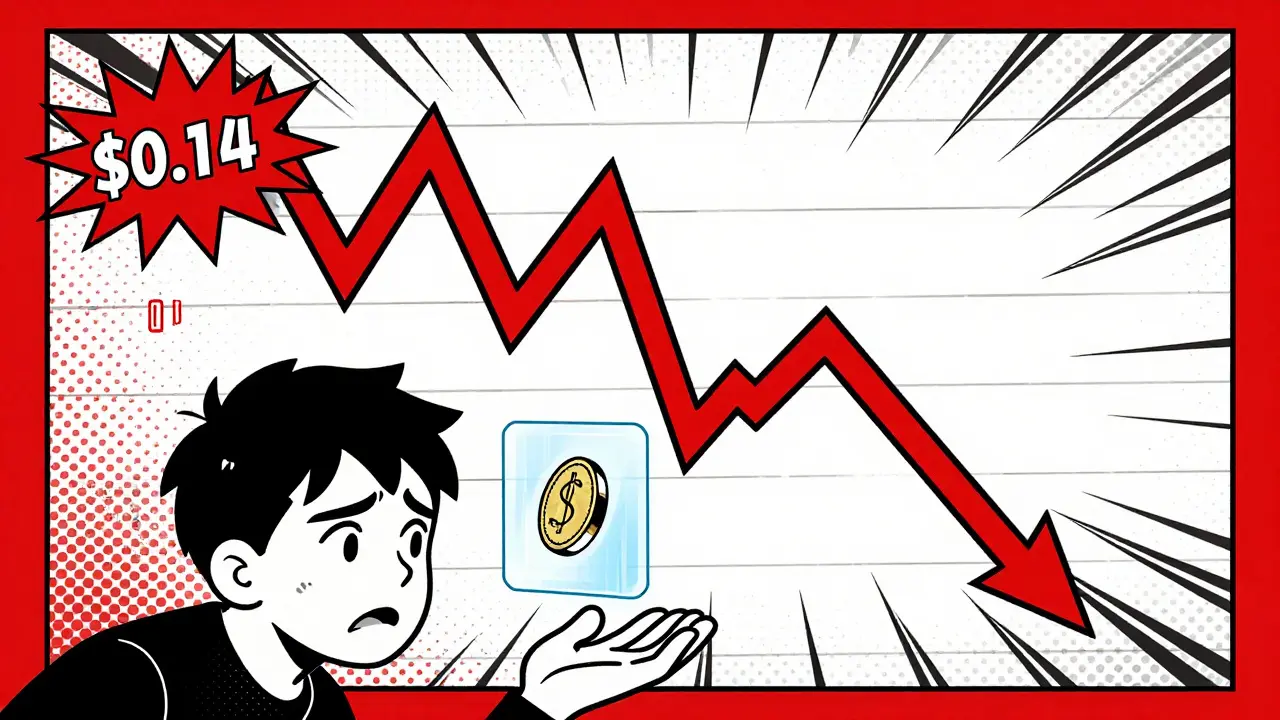
Now, let’s talk about the elephant in the room: the price. If you bought Massa at its Initial DEX Offering (IDO) in April 2024, you paid $0.12 per token. The token hit an all-time high (ATH) of $0.1426 shortly after.
But here is the hard truth. As of mid-2026, Massa is trading significantly lower. Recent data points show prices hovering between $0.0028 and $0.0045. This represents a drawdown of nearly 97.7% from its peak. The all-time low was recorded at $0.001391 in May 2026.
Why such a drop? Several factors are at play:
- Small Market Cap: With a market cap often fluctuating between $1 million and $1.5 million, Massa is considered a micro-cap asset. These assets are highly volatile and sensitive to broader market trends.
- Liquidity Issues: Daily trading volumes have been modest, ranging from $130,000 to $230,000. Low liquidity means large buys or sells can drastically swing the price.
- Market Sentiment: Technical analysis tools like CoinCodex have flagged the sentiment as "Bearish" with a Fear & Greed Index score of 29 (indicating fear). Short-term predictions suggest further consolidation or slight declines before any potential recovery.
However, some models predict a rebound. One forecast suggests Massa could reach $0.01004 by the end of 2026. While this would be a significant gain from current levels, remember that crypto forecasts are not guarantees. They are based on historical patterns that may not repeat.
Staking and Earning Rewards
If you believe in Massa’s long-term vision, holding the token isn’t your only option. You can stake it to help secure the network and earn rewards. Since Massa runs on a Proof-of-Stake-like model (via its Blockclique consensus), active participants are incentivized.
Here is how the reward distribution works per slot:
- Block Creator: Earns 0.02353 MASSA for producing a block.
- Endorsements: Up to 16 endorsements can be included in a block. Each endorsement earns the creator 0.007843333 MASSA, and the block creator also gets a small cut for including them.
With two slots occurring every second, these small amounts add up. Annually, the network mints roughly 25.2 million new MASSA tokens, distributed among active staking nodes. Because the reward per slot was halved in 2025, the annual yield percentage depends heavily on the total amount staked. If more people stake, the individual return percentage drops, but the network becomes more secure.
To start staking, you typically need to acquire MAS on an exchange like Bybit, transfer it to a compatible wallet, and then delegate your stake to a validator or run your own node if you meet the hardware requirements. Running a node is encouraged by the project to maintain decentralization, but delegating is easier for most users.
Common Confusion: MAS vs. Midas Protocol
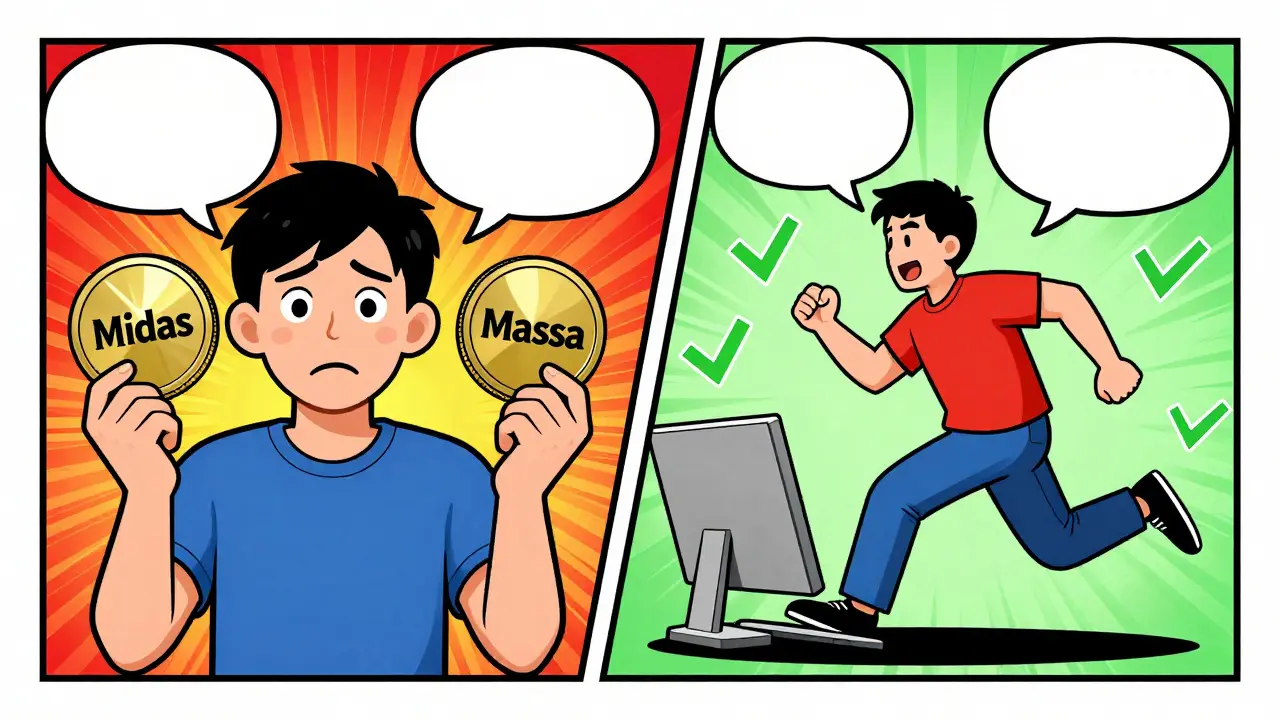
Before you execute any trades, pay close attention to one critical detail: ticker symbols. On some exchanges, particularly MEXC, the ticker MAS refers to Midas Protocol, a completely different project focused on portfolio management.
Massa’s token is often listed as MASSA or clearly labeled as "Massa Network" alongside the MAS ticker. Always double-check the contract address or the full project name. Buying Midas thinking it’s Massa is a costly mistake that happens frequently in the crypto space. When looking at data aggregators like CoinMarketCap or CoinStats, ensure you are viewing the chart for the Layer-1 blockchain, not the DeFi tool.
Is Massa Worth Your Attention?
So, where does Massa stand in 2026? It’s a fascinating technical experiment. Its Blockclique architecture genuinely offers a solution to the scalability trilemma (speed, security, decentralization) that plagues older blockchains. The fact that it maintains thousands of nodes while hitting 10,000 TPS is impressive engineering.
However, technology alone doesn’t drive price. Adoption does. Currently, Massa lacks the massive developer ecosystem and user base of giants like Ethereum or Solana. Its tiny market cap makes it a high-risk, high-reward play. If the ecosystem grows and dApps start launching exclusively on Massa due to its speed and low fees, the token could see significant appreciation. If adoption stalls, the price may remain suppressed.
The recent governance action to reduce inflation shows the team and community are actively managing the token’s health. That’s a green flag. But the steep price decline from its IDO price serves as a reminder of how brutal the crypto market can be for early-stage projects.
What is the main difference between Massa and Ethereum?
The main difference lies in architecture and speed. Ethereum uses a single linear chain (though it now uses rollups for scaling), which can lead to congestion. Massa uses a multithreaded block graph called Blockclique, allowing it to process transactions in parallel across multiple threads. This enables Massa to handle over 10,000 transactions per second natively, whereas Ethereum’s base layer handles far fewer.
How do I buy Massa (MAS) safely?
You can buy Massa on centralized exchanges like Bybit. First, create an account and verify your identity. Deposit fiat currency or another cryptocurrency. Search for "MASSA" or "MAS" but carefully verify the project name is "Massa Network" to avoid confusion with Midas Protocol (also MAS). Execute the trade and withdraw the tokens to a secure personal wallet for long-term holding.
Is Massa a good investment in 2026?
Massa is considered a high-risk, speculative investment. It has a very small market cap (around $1-1.5 million) and has dropped over 97% from its all-time high. While its technology is innovative and its inflation has been reduced via governance, there is no guarantee of price recovery. Only invest what you can afford to lose, and consider it a bet on future adoption rather than current utility.
What happened to Massa's price since its launch?
Massa launched with an IDO price of $0.12 in April 2024 and reached an all-time high of $0.1426. Since then, it has experienced a severe bearish trend, hitting an all-time low of $0.001391 in May 2026. As of mid-2026, it trades between $0.0028 and $0.0045. This reflects common post-launch volatility for new Layer-1 blockchains that haven't yet achieved mass adoption.
Can I run a Massa node on my home computer?
Yes, Massa is designed to be lightweight. Unlike some high-performance chains that require enterprise-grade servers, Massa aims to allow standard consumer hardware to run nodes. This helps maintain decentralization. You can check the official documentation for specific CPU, RAM, and storage requirements, which are generally modest compared to competitors.