
Most people think the choice is simple: you either trust the government with your money or you trust a decentralized algorithm. But if you look closely, both systems have massive holes. Whether it's a central bank printing money into oblivion or a digital coin crashing 20% in a few hours, the risks are real. To make a smart move with your money, you need to see the flaws of both without the hype.
| Feature | Fiat Currency Flaws | Cryptocurrency Flaws |
|---|---|---|
| Value Stability | Slow decay via inflation | Violent short-term swings |
| Control | Centralized government power | Technical complexity/Self-custody risk |
| Speed | Slow cross-border transfers | Network congestion/Confirmation lags |
| Accessibility | Banking barriers/Account freezes | Low merchant acceptance |
The Hidden Costs of Trusting the System
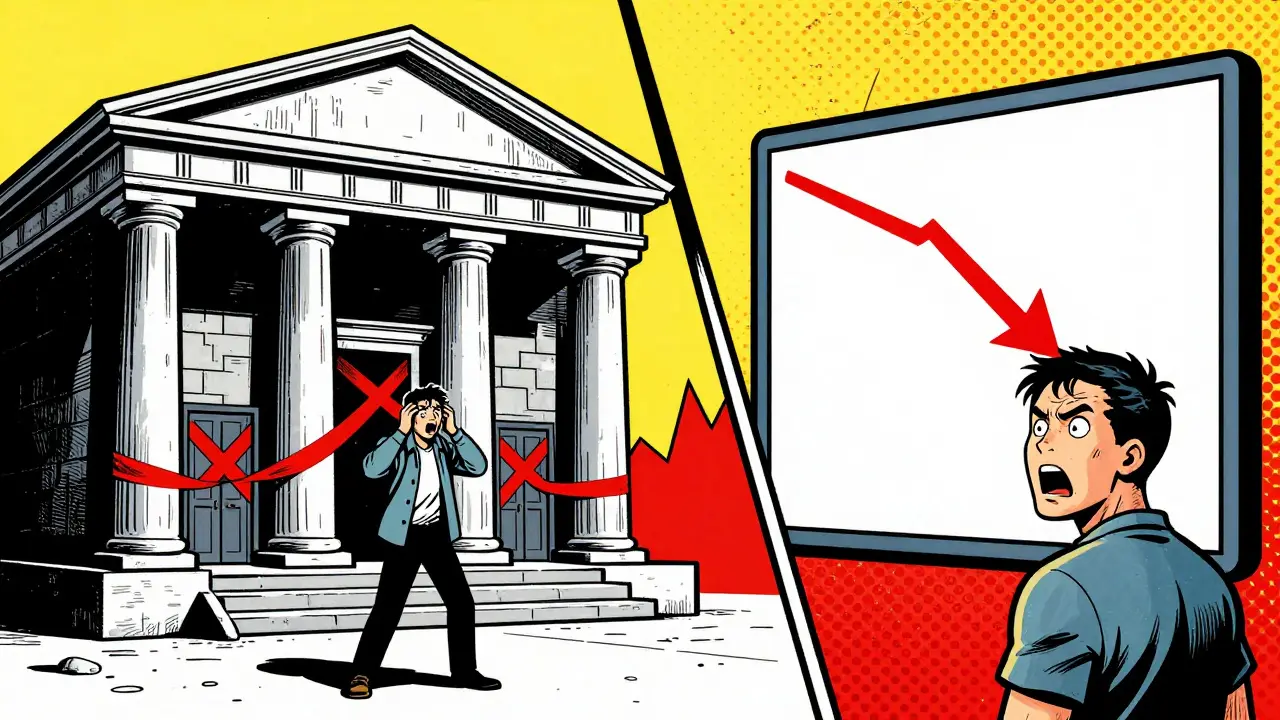
When we talk about Fiat Currency is government-issued currency that is not backed by a physical commodity like gold, we're talking about a system built on trust. But that trust often comes with a price tag. The biggest problem here is the lack of a "stop button" on the printing press.
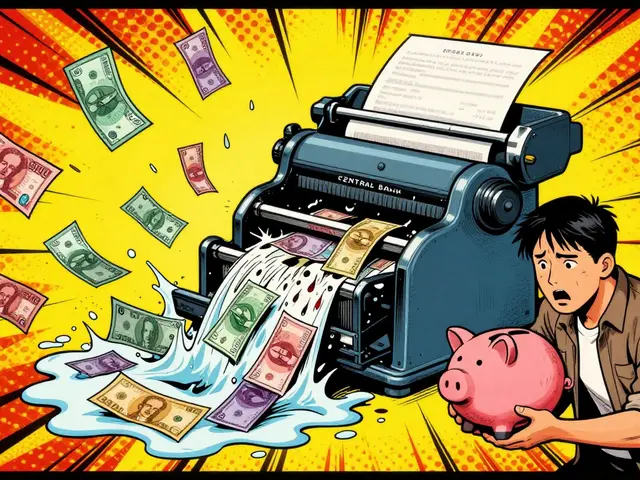
Inflation isn't just a buzzword; it's a silent thief. When a government decides to inject more money into the economy to solve a short-term political problem, your purchasing power drops. Take a look at the Zimbabwean dollar, which lost a staggering 76% of its value in 2022 alone. That's not just a bad year; that's a total collapse of a monetary system. If you hold your life savings in a currency that can be diluted by a pen stroke, you're essentially gambling on the competence of your government.
Beyond inflation, there's the issue of centralized control. Your money isn't truly "yours" if a bank can freeze your account or a government can restrict how much you withdraw during a crisis. These systemic vulnerabilities mean that a single point of failure-be it a corrupt politician or a failing bank-can wipe out your financial security overnight.
The Friction of Traditional Banking
Have you ever tried sending money to someone in another country using a traditional bank? It's a nightmare. You're often looking at a window of 2 to 99 business days for the funds to actually land, all while paying hefty commissions. This is a massive disadvantage for anyone doing business globally.
The infrastructure is old. It relies on a series of intermediary banks that each take a cut and each add a layer of delay. While we think of fiat as "stable," the mechanism for moving it is incredibly inefficient. This friction makes the traditional system feel like a relic when compared to the instant nature of the internet.
The Chaos of the Digital Frontier
Now, let's switch sides. The promise of Cryptocurrency is freedom from the banks, but that freedom comes with a side of chaos. The most obvious flaw is price volatility. Imagine waking up and finding that the money you intended to use for rent has dropped 22% in value because an exchange collapsed or a billionaire tweeted something cryptic.
This happened during the FTX collapse, where prices plummeted in hours. When your asset swings like a pendulum, it fails at one of the most basic jobs of money: acting as a stable store of value. You can't realistically price a cup of coffee in Bitcoin if that Bitcoin might be worth twice as much (or half as much) by tomorrow morning.
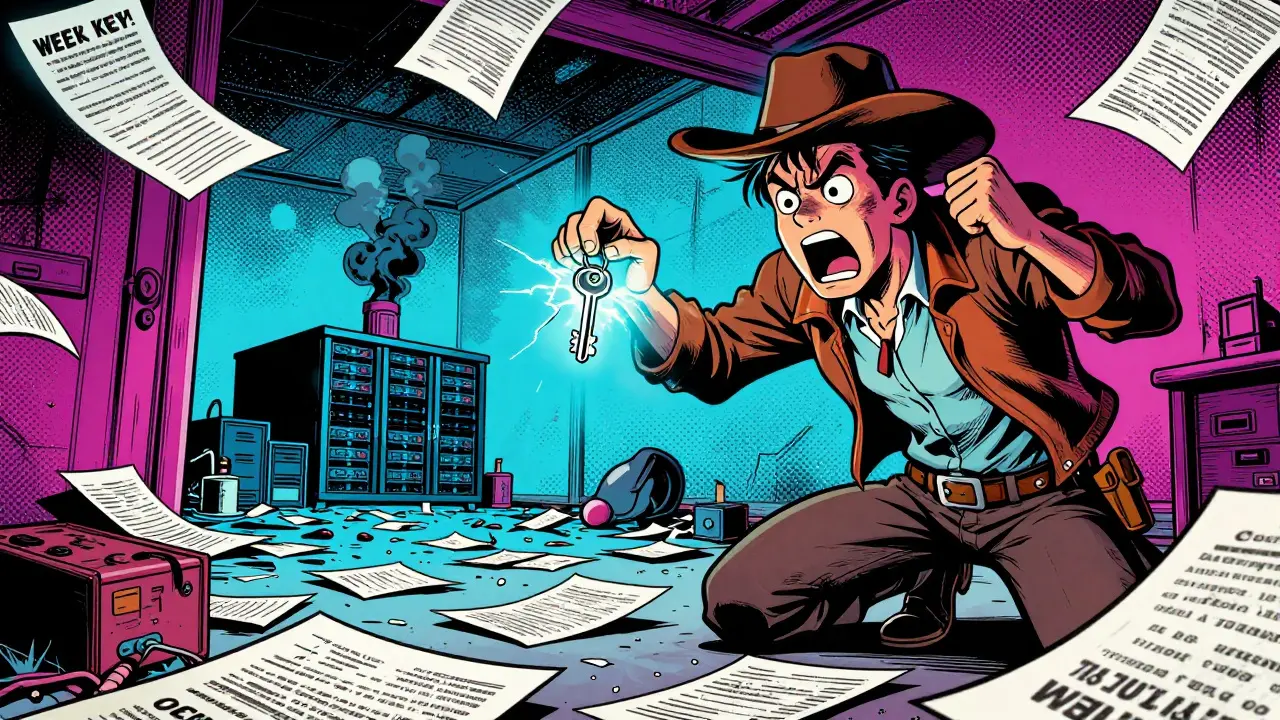
Then there's the "Wild West" nature of the tech. In the fiat world, if you lose your credit card, you call the bank and get a new one. In the crypto world, if you lose your private keys or get tricked into giving away your seed phrase via a phishing attack, your money is gone forever. There is no "forgot password" button for a blockchain wallet. The responsibility is 100% on you, and for most people, that's a terrifying level of risk.
The Practical Walls of Adoption
Even if you ignore the volatility, you can't actually spend crypto anywhere. While El Salvador made a headline by adopting Bitcoin as legal tender in 2021, most of the world is still far behind. You can't walk into a random grocery store and pay with Ethereum. This lack of universal acceptance turns many cryptocurrencies into speculative assets rather than actual currency.
Technical hurdles also persist. People love to brag about the speed of Blockchain, but the reality is often different. During peak times, networks like Ethereum experience massive congestion, leading to high "gas fees." Suddenly, sending a small amount of money becomes expensive because you're competing with thousands of other users for block space. If a transaction takes hours to confirm or costs $50 in fees to move $100, the efficiency argument falls apart.
The Environmental and Regulatory Headache
We can't ignore the elephant in the room: the energy cost. Proof of Work, the system used by Bitcoin, requires an immense amount of computational power. This creates a massive carbon footprint that makes many investors and governments uncomfortable. It's hard to pitch a "future of money" that consumes as much electricity as a small country.
On top of that, you have the regulatory nightmare. Governments hate things they can't control. Depending on where you live, the legality of owning or trading crypto can change with a single announcement. This uncertainty makes it a risky bet for businesses that need long-term legal clarity. You're essentially operating in a gray area where the rules are being written while you're already playing the game.
Which Risk is Worse?
So, which is the bigger disaster? It depends on your timeline. Fiat currency risks are systemic and slow. You might not notice your money losing value today, but over a decade, inflation eats your wealth. The danger is a slow bleed or a sudden, catastrophic government collapse.
Cryptocurrency risks are immediate and tactical. You don't worry about a 10-year inflation cycle as much as you worry about a hack today or a 30% price crash tomorrow. Fiat is better for buying milk; crypto is better for those who want to bet on a decentralized future or move money across borders without a bank's permission-provided they can stomach the volatility.
Some are trying to find a middle ground with stablecoins, which peg their value to the US Dollar. While this solves the volatility problem, it brings back the centralized risk: you're once again trusting a company to actually hold the reserves they claim to have. No matter where you turn, there's a trade-off between stability, control, and security.
Why is fiat currency considered risky if it's used by everyone?
The risk isn't that it will disappear tomorrow, but that its value will erode. Because central banks can print unlimited amounts of money, inflation naturally occurs, meaning your money buys fewer goods over time. In extreme cases, like in Zimbabwe or Venezuela, this leads to hyperinflation where the currency becomes virtually worthless.
Can cryptocurrency ever replace fiat currency?
It's unlikely to happen completely. For a currency to work, it needs to be a stable medium of exchange. As long as crypto has extreme price swings, people won't use it for daily expenses. It is more likely to exist alongside fiat as a specialized tool for investment or international transfers rather than a total replacement.
What happens if I lose my crypto wallet keys?
Unlike a bank account, there is no central authority to reset your password. If you lose your private keys or your seed phrase and don't have a backup, you lose access to your funds permanently. The blockchain doesn't know who you are; it only knows who has the key.
Are gas fees in crypto similar to bank fees?
Not exactly. Bank fees are usually flat rates or percentages set by the institution. Gas fees are paid to the network validators to process your transaction. During high traffic, gas fees spike because more people are bidding for limited space in the next block, which can make small transactions prohibitively expensive.
Is crypto actually more private than fiat?
It's a common misconception. While your name isn't on a Bitcoin address, the blockchain is a public ledger. Every transaction ever made is visible to anyone. If your identity is ever linked to a specific wallet address, your entire financial history on that chain becomes transparent, whereas bank records are private (though accessible to the government).
Next Steps for Your Money
If you're tired of inflation but scared of volatility, don't put all your eggs in one basket. Diversification is the only real hedge. Keep enough fiat in a high-yield account for your daily needs, but consider moving a small percentage of your wealth into decentralized assets to protect yourself against a systemic banking failure.
For those moving into crypto, start with a hardware wallet. Don't leave your assets on an exchange, as you saw with the FTX disaster-if the exchange goes bust, your money goes with it. Learn how to manage your own keys before you commit significant capital.
vijendra pal
April 6, 2026 AT 08:06Bro you nailed it! 🚀 Most peopel don't even get how bad inflation is until their savings just vanish lol 💸 Crypto is definitely the way forward even if the price go crazy sometimes!! 📈💎🙌
Emma Pease-Byron
April 6, 2026 AT 18:04How quaint that we are still debating whether a volatile digital token is a viable alternative to a government-backed currency. It is almost adorable to believe that changing the medium of failure actually solves the underlying issue of human greed.
Matthew Wright
April 6, 2026 AT 23:01The point about self-custody is huge...!! A lot of people just use exchanges and then act surprised when they go bust...!! Getting a Ledger or Trezor is literally the only way to be safe...!!
alex rodea
April 7, 2026 AT 23:18Just start small. You don't need to be an expert to save a bit of money for later.
Taylor Meadows
April 9, 2026 AT 03:32Honestly, if you're still holding fiat in 2024, you're basically admitting you're okay with being a peasant. I've seen your portfolio and it's a disaster, which is why you're probably clinging to these 'stable' lies.
JERRY ORTEGA
April 10, 2026 AT 22:49hardware wallets are the move if you want to sleep at night. don't let the exchange hold your keys because then it's not really your money
Evan Borisoff
April 11, 2026 AT 23:41The sheer incompetence of the current monetary policy is a testament to the systemic failure of the administrative state, and while the blockchain offers a theoretical hedge against the debasement of the dollar, the lack of a coherent regulatory framework ensures that only the most aggressive speculators thrive while the average patriot is left holding a bag of worthless tokens.
Trish Swanson
April 13, 2026 AT 08:41Diversification is key...!! Stop fighting...!! Just balance it...!!
Bruce Micciulla Agency
April 15, 2026 AT 08:26the analysis on gas fees is basic at best because it ignores the layer 2 scaling solutions that effectively negate the congestion issue for anyone actually paying attention to the tech stack instead of just staring at the price chart every five minutes
Joshua Aldrich
April 16, 2026 AT 01:27it's funny how we trust the 'system' just cuz we're told to... but like, if you think about it, money is just a shared imagniation anyway. whether it's a piece of paper or a string of digits, it only works if we all agree it does
Emily 2231
April 17, 2026 AT 07:05THE FED IS PRINTING TO RESET THE SYSTEM. They want us in CBDCs so they can track every single cent we spend in real time. Crypto is the only escape before the total surveillance state arrives
Arwyn Keast
April 17, 2026 AT 20:46Typical American centric view. Our sterling has its own set of institutional decays, but the sheer volatility of these 'assets' makes them a joke for any serious capital preservation strategy. The liquidity gaps in crypto are an absolute shambles.
Patty Levino
April 18, 2026 AT 17:17I totally get why the seed phrase thing is scary. If you're feeling overwhelmed, maybe look into multi-sig wallets where a friend or family member can help you recover funds if you lose your key.
shubhu patel
April 18, 2026 AT 22:51I agree that we should be very careful with where we put our money and it is so important to read all the fine print before signing up for any new financial service because sometimes the hidden fees are even worse than the inflation we are trying to avoid in the first place.
Arlen Medina
April 20, 2026 AT 07:16Stop worrying about the carbon footprint! Who cares about a few servers when the US dollar is basically a joke? Get some Bitcoin and stop acting like a coward!
Adriana Gurau
April 20, 2026 AT 09:51Imagine actually thinking stablecoins are safe :P. It's just a different way to lose money while pretending you're being 'smart' about it. 🙄
akash temgire
April 22, 2026 AT 02:18The volatility remains unacceptable. A currency cannot function if the unit of account changes daily.
david head
April 23, 2026 AT 03:09keep learning and keep growing 🚀✨
Lauren Gilbert
April 24, 2026 AT 19:04Maybe the real lesson here is that we're trying to solve a human problem with technical tools. We want security and freedom at the same time, but those two things are fundamentally at odds in any system, whether it's run by a king, a president, or a piece of code.
Hugo Lopez
April 26, 2026 AT 03:48I think it's great that we have options now! 🌟 Finding a balance that works for your own life is the most important part. 😊
Carmelita Gonzales
April 27, 2026 AT 17:02it's just stressful for a lot of people to manage this stuff and i think we need to be kinder to those who don't understand the tech
Robert Coskrey
April 29, 2026 AT 15:19I find your assessment of the trade-offs to be quite accurate, and I would agree that diversification is the most prudent approach for the average investor...!!
Brooke Herold
April 30, 2026 AT 19:08I usually just stay out of these debates. It's a lot of noise for something that mostly just feels like gambling to me.