
Margin trading in cryptocurrency lets you borrow money to trade bigger positions than your account balance allows. It’s not magic. It’s not a shortcut. It’s a high-risk tool that can double your profits-or wipe out your entire investment in minutes. If you’ve seen someone post about making 300% on ETH with 5x leverage, you’re seeing the tip of the iceberg. What you don’t see is the 10 other traders who lost everything the same day.
How Margin Trading Actually Works
Here’s the simple version: you put up your own money as collateral, called margin. The exchange lends you more money on top of that. Together, they let you control a much larger position. If you have $1,000 and use 5x leverage, you can trade $5,000 worth of Bitcoin. You don’t own more Bitcoin-you just control a larger position. When the price moves, your gains or losses are based on the full $5,000, not just your $1,000.
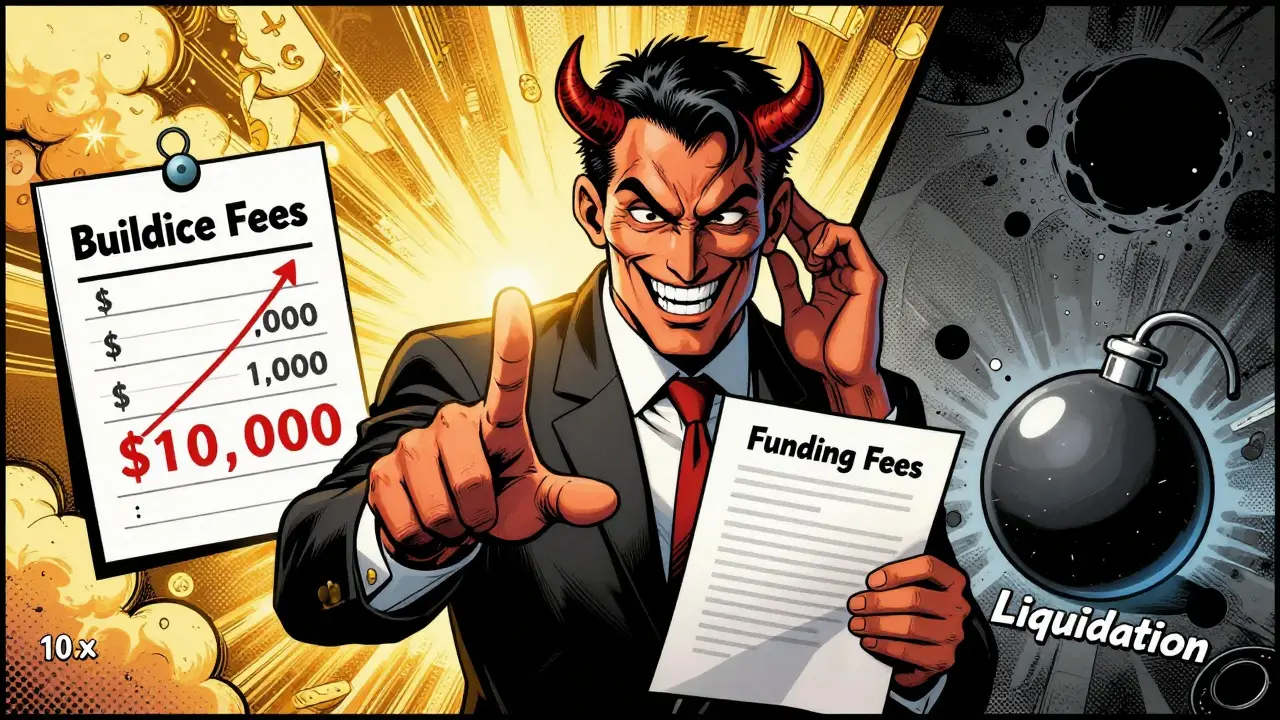
This isn’t like buying Bitcoin outright. In spot trading, you own the asset. In margin trading, you’re borrowing. That means you pay fees-called funding rates-every 4 to 8 hours. These add up fast. On Binance or Kraken, funding rates can swing from 0.01% to 0.1% per period. Over a week, that’s 1.5% to 15% in fees alone if you hold a position open.
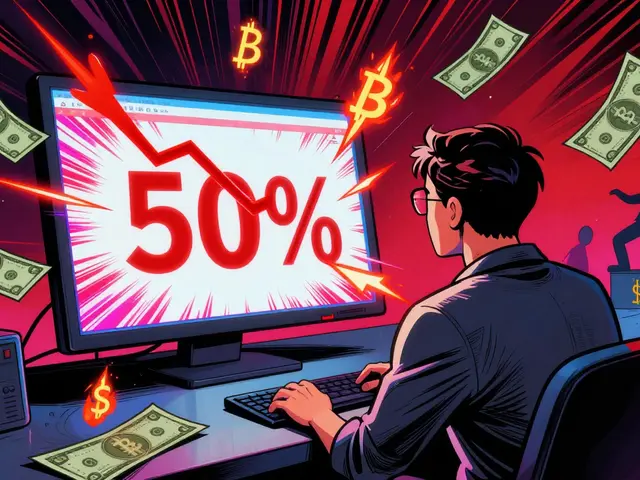
Every exchange sets a maintenance margin. That’s the minimum amount of equity you must keep in your account to stay in the trade. If your position drops below that level, the exchange automatically closes it. That’s called liquidation. And it happens fast. During Bitcoin’s 50% crash in May 2021, over $1 billion in margin positions were wiped out in less than 24 hours. Most of those traders didn’t even see it coming.
Long vs. Short: Betting Both Ways
Margin trading isn’t just about going long (betting prices will rise). You can also go short-betting prices will fall. Here’s how:
- Long position: You borrow BTC, buy it, wait for the price to go up, sell it, pay back the loan, and pocket the difference.
- Short position: You borrow BTC, sell it immediately, wait for the price to drop, buy it back cheaper, return the BTC, and keep the profit.
Shorting is especially dangerous in crypto. Unlike stocks, there’s no upper limit to how high a coin can go. If you short Bitcoin at $60,000 and it surges to $120,000, you’ve lost 100% of your margin-and still owe more. That’s why most experienced traders avoid shorting unless they’re using strict stop-losses.
Leverage: The Double-Edged Sword
Leverage is the multiplier. 2x, 5x, 10x, even 125x. Higher leverage means bigger potential profits. But it also means your position gets liquidated faster.
Let’s say you deposit $1,000 and use 10x leverage on Bitcoin. You control $10,000 worth of BTC. If Bitcoin drops 10%, your position loses $1,000. That’s your entire margin gone. Liquidated. Poof.
Compare that to spot trading. If you buy $1,000 of Bitcoin and it drops 10%, you lose $100. You still own the rest. No liquidation. No debt.
Most exchanges limit spot margin leverage to 3x-10x. Futures trading (a different beast) can go up to 125x. But futures don’t involve owning the asset-you’re just betting on price movement. Margin trading on spot markets means you technically own the asset, but you’re still at risk of liquidation if your collateral falls too low.
Where You Can Trade (And Where You Can’t)
Major exchanges like Binance, Kraken, and Bybit still offer margin trading. But not everywhere. Coinbase shut down its margin feature in 2025 because U.S. regulators made it too risky to operate. The SEC and CFTC have cracked down hard on lending and borrowing crypto assets. Now, if you’re in the U.S., your options are slim. Many platforms now block U.S. users from margin trading entirely.
In Europe, MiCA regulations cap retail leverage at 2x-5x. That’s a big change from 2023, when you could get 25x on some platforms. Asia still allows higher leverage, but even there, exchanges like Binance are rolling out new rules to reduce liquidations. In January 2025, Binance introduced dynamic liquidation thresholds-meaning your liquidation price adjusts based on how wild the market is.
So if you’re outside the U.S. or Europe, you might still find 10x leverage. But don’t assume it’s safe. Just because it’s available doesn’t mean it’s smart.
Real Risks: It’s Not Just About Losing Money
Most people think the biggest risk is losing their deposit. That’s true-but it’s not the whole story.
Let’s say you short Ethereum with 5x leverage. The price drops. You win. But then it reverses. You’re down 20%. Your margin is gone. Liquidated. But here’s the twist: because you borrowed ETH to sell it, you still owe the exchange the amount you borrowed-even if the price crashed. If ETH rebounds after your liquidation, you don’t get to keep the profit. You just got wiped out.
And then there’s funding rates. If you hold a long position on a coin that’s in high demand for borrowing, you pay daily fees. Some traders lose 5-10% of their account in funding fees alone over a month. That’s not a bug. It’s a feature. Exchanges make money on these fees. You’re paying to play.
Reddit user u/CryptoTrader87 posted in March 2024: “Made 300% in two weeks on ETH with 5x leverage. Then lost everything in one bad BTC trade during the ETF announcement.” That’s not rare. It’s routine.
Who Should Even Try This?
Bitpanda Academy says it plainly: “Margin trading is suitable for experienced traders only.”
What does “experienced” mean? It means you’ve traded spot crypto for at least 6-12 months. You know how to read candlesticks. You understand support and resistance. You’ve been through at least one major crash. You don’t panic-sell when Bitcoin drops 15% in an hour.
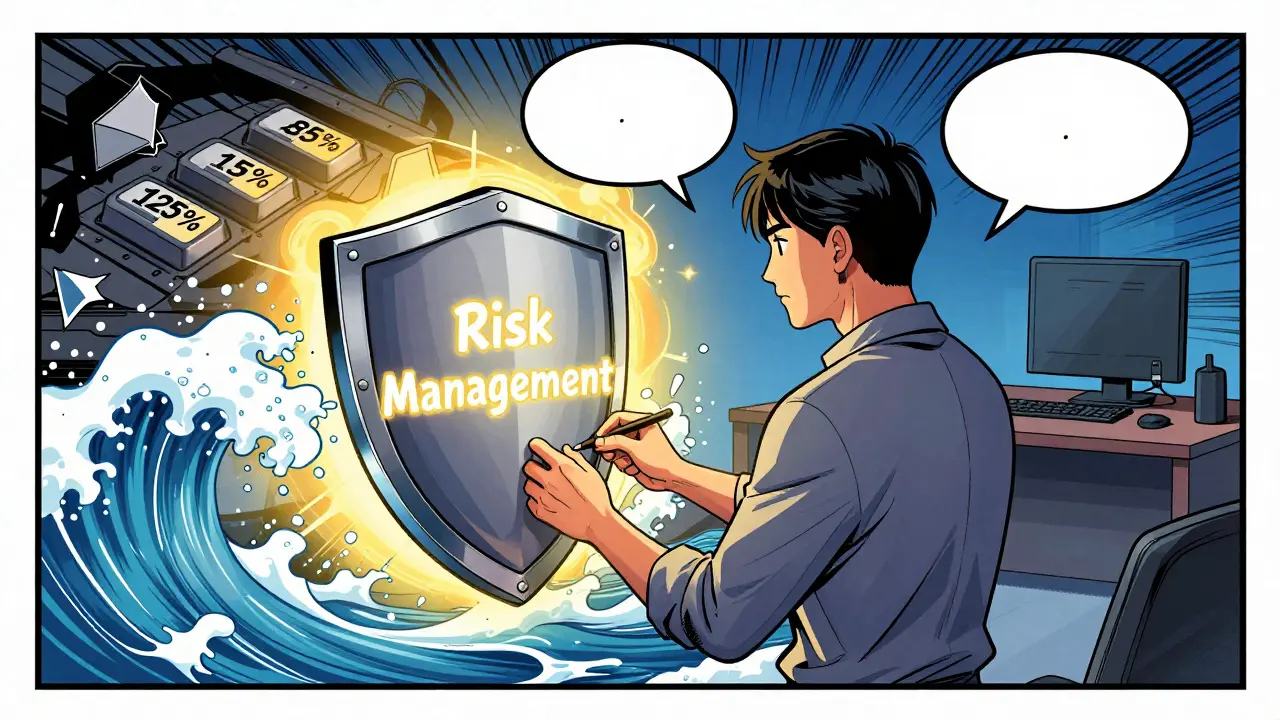
You also have a risk management plan. That means:
- Never risking more than 5% of your total portfolio on one margin trade
- Always setting a stop-loss 10-15% below your entry point
- Never using maximum leverage
- Keeping extra cash on hand to cover funding fees
Most beginners skip these steps. They see a 10x leverage button. They think, “I can double my money in a day.” Then they get liquidated. And they never come back.
Margin Trading vs. Spot Trading vs. Futures
Here’s a quick breakdown:
| Feature | Spot Trading | Margin Trading | Futures Trading |
|---|---|---|---|
| Asset Ownership | You own the crypto | You own the crypto | You own nothing-just a contract |
| Leverage Available | None | 2x-10x (typically) | 5x-125x |
| Funding Fees | No | Yes, every 4-8 hours | Yes, every 8 hours |
| Liquidation Risk | None | High | Very High |
| Best For | Long-term holding | Short-term bets with ownership | Speculation without owning assets |
Spot trading is safe. Margin trading is risky but gives you ownership. Futures are pure speculation. If you want to hold Bitcoin for years, stick with spot. If you want to trade short-term and understand the risks, margin might work. If you’re just trying to gamble, futures will eat you alive.
The Bottom Line
Margin trading in cryptocurrency isn’t for everyone. It’s not for beginners. It’s not for people who think they can “get lucky.” It’s for disciplined traders who know exactly how much they can lose-and have a plan to avoid it.
The market is changing. Regulations are tightening. Exchanges are adding safety features. But the core truth hasn’t changed: leverage multiplies both gains and losses. And in crypto, where prices swing 20% in a day, that’s a recipe for disaster if you’re not careful.
If you’re thinking about trying it, start small. Use 2x leverage. Trade with money you can afford to lose. Learn how liquidation works. Track your funding fees. And never, ever trade without a stop-loss.
Because in margin trading, the market doesn’t care if you’re right. It only cares if you have enough collateral to stay in the game.
Is margin trading legal in the U.S.?
Margin trading is technically legal in the U.S., but most major exchanges don’t offer it to American users. Coinbase shut down its margin feature in 2025 due to regulatory pressure from the SEC and CFTC. Platforms like Binance and Kraken restrict U.S. users from accessing margin accounts. Some smaller exchanges still offer it, but they operate in a legal gray area. If you’re in the U.S., your safest bet is to avoid margin trading entirely.
What happens if I get liquidated?
When you get liquidated, the exchange automatically closes your position to prevent further losses. Your entire margin (the money you put up) is lost. You don’t owe more than that-unless you’re trading on a platform that allows negative balances (rare in crypto). Most exchanges now have zero-negative-balance protection. But you still lose everything you risked on that trade.
Can you make consistent profits with margin trading?
Yes-but only if you treat it like a business, not a lottery. Top traders use strict risk controls, trade only during low-volatility periods, and avoid over-leveraging. They also track funding rates and avoid holding positions overnight unless the fees are favorable. Most people who try to make consistent profits fail because they underestimate volatility and overestimate their skill. It’s not about being right 60% of the time-it’s about losing less when you’re wrong.
How do I know if my liquidation price is too close?
Your liquidation price is calculated based on your leverage, entry price, and maintenance margin. Most exchanges show it in your position details. If your stop-loss is within 5% of your liquidation price, you’re in danger. A 5% market move can wipe you out. Always leave at least a 10-15% buffer between your stop-loss and your liquidation price. That gives the market room to breathe without killing your position.
What’s the best leverage for beginners?
If you’re new to margin trading, start with 2x leverage. That means you double your position size but halve your risk compared to 5x or 10x. Use it only on stable coins like BTC or ETH during low-volatility periods. Never use more than 2x until you’ve traded spot for over a year and have survived at least one bear market. Even then, treat 2x as a learning tool-not a profit engine.
Do I need to repay the borrowed crypto?
Yes. When you open a margin trade, you borrow either fiat or crypto from the exchange. When you close the position, you must return the borrowed amount plus any funding fees. If you shorted BTC, you borrowed it, sold it, and now you must buy it back to return it. If you went long and borrowed USD, you must repay the USD you borrowed. The exchange doesn’t care if you made a profit-you still owe the loan.
Michael Sullivan
February 2, 2026 AT 08:56Mrs. Miller
February 3, 2026 AT 09:31Also, funding rates are just exchanges quietly siphoning your soul. Every 8 hours, a tiny piece of you dies. And you cheer because ‘you’re winning’.
David Bain
February 3, 2026 AT 20:34Deeksha Sharma
February 5, 2026 AT 12:41Freddie Palmer
February 6, 2026 AT 19:09Alisha Arora
February 8, 2026 AT 02:43Taybah Jacobs
February 8, 2026 AT 19:35Kyle Pearce-O'Brien
February 8, 2026 AT 23:28Robin Ødis
February 9, 2026 AT 19:11Brittany Novak
February 10, 2026 AT 05:27Joshua Herder
February 11, 2026 AT 11:24Brittany Coleman
February 12, 2026 AT 22:17laura mundy
February 13, 2026 AT 06:05Jacque Istok
February 13, 2026 AT 16:15Matthew Ryan
February 14, 2026 AT 12:28Shruti Sharma
February 15, 2026 AT 04:50Reda Adaou
February 16, 2026 AT 10:38