
Imagine owning a piece of a skyscraper in New York or a warehouse in Dallas without needing $500,000. That’s what real estate security tokens do. They turn physical property into digital shares you can buy, sell, and trade-like stocks, but backed by bricks and mortar. This isn’t science fiction. It’s happening right now, and it’s changing how people invest in real estate.
What Are Real Estate Security Tokens?
Real estate security tokens are digital representations of ownership in a property. They’re not just crypto tokens like Bitcoin. They’re regulated financial instruments, legally treated as securities under U.S. law. That means they fall under the same rules as stocks or bonds. The key difference? Instead of buying a whole house or commercial building, you buy a fraction of it-sometimes as little as $100. These tokens are built on blockchain networks, usually Ethereum, using standards like ERC-20. Each token represents a share in a Special Purpose Vehicle (SPV), a legal entity that owns the actual property. So when you own a token, you don’t own the building directly-you own a stake in the company that does. That’s why they’re called security tokens: they promise returns through rental income, appreciation, or sale proceeds, just like traditional real estate investments.How They Work: From Property to Digital Shares
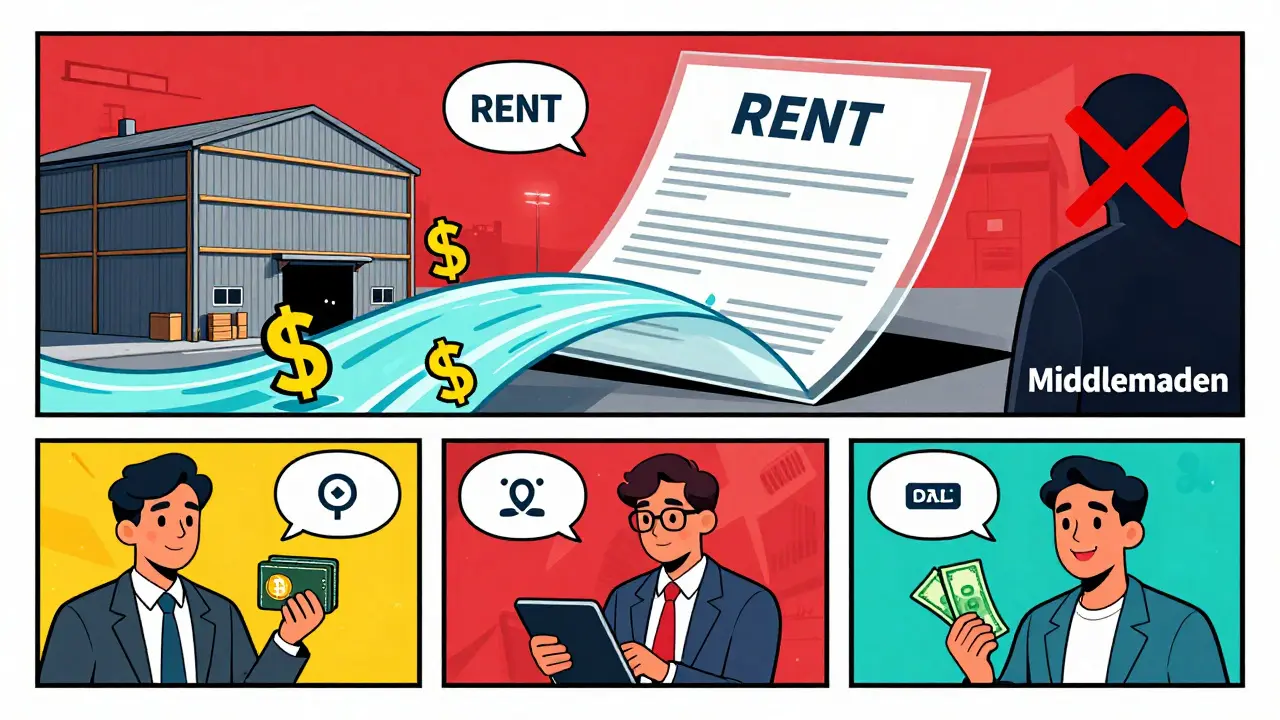
The process starts with a legal structure. A property owner or developer sets up an SPV-often an LLC or limited partnership-that takes legal title to the real estate. Then, they issue digital tokens representing ownership in that SPV. Each token is programmed with rules using smart contracts: who can buy it, how dividends are paid, and when it can be sold. Smart contracts automate everything. If a tenant pays rent, the contract splits the money among token holders automatically. If the property sells, proceeds flow directly to investors. No lawyers, no escrow accounts, no delays. EY estimates this cuts transaction costs by 40-60% compared to traditional real estate deals. Custody is handled either by the investor themselves-using a crypto wallet like MetaMask-or through licensed custodians who offer insured, regulated storage. This is critical: unlike utility tokens (which give access to a service), security tokens are investments. And investments require protection.Why They’re Classified as Securities
Not all blockchain tokens are the same. Utility tokens let you use a platform-like paying for cloud storage with a token. Security tokens represent financial rights. The U.S. Securities and Exchange Commission (SEC) uses the Howey Test to decide if something is a security. If investors put money into a common enterprise expecting profit from others’ efforts, it’s a security. Real estate tokens meet all three parts of the Howey Test:- Investment of money
- Common enterprise (the SPV owns the property)
- Expectation of profit from others’ work (the manager runs the property)
Types of Real Estate Security Tokens
There are three main types:- Asset-Backed Tokens: These are tied directly to physical property. The token’s value moves with the property’s market price.
- Equity Tokens: These give investors ownership rights-like voting on major decisions or receiving dividends from rent.
- Debt Tokens: These act like bonds. Investors lend money to the SPV and get fixed returns, similar to a mortgage-backed security.
Real-World Adoption and Market Growth
The global real estate market is worth $228 trillion. Right now, less than 1% of it is tokenized. But that’s changing fast. EY predicts that by 2027, 10% of commercial real estate transactions will involve tokens. The market could hit $16.3 trillion by 2030. Most activity is in commercial property. Office buildings, warehouses, and retail spaces make up 68% of tokenized assets. Why? They’re easier to value, generate steady income, and attract institutional investors. Residential tokenization is slower. Platforms like RealT are trying, but zoning laws, property taxes, and local regulations make it messy. Big names are getting involved. JPMorgan Chase completed its first tokenized real estate deal in September 2023-a $50 million Texas warehouse-using its own blockchain settlement system, JPM Coin. This shows traditional finance isn’t just watching-it’s participating.Where You Can Trade Them
You won’t find real estate security tokens on Coinbase or Binance. They’re not traded on public crypto exchanges. Why? Because they’re securities. Trading them requires licensed platforms called Alternative Trading Systems (ATS), which follow strict investor verification and reporting rules. Platforms like INX, DigiShares, and Securitize operate these ATS networks. They handle KYC (know your customer) checks, track ownership, and ensure compliance. If you want to buy a token, you’ll need to pass identity verification and prove you’re an accredited investor-or meet the limits for Regulation A+ offerings. This limits liquidity. There’s no 24/7 market like Bitcoin. But it also means fewer scams and more legal protection.Regulatory Challenges
The biggest hurdle isn’t technology-it’s regulation. In the U.S., you’re not just dealing with federal law. You’re also navigating 50 state laws, 3,069 county rules, and different interpretations of what counts as a security. The SEC has cracked down hard. In 2022, it fined blockchain firm Blockstream $30 million for unregistered token sales. That sent a clear message: if it looks like a security, it is a security-no matter how fancy the blockchain looks. In Europe, the MiCA regulation is still being finalized. Switzerland is ahead with clear guidelines from FINMA. But in many countries, the rules are either unclear or nonexistent. That’s why most tokenized real estate projects focus on the U.S., Switzerland, and Singapore.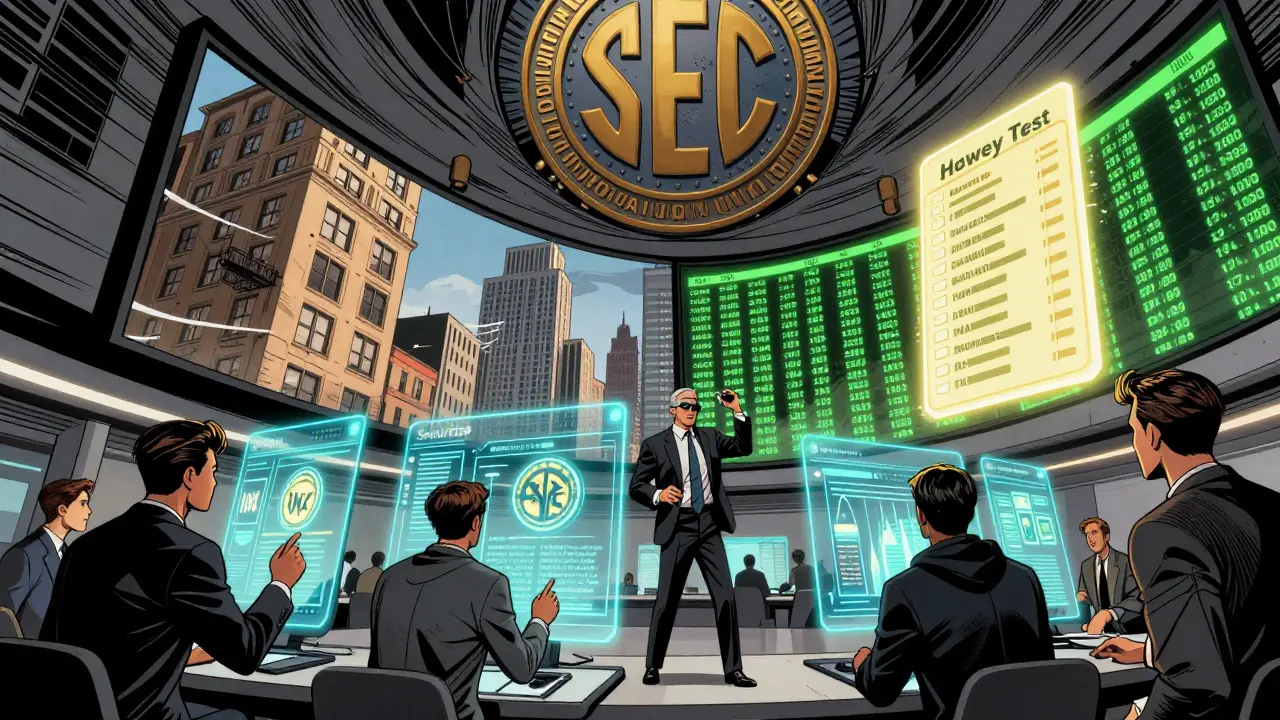
Pros and Cons
Pros:- Low entry cost: Start with $100 instead of $10,000+
- Fractional ownership: Own part of high-value properties you couldn’t afford before
- 24/7 trading (on licensed platforms): More liquidity than traditional real estate
- Transparency: All transactions are recorded on blockchain
- Automation: Smart contracts handle payments and transfers without middlemen
- Limited trading venues: Only a few regulated platforms exist
- Complex compliance: Legal setup takes 6-9 months and costs tens of thousands
- Regulatory risk: Laws can change overnight
- Liquidity risk: Even on ATS platforms, there may be few buyers
- Technology risk: Wallet hacks, smart contract bugs, or platform failures
Who Should Invest?
Real estate security tokens aren’t for everyone. They’re best for:- Accredited investors looking to diversify into real estate without buying whole properties
- People who want exposure to commercial real estate but lack the capital
- Investors comfortable with blockchain and digital assets
- Those who understand this is a long-term play-not a get-rich-quick scheme
The Future: What’s Next?
The SEC is expected to release its Digital Asset Securities Framework in early 2024. This could bring clearer rules for tokenized real estate, making it easier for platforms to operate and for investors to participate. Gartner predicts mainstream adoption by 2028-2030. Until then, expect slow, steady growth. Institutional investors will lead. Residential tokenization will lag. And platforms that combine legal expertise with clean tech will win. The goal isn’t to replace traditional real estate. It’s to make it more accessible, efficient, and liquid. In 10 years, buying a share of a London office tower might be as easy as buying a stock-only better, because you’re getting actual property income, not just speculation.Are real estate security tokens the same as cryptocurrency?
No. Cryptocurrencies like Bitcoin are decentralized digital currencies. Real estate security tokens represent ownership in a physical asset and are regulated as financial securities. They’re built on blockchain, but their purpose is investment, not currency or utility.
Can anyone buy real estate security tokens?
It depends. Most offerings are limited to accredited investors-those with over $200,000 annual income or $1 million net worth. Some platforms use Regulation A+ to allow non-accredited investors to buy, but with caps on how much they can invest. Always check the offering’s legal terms before buying.
How do I earn money from real estate security tokens?
You earn through two ways: rental income (distributed as dividends) and capital appreciation (profit when the property sells). Smart contracts automate these payouts. For example, if a tokenized building generates $10,000 in rent monthly and you own 1% of the tokens, you get $100.
What happens if the property manager goes out of business?
The property itself still exists. The SPV that owns it is a legal entity, separate from the manager. If the manager fails, investors can vote to appoint a new one-or sell the property. The tokens represent ownership in the entity, not the manager.
Are real estate security tokens safe?
They’re safer than unregulated crypto, but not risk-free. The blockchain is secure, but smart contracts can have bugs. Platforms can fail. Regulations can change. And liquidity might be low. Always use regulated platforms, do your due diligence, and never invest more than you can afford to lose.
Kelley Ramsey
January 6, 2026 AT 14:50Wow, this is genuinely exciting-fractional ownership of Manhattan buildings for $100?!! I’ve been waiting for this to go mainstream, and now it’s here!!
Veronica Mead
January 7, 2026 AT 00:10While the concept is technologically elegant, one must not overlook the regulatory overreach inherent in labeling these instruments as securities. The SEC’s paternalistic grip on innovation stifles true financial freedom. This is not investment-it is compliance theater dressed in blockchain.
Michael Richardson
January 7, 2026 AT 13:46So you’re telling me we’re replacing lawyers with code? Brilliant. Next they’ll automate jury duty and call it ‘justice 2.0’.
Natalie Kershaw
January 8, 2026 AT 23:23OMG YES!! This is exactly the kind of democratization we need!! Smart contracts = no more escrow delays, no more middlemen taking 10% cuts!! You can finally get exposure to CRE without needing a trust fund!! Let’s goooo!! 🚀📈
Mujibur Rahman
January 10, 2026 AT 16:40Tokenization is the future but the U.S. regulatory mess is holding back global adoption. In Switzerland they’ve got clear guidelines, in Singapore they’re scaling fast. Here? You need a law degree just to click 'Buy'. The tech is ready, the institutions aren't
Tiffani Frey
January 12, 2026 AT 07:06Interesting breakdown. I appreciate the distinction between security tokens and utility tokens-so many confuse them. The Howey Test application here is spot-on. Still, the liquidity risk remains underdiscussed.
kris serafin
January 12, 2026 AT 18:17100 bucks for a slice of a skyscraper?? 😍 I’m in. No more dreaming about rental income-I’m actually gonna get it. Blockchain + real estate = 💯💯💯
Jordan Leon
January 13, 2026 AT 07:37There’s a philosophical tension here: the promise of decentralization versus the reality of regulatory centralization. The blockchain enables autonomy, yet the law demands gatekeepers. Is this progress-or a new form of control?
Allen Dometita
January 14, 2026 AT 03:36This is wild. I used to think real estate was for rich people. Now I can buy a piece of a warehouse while sipping coffee. No capes needed. Just a wallet and a little patience. 🤝
Brittany Slick
January 14, 2026 AT 20:41It’s like turning concrete into confetti-you can hold a piece of the whole, and it sparkles with possibility. I’ve never felt so connected to a building I’ve never stepped inside.
Andy Schichter
January 15, 2026 AT 01:50Oh great. Now even our dreams of owning property are being NFT’d into a regulatory compliance checklist. What’s next? Tokenized air?
Caitlin Colwell
January 15, 2026 AT 23:52I like that this makes it accessible. Feels right.
Charlotte Parker
January 16, 2026 AT 16:51Let’s be real: if you need a 506(c) exemption to invest, you’re not democratizing anything-you’re just giving the rich a fancier way to be rich. This isn’t revolution. It’s rebranding.
Calen Adams
January 17, 2026 AT 04:16Tokenization is the next-gen REIT-except with zero bureaucracy and 10x transparency. The SPV structure is genius. Smart contracts = automatic dividends. This is the future of passive income, no capes required.
Valencia Adell
January 19, 2026 AT 01:27Don’t be fooled. 1% of commercial real estate tokenized by 2027? That’s a fantasy. Liquidity is a mirage. Platforms will collapse. Wallets will get hacked. And when the dust settles, the only ones with real ownership are the ones who never sold a single token.