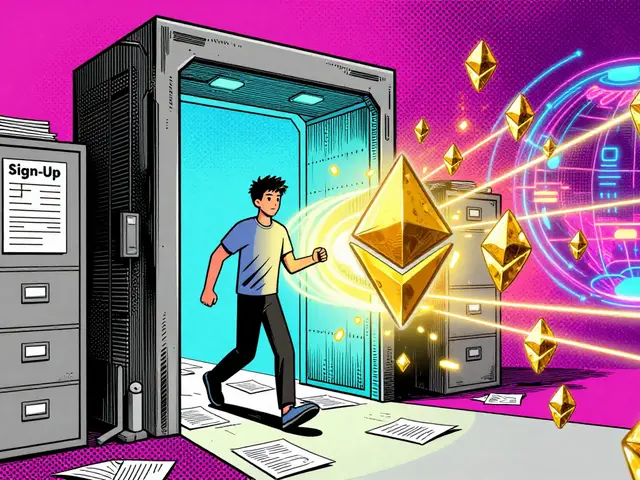
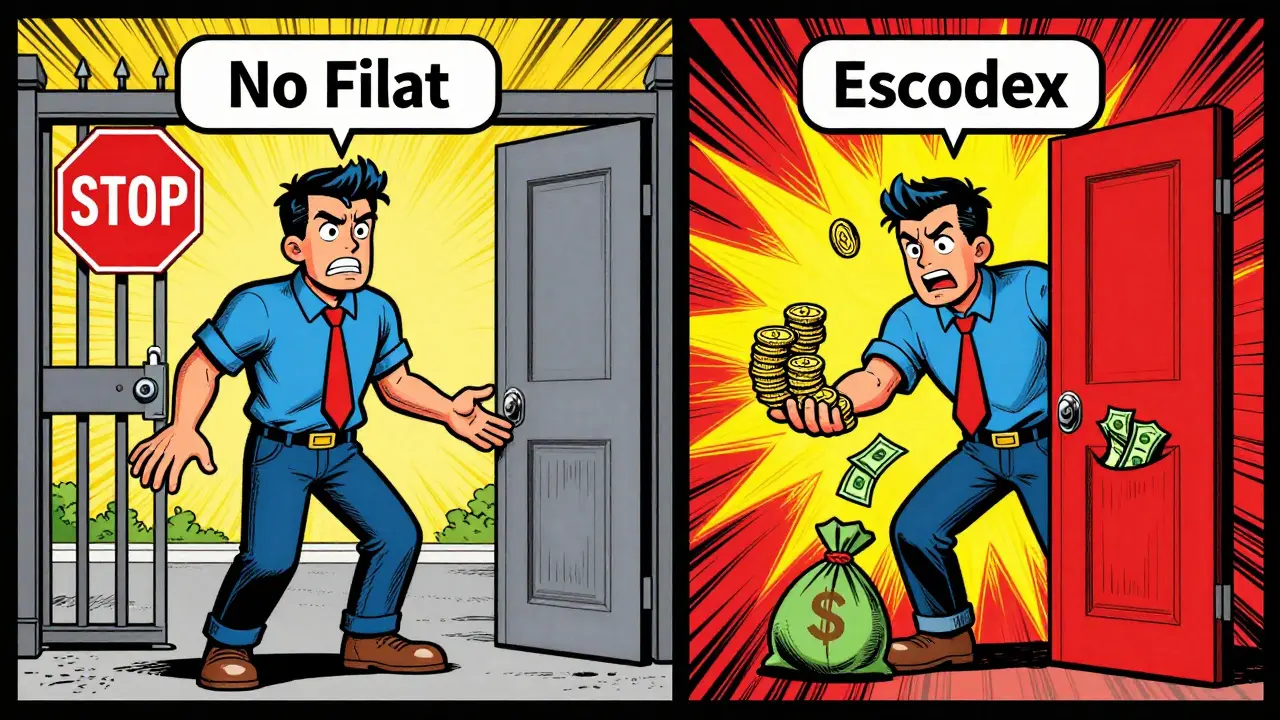
Most crypto traders are used to a simple rule: you pay more to trade faster or in larger volumes. But what if the platform charged you exactly the same rate regardless of how much money you moved? That is the premise behind Escodex, a cryptocurrency exchange built on the BitShares blockchain infrastructure that offers a flat 0.10% trading fee for all users. It sounds too good to be true, especially when the industry average hovers around 0.25%. However, there is always a catch with these ultra-low-fee models. In the case of Escodex, the catch is accessibility. You cannot buy Bitcoin here with dollars or euros. If you don’t already hold crypto, this door is locked.
This review breaks down whether Escodex is worth your time in 2026. We will look at the fee structure, the technology under the hood, and who should actually use this platform. If you are an experienced trader looking to shave off basis points on every trade, keep reading. If you are looking to buy your first Bitcoin, you can stop here-this isn’t the place for you.
The Flat Fee Model: A Game Changer or a Niche?
Let’s start with the headline feature: the cost. Most major exchanges like Binance, Coinbase, or Kraken use a tiered maker-taker model. This means your fee depends on your 30-day trading volume and whether you add liquidity (maker) or remove it (taker). High-volume traders negotiate custom rates, while small retail traders often pay higher percentages.
Escodex throws that complexity out the window. The fee is a flat 0.10% for everyone. Whether you are trading $100 or $10 million, the percentage remains identical. This applies to both market makers and takers. According to data from Cryptowisser, the global industry average for spot trading fees is approximately 0.25%. By charging 0.10%, Escodex is effectively offering a 60% discount compared to the standard market rate.
| Exchange Type | Average Fee | Fee Structure | Best For |
|---|---|---|---|
| Escodex | 0.10% | Flat rate for all users | High-frequency traders, existing crypto holders |
| Industry Average | ~0.25% | Tiered Maker/Taker | General retail investors |
| Top Tier Exchanges (e.g., Binance) | 0.10% - 0.75% | Volume-based discounts | Institutional and high-volume traders |
Why does this matter? Imagine you trade $100,000 in volume per month. On a typical exchange charging 0.25%, you pay $250 in fees. On Escodex, you pay $100. That is $150 saved monthly, or $1,800 annually. For active day traders, these savings compound significantly. The simplicity also removes the anxiety of "did I qualify for the lower tier?" You know exactly what you will pay before you click buy or sell.
The BitShares Backbone: Decentralized by Design
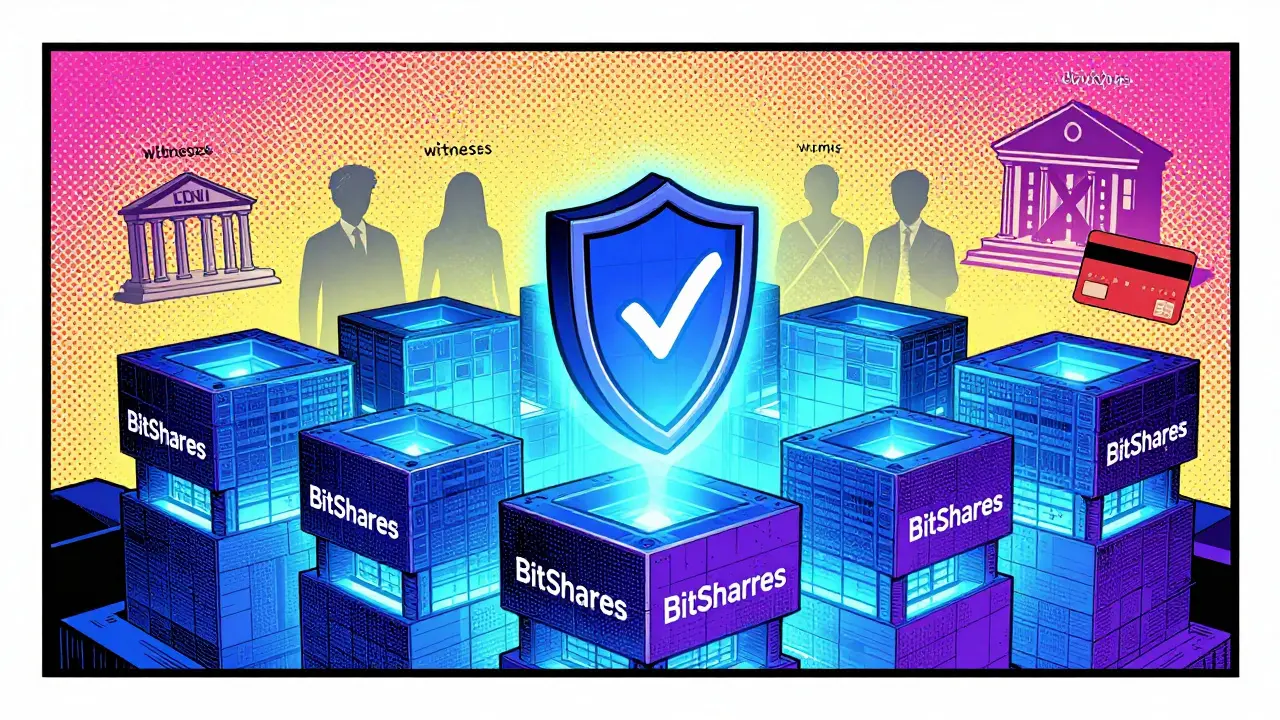
To understand Escodex, you have to understand its foundation. It is not a standalone centralized server farm holding your keys. It is built on BitShares, a blockchain specifically designed for decentralized financial services. BitShares uses a Delegated Proof of Stake (DPoS) consensus mechanism, which allows for fast transaction processing and low costs.
This architecture brings two major implications:
- No Central Custodian Risk: Because it runs on a decentralized protocol, there is no single point of failure where a hacker could drain a central vault. Your assets are secured by the BitShares network.
- Transparency: All trades and balances are recorded on the public ledger. You can verify the exchange's solvency and your own holdings independently.
However, this technical choice reinforces the platform's limitation. BitShares is optimized for crypto-to-crypto swaps. It was never designed to interface with traditional banking systems like SWIFT or SEPA. This leads us to the biggest hurdle for new users.
The Dealbreaker: No Fiat Currency Support
Here is the reality check. Escodex does not accept deposits in USD, EUR, GBP, or any other government-issued currency. There is no credit card integration, no bank transfer option, and no peer-to-peer fiat marketplace built into the core experience.
If you are trying to enter the crypto space for the first time, Escodex is useless to you. You must already possess cryptocurrency elsewhere. This makes Escodex a secondary tool, not a primary entry point. Experts at Cryptowisser classify this as a "non-entry-level" exchange. They recommend using an "entry-level exchange" (one that accepts fiat) to buy your initial crypto, and then transferring those assets to Escodex for trading if you want to save on fees.
This creates a specific user journey:
- Buy Bitcoin or USDT on a regulated fiat-friendly exchange (like Coinbase or Kraken).
- Withdraw those assets to your personal wallet or directly to Escodex.
- Trade on Escodex to take advantage of the 0.10% fee.
For casual investors who buy once a year, this extra step is annoying. For active traders who move large sums frequently, the fee savings justify the hassle.
Withdrawal Fees: Where Escodex Shines
If trading fees aren't enough to convince you, look at the exit strategy. Withdrawing crypto from most exchanges is painful. Bitcoin withdrawal fees on major platforms often range from 0.0005 BTC to 0.001 BTC, depending on network congestion. At current prices, that can mean paying $20 to $50 just to move your money out.
Escodex follows the BitShares protocol for withdrawals. It charges only the necessary network transaction fee. The internal transfer fee within the BitShares protocol is 0.104 BTS. When converted, this is roughly equivalent to 0.000014 BTC. Compare that to the industry average of 0.0008 BTC for Bitcoin withdrawals. Escodex’s effective withdrawal cost is nearly 98% lower than the norm.
Furthermore, Escodex does not add a "platform fee" on top of this network cost. Many exchanges charge a fixed service fee plus the network fee. Escodex passes the network cost through directly. This is a massive advantage for users who frequently rebalance portfolios across different wallets or exchanges.
Who Should Use Escodex? (And Who Shouldn't)
Not every exchange is for everyone. Based on the fee structure and technical limitations, we can clearly define the ideal user profile.
You should use Escodex if:
- You already hold significant amounts of cryptocurrency.
- You trade frequently (day trading or swing trading) and want to minimize overhead costs.
- You prefer decentralized infrastructure over centralized custodial models.
- You are comfortable managing transfers between different exchanges and wallets.
You should avoid Escodex if:
- You are a beginner looking to buy crypto with a debit card or bank transfer.
- You need access to margin trading, futures, or staking rewards (features not detailed in their core offering).
- You require 24/7 live chat support for fiat-related issues (since they don't handle fiat).
- You prefer a single app for all your needs (buying, storing, and trading).
Security and Trust Considerations
Because Escodex leverages the BitShares blockchain, it inherits the security properties of that network. BitShares has been operational since 2014 and has maintained a strong track record of uptime and security. The DPoS consensus model relies on elected witnesses to validate transactions, reducing the risk of 51% attacks that plague smaller proof-of-work chains.
However, "decentralized" does not mean "unhackable." Users must still secure their own accounts. Since Escodex is a web-based interface for the BitShares blockchain, phishing attacks targeting login credentials remain a threat. Always ensure you are accessing the official URL and enable two-factor authentication (2FA) if available. Additionally, because there is no fiat backing, there is no insurance fund like FDIC coverage for traditional banks. If you lose your private keys or fall victim to a scam, recovery is unlikely.
Final Verdict
Escodex is a specialist tool. It is not a general-purpose gateway to the crypto world. Its value proposition is narrow but potent: extremely low trading and withdrawal fees powered by robust decentralized technology. For the average person buying $50 of Bitcoin a month, the friction of transferring funds outweighs the fee savings. But for the serious trader moving thousands or millions in volume, Escodex offers one of the most cost-effective environments in the market today.
If you fit the profile of an experienced crypto holder looking to optimize costs, Escodex deserves a spot in your toolkit. Just remember to bring your own crypto to the table.
Can I deposit USD or EUR on Escodex?
No. Escodex does not support fiat currency deposits. You must already own cryptocurrency and transfer it to the platform to begin trading.
Is Escodex safe to use?
Escodex operates on the BitShares blockchain, which has a long history of security and stability. However, as with any crypto platform, you are responsible for securing your account credentials. There is no central insurance for lost funds.
How do Escodex fees compare to Binance?
Escodex charges a flat 0.10% fee for all trades. Binance uses a tiered system that starts higher for new users but decreases with volume. For many mid-to-high volume traders, Escodex’s flat rate is cheaper or comparable, without the complexity of tiers.
What is the withdrawal fee for Bitcoin on Escodex?
The withdrawal fee is based on the BitShares network cost, which is approximately 0.000014 BTC. This is significantly lower than the industry average of 0.0008 BTC.
Do I need to verify my identity (KYC) to use Escodex?
Since Escodex is a decentralized exchange built on BitShares, it typically does not require traditional KYC processes for basic trading, as it does not handle fiat currency. However, always check the latest terms of service for any updates regarding regulatory compliance.