
Imagine a world where you want to dive into decentralized finance but feel completely overwhelmed by the technical jargon and complex interfaces. That's exactly where Sensi is a community-driven, deflationary DeFi token designed to simplify decentralized finance applications and make them accessible to a broader audience. Launched stealthily by a team with backgrounds at tech giants like Google and Microsoft, it aims to strip away the intimidation factor of blockchain and give regular people a way to maximize their assets without needing a degree in computer science.
The Core Mechanics: How SENSI Works
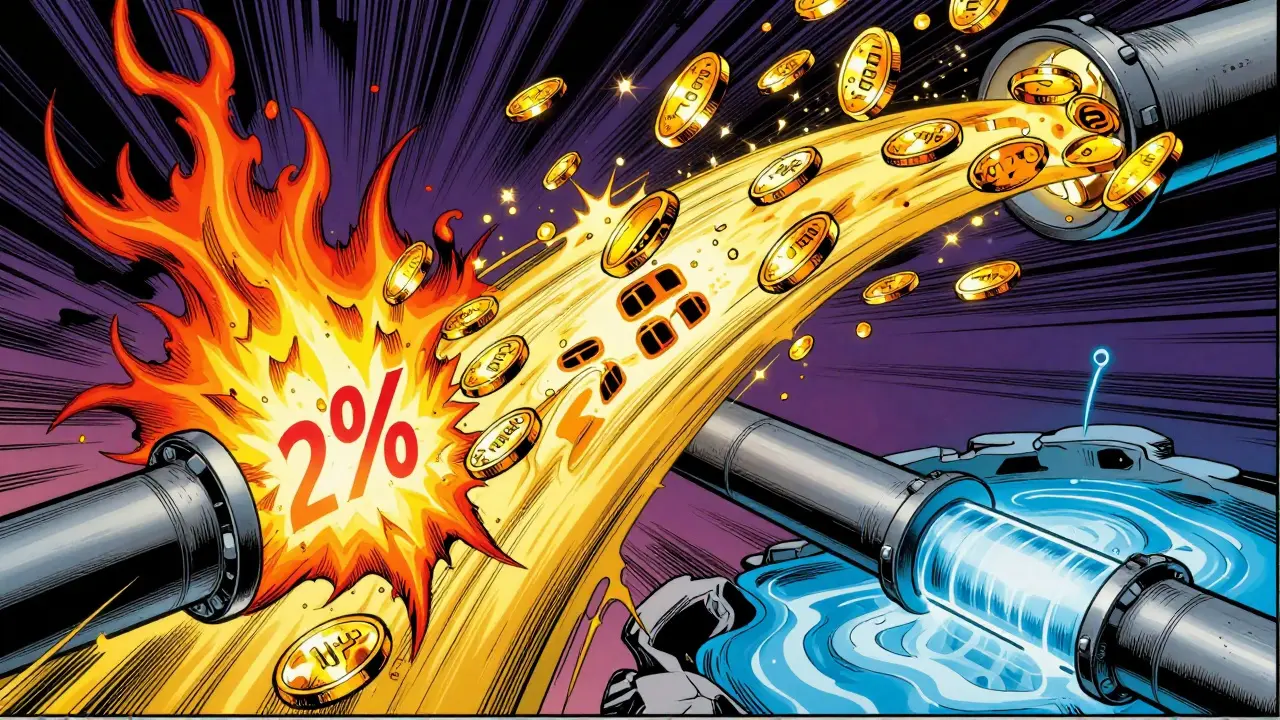
At its heart, SENSI isn't just a currency; it's a utility asset with a built-in mechanism to fight inflation. Most coins just flood the market with more supply, but SENSI uses a deflationary model. Every time someone sends a transaction, a 4% fee is triggered. But instead of just going to a central pocket, that fee is split strategically: 2% is permanently burned (deleted from existence), 1% goes back into liquidity pools to keep the market stable, and 1% is set aside for the development team to keep the project moving forward.
This burning process is a key part of the project's strategy. By reducing the total number of tokens over time, the project hopes to create scarcity. If demand stays the same or grows while the supply shrinks, the theoretical value of each remaining token can increase. This is a common tactic in the DeFi space, but Sensi combines it with practical tools to make the token actually useful rather than just a speculative bet.
The Sensi Ecosystem and Utility
Holding SENSI allows you to interact with several specialized products. The most prominent is Smart Yield, a yield farming platform that lets users put their assets to work. Instead of just letting your tokens sit in a wallet, you can lock them to earn rewards. This encourages long-term holding and reduces the number of tokens being dumped on the market.
Then there are the Utility NFTs. These aren't just digital art pieces to show off; they act like membership cards. Owners of these NFTs can get discounted trading fees and bonus SENSI rewards. By tying financial benefits to NFTs, Sensi creates a layer of incentive for users to engage deeper with the platform. To manage all of this, the project provides a dedicated dApp (decentralized application) where you can track your locking activities and monitor your yield farming progress in real-time.
| Attribute | Value / Detail |
|---|---|
| Primary Network | BNB Smart Chain |
| Total Transaction Fee | 4% per transaction |
| Burn Rate | 2% (Automatic) |
| Liquidity Allocation | 1% |
| Dev Wallet Allocation | 1% |
| Maximum Supply | Approx. 244.8 Million SENSI |
Comparing Sensi to DeFi Giants
To understand where Sensi stands, you have to look at the landscape. On one side, you have behemoths like Uniswap (UNI) and PancakeSwap (CAKE). These projects have market caps in the billions and liquidity that allows institutional investors to move millions of dollars without moving the price. Sensi, by contrast, is a small-cap project. With a market cap that has fluctuated around $1.22 million, it operates in a completely different league.
The big advantage Sensi has is its focus on accessibility. While giants like Uniswap provide the infrastructure for the entire crypto world, they can be intimidating for a beginner. Sensi builds a "walled garden" experience where the tools are integrated and simpler to use. However, the trade-off is liquidity. Because Sensi is small, it suffers from high slippage-meaning if you try to sell a large amount of tokens at once, the price might drop significantly before your trade finishes, costing you more than you expected.

The Risks: What You Need to Know
It would be irresponsible to talk about a project like Sensi without mentioning the risks. The most glaring issue is the extremely low daily trading volume. Some reports have shown daily volume under $1,000. In the crypto world, low liquidity is a red flag because it makes the coin susceptible to price manipulation and makes it hard for investors to exit their positions quickly.
There are also transparency concerns. Some analysts have pointed out discrepancies between the self-reported circulating supply and the total supply visible on the blockchain. Furthermore, while the smart contracts haven't shown obvious vulnerabilities in basic scans, the lack of a formal, comprehensive audit from a top-tier firm like CertiK (though they have performed basic scans) means you're trusting the team's internal code quality. When you combine this with the SEC's general wariness of automated burn mechanisms, Sensi falls firmly into the "high-risk, high-reward" category of speculative investing.
How to Get Started with SENSI
If you're still interested in trying out the ecosystem, the process is relatively straightforward for those familiar with Web3. First, you'll need a digital wallet like MetaMask. Since Sensi primarily runs on the BNB Smart Chain, you'll need to hold some BNB to pay for gas fees-the cost of processing transactions on the network.
- Connect your MetaMask wallet to the Sensi dApp.
- Head over to a decentralized exchange like PancakeSwap to swap your BNB for SENSI tokens.
- Set your slippage tolerance to 10-15% to ensure the trade goes through, as the low liquidity often causes transactions to fail at standard settings.
- Once you have the tokens, you can use the dApp to stake them or explore the Smart Yield options.
A word of advice from experienced users: start small. Because of the liquidity issues mentioned earlier, putting a massive amount of capital into a low-volume token can lead to significant losses through impermanent loss or slippage when you try to withdraw.
Is Sensi (SENSI) a safe investment?
Sensi is considered a high-risk, speculative asset. Due to its very low trading volume and liquidity, it is susceptible to high price volatility and slippage. Financial experts generally suggest that if you choose to invest, it should only represent a tiny fraction (less than 1%) of a diversified portfolio.
What makes Sensi "deflationary"?
It is deflationary because it automatically removes tokens from the total supply. Every transaction has a 4% fee, and 2% of that fee is "burned," meaning those tokens are sent to an inaccessible address and can never be used again, theoretically increasing the value of the remaining tokens.
Which blockchain does Sensi use?
Sensi primarily operates on the BNB Smart Chain (BSC). While there were early mentions of the Ethereum blockchain, the project has focused its ecosystem and liquidity on the BNB chain to keep transaction costs lower for users.
What is Smart Yield in the Sensi ecosystem?
Smart Yield is a yield farming platform within the Sensi ecosystem that allows users to stake their tokens to earn rewards. It is designed to be more intuitive than traditional DeFi farming, making it easier for beginners to earn passive income on their crypto.
Why is slippage so high when trading SENSI?
High slippage happens because Sensi has low liquidity in its trading pools. When there aren't enough buyers and sellers at a specific price point, a single trade can push the price significantly in one direction, requiring users to set a higher slippage tolerance (often 10-15%) for the trade to execute.