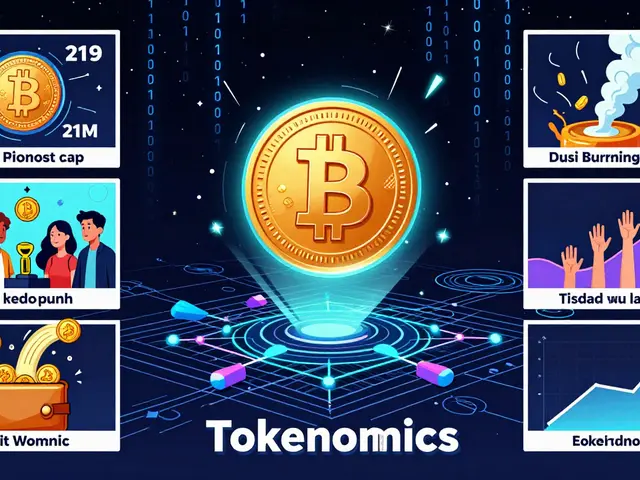
Not all cryptocurrencies are built the same. Two projects might look identical on the surface-both use blockchain, both have tokens, both promise decentralization-but one could collapse in six months while the other lasts a decade. The difference? Tokenomics. It’s not just buzzword bingo. It’s the hidden blueprint that decides whether a token holds value or becomes digital trash.
What Tokenomics Really Means
Tokenomics is the study of how a digital token’s economy works. It’s not about how fancy the website looks or how many influencers post about it. It’s about the math behind the money. Who gets tokens? How many are made? Can they be burned? Do people actually need them to use the platform? If you can’t answer these questions, you’re gambling, not investing.Think of it like running a business. You wouldn’t buy a company without checking its revenue model, payroll, and cash flow. Tokenomics is the same for crypto. It answers: Why does this token have value, and will it keep it?
The Six Core Components of Tokenomics
There are six non-negotiable pieces to any solid tokenomics analysis. Skip one, and you’re flying blind.1. Token Supply Models
Not all tokens have the same supply rules. Some are fixed. Some keep printing. Others burn tokens to make them scarcer.Fixed supply means a hard cap-like Bitcoin’s 21 million. This creates scarcity. But it also means no flexibility. If the network needs more tokens to reward validators later, it can’t make them. That can hurt growth.
Inflationary supply means new tokens are created over time. Ethereum used to do this. It’s good for keeping validators paid and networks running. But if too many are made too fast, prices drop. The key is predictability. Look for clear schedules: “1% annual inflation for 5 years, then 0.5%.” That’s transparent. “We’ll mint as needed” is a red flag.
Burn mechanisms remove tokens permanently. Binance Coin (BNB) burns a portion of its supply every quarter. That reduces total supply over time, which can push prices up-if demand stays steady. But if no one’s using the platform, burning tokens won’t save it.
2. Distribution Mechanisms
Who gets the tokens when they’re first created? This matters more than you think.Pre-mined tokens are created before the public can buy. Often, 30-60% go to the team, investors, or foundation. If 50% of all tokens are held by insiders with no vesting schedule, expect a dump when they cash out.
Fair launches mean no pre-mine. Everyone starts on equal footing. This builds trust but makes funding hard. Projects like Bitcoin did this. Most modern tokens don’t.
Initial Coin Offerings (ICOs) sell tokens before the product exists. Watch for who’s buying. If 80% go to a few big investors, they’ll control the market. Look for vesting periods. If the team’s tokens unlock all at once in 6 months, that’s dangerous. If they’re locked for 2-4 years, that’s a sign they believe in the project.
3. Token Utility
This is where most projects fail. They make a token but give it no real job.Ask: Can you use this token to do something you can’t do without it?
Good utility examples:
- Pay for gas fees on a blockchain (like ETH on Ethereum)
- Vote on governance proposals (like UNI on Uniswap)
- Stake to earn rewards (like ATOM on Cosmos)
- Use as collateral in DeFi loans (like MKR on MakerDAO)
Bad utility? “We’ll use it for discounts in our future app.” That’s not utility. That’s a promise. Real utility is active today. Check the blockchain. Are people actually using the token to pay for services? Are smart contracts calling it? Or is it just sitting in wallets?
4. Incentive Mechanisms
People need a reason to hold, use, or build with a token. Incentives drive behavior.Staking rewards are common. But if you’re getting 20% APY on a token with no real use, people will stake it, earn rewards, then sell everything. That’s not growth-that’s a pump-and-dump.
Good incentives tie rewards to long-term network health:
- Pay validators for securing the chain
- Reward users for providing liquidity
- Give bonuses for referring new users
Avoid projects that pay out more in rewards than the token’s market cap. That’s mathematically impossible to sustain. If a token pays $10 million in rewards monthly but is only worth $50 million total, it’s a Ponzi. It can’t last.
5. Governance Structures
Who controls the project? If a CEO holds 70% of voting tokens, it’s not decentralized. It’s a company with a blockchain logo.True governance means token holders vote on:
- Protocol upgrades
- Fee changes
- treasury spending
- Partnerships
Look for low voter turnout. If only 5% of holders vote, the system is broken. Healthy projects have active communities with high participation. Check snapshot.org or similar platforms to see voting history. If proposals pass with 90% approval but only 100 people voted, that’s not democracy-it’s manipulation.
6. Monetary Policy
This is the big picture: Is the token designed to grow in value, stay stable, or shrink over time?Some tokens are deflationary: they burn more than they mint. Others are inflationary: they print to fund development. Neither is bad-but you need to know which one you’re dealing with.
Look at the long-term trajectory. Is the inflation rate slowing down? Are burns increasing? Is there a clear path to equilibrium? Projects like Ethereum 2.0 shifted from inflation to near-neutral supply after the merge. That was a deliberate policy change based on real data.
Utility vs. Security Tokens: Know the Difference
Not all tokens are created equal under the law. This isn’t just legal jargon-it affects survival.Utility tokens give you access to a service. You buy them to use the platform. They’re not investments. They’re keys.
Security tokens represent ownership. They pay dividends, share profits, or give equity. These are regulated like stocks. If a project says it’s a utility token but promises returns, it’s probably a security in disguise. The SEC has fined dozens for this.
Check the whitepaper. If it mentions “investment potential,” “profit sharing,” or “return on investment,” you’re likely dealing with a security. That means compliance, KYC, and reporting. If the team avoids those, they’re risking a lawsuit that could kill the project.
Native Crypto vs. Platform Tokens
Don’t confuse ETH with AXS. They’re not the same.Native cryptocurrencies (like Bitcoin, Ethereum, Solana) are the base layer. They secure the network. Miners or validators get paid in them. They’re the fuel.
Platform tokens (like AXS, SAND, MANA) are built on top. They’re apps on a blockchain. They might govern a game or reward users. But they rely on the base layer to function.
Why does this matter? If Ethereum crashes, AXS crashes with it. But if Axie Infinity fails, ETH keeps going. Analyze platform tokens based on the health of their underlying chain. A weak base makes even the best token fragile.
How to Do Your Own Tokenomics Check
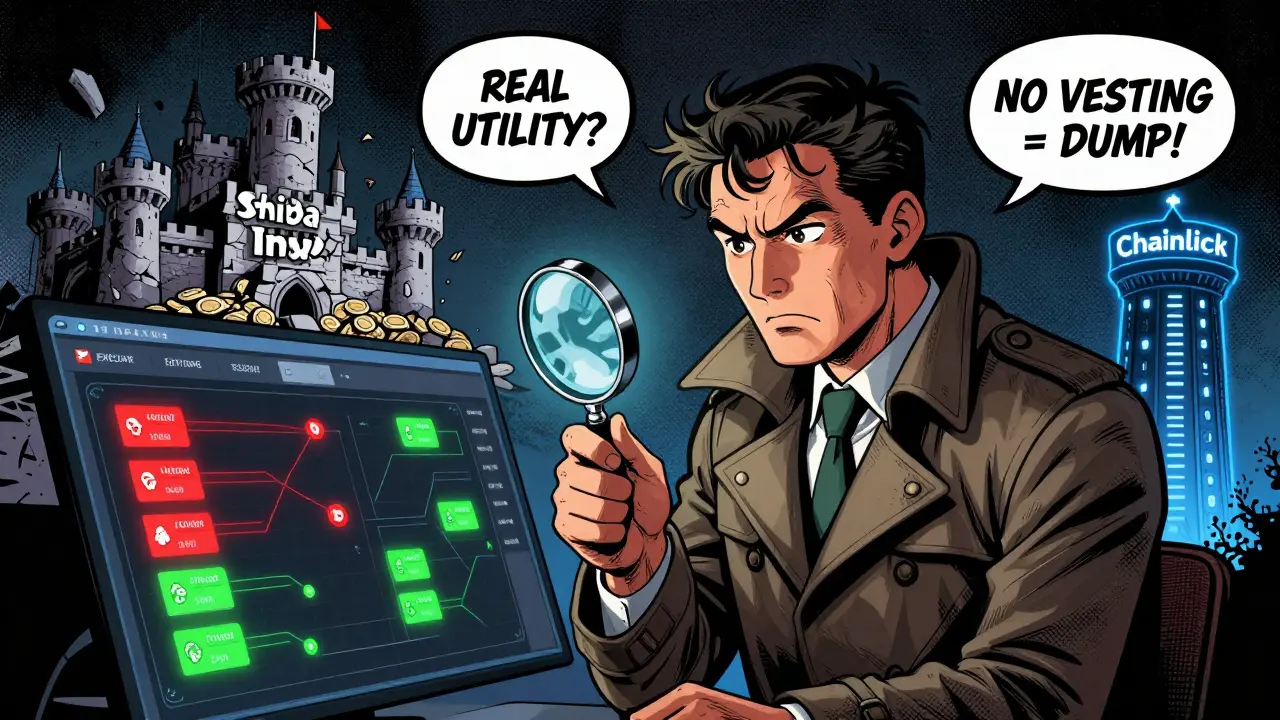
Here’s a simple checklist you can use for any project:- Find the whitepaper. Read the “Token Economy” section. If it’s vague or missing, walk away.
- Check token supply: total, circulating, burned. Use blockchain explorers like Etherscan or Solana Explorer.
- Look at token distribution. Use tools like Token Terminal or Nansen. Who holds the top 10 wallets?
- Find real usage. Are tokens being spent? On-chain activity? Or just hoarded?
- Check vesting schedules. Use tokensniffer.com or similar. Are team tokens locked?
- Read governance votes. Are people actually participating?
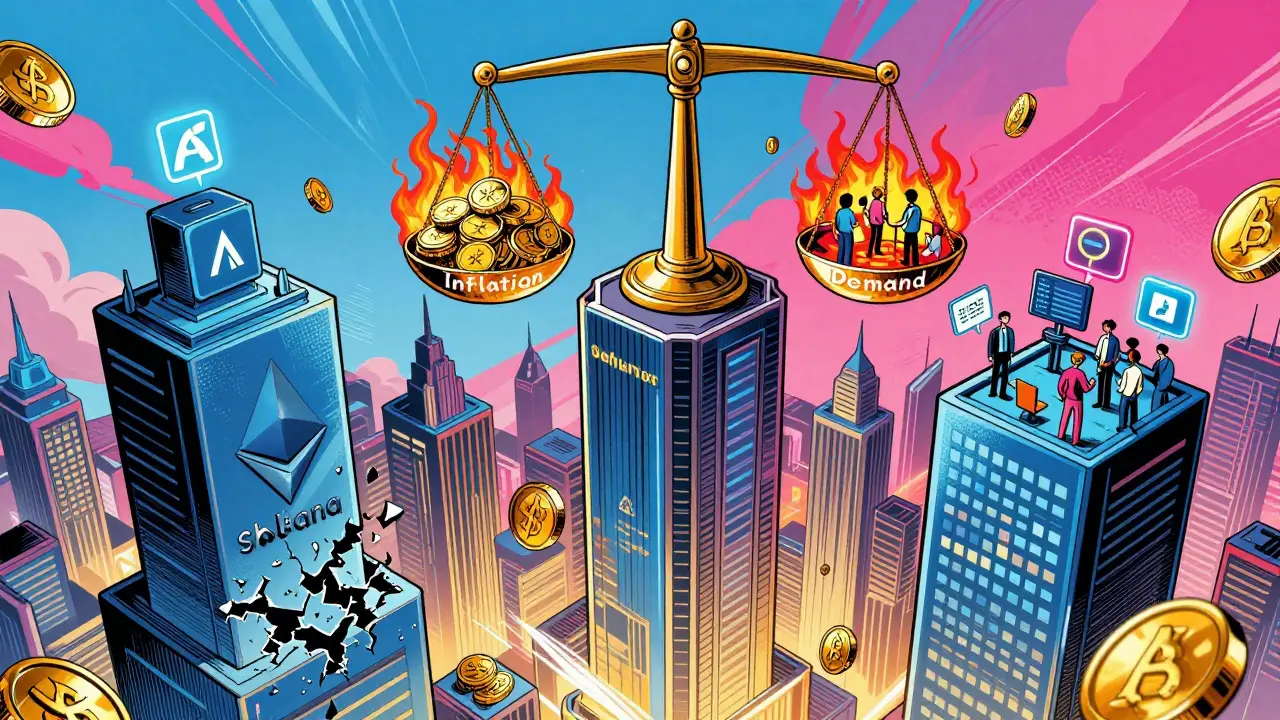
- Compare inflation rates. Is the token printing faster than demand is growing?
Don’t rely on Twitter. Don’t trust YouTube influencers. Go to the blockchain. Look at the data. If you can’t verify it yourself, you don’t know it.
Real-World Examples
Bitcoin: Fixed supply. No utility beyond being digital gold. No governance. Simple. Proven. Low inflation. High scarcity.
Ethereum: Originally inflationary. Now near-neutral after EIP-1559 burns. High utility: DeFi, NFTs, dApps. Strong governance. Active community. Tokenomics evolved with the network.
Shiba Inu: Huge supply (1 quadrillion tokens). No real utility. No burning mechanism. Most tokens held by whales. Incentives? None. It’s a meme, not a project.
Chainlink: Utility: pays node operators for data. Incentives: staking for rewards. Supply: fixed cap. Governance: active voting. Vesting: team tokens locked for 4 years. Solid tokenomics.
What to Avoid
Red flags that mean trouble:
- “We’ll add utility later” - if it doesn’t work now, it never will.
- Team gets 30%+ with no vesting - they’ll dump it.
- APY over 20% with no clear revenue model - unsustainable.
- Zero on-chain usage - it’s a ghost token.
- Whitepaper uses “revolutionary,” “unlimited,” or “guaranteed returns” - it’s a scam.
Tokenomics isn’t about getting rich quick. It’s about finding projects with economic logic that can survive bear markets, regulatory pressure, and competition. The ones that do? They last. The rest? They vanish.
What’s the most important part of tokenomics?
There’s no single most important part-it’s the combination. But if you had to pick one, it’s utility. A token with no real use case will eventually lose value, no matter how good the supply model or incentives are. People don’t hold tokens because they’re pretty. They hold them because they need them to do something.
Can a token with high inflation still be valuable?
Yes, but only if demand grows faster than supply. Ethereum had inflation for years, but because so many people used it for DeFi and NFTs, demand outpaced new token creation. The key isn’t low inflation-it’s whether the token is actively used. If users keep buying and using it, inflation becomes irrelevant. If not, even 1% inflation will kill it.
How do I know if a token is a security?
Look for promises of profit. If the project says you’ll earn returns, dividends, or share in revenue, it’s likely a security. The Howey Test (used by the SEC) asks: Are you investing money in a common enterprise expecting profits from others’ efforts? If yes, it’s a security. Utility tokens should only promise access to a service, not financial gain.
Are token burns always good?
Not always. Burning tokens only helps if demand is stable or growing. If no one’s using the platform, burning tokens just makes the supply smaller-but doesn’t create value. Binance Coin burns work because Binance has real trading volume. A token with no users burning its supply is just theater.
Can tokenomics fix a bad product?
No. Tokenomics can amplify a good product, but it can’t save a bad one. If the app is slow, buggy, or useless, no amount of staking rewards or burns will make people use it. Focus on the product first. Tokenomics is the engine-it needs a car to move.